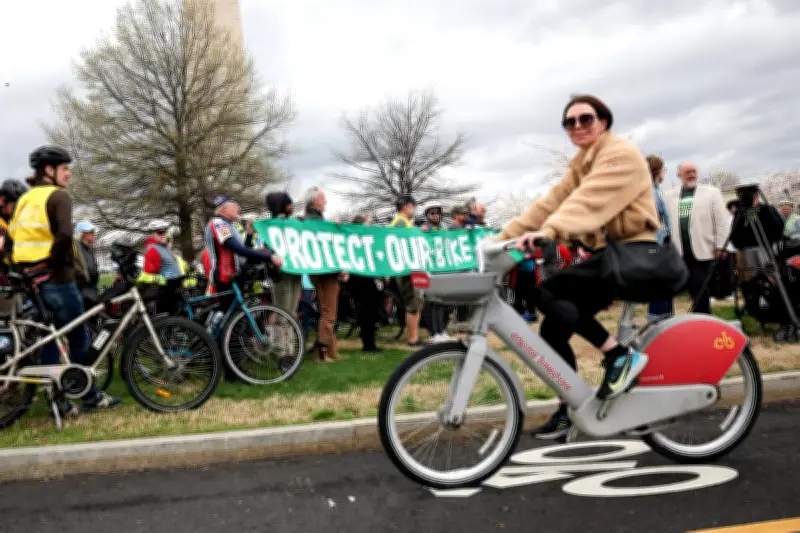
The Trump administration’s decision to defund bike lane projects, labeling them as diversity, equity, and inclusion (DEI) tools, will undermine road safety improvements, according to non-motorized transportation advocates. Transportation Secretary Sean Duffy announced on X that $1.73bn previously allocated for what he called "Biden-era DEI pet projects" would be redirected to roads, bridges, and ports.
Funding shift and safety concerns
Duffy did not specify how the department would determine which bike lanes qualify as DEI. The administration also removed bike lanes and speed cameras from the Federal Highway Administration’s list of proven safety countermeasures. These moves are seen as part of a broader culture war, but they also ensure federal roadway projects remain car-focused, despite rising bicycle usage.
Caron Whitaker, deputy executive director of the League of American Bicyclists, criticized the uncertainty created for cities that had invested in planning. "For this administration to come in and say, ‘Yes, I know the agency said yes to you last year, but now we are going to pull it back,’ creates a huge amount of uncertainty for cities and towns and communities that have invested in planning and identifying safety concerns or areas for economic growth," she said. "It slows the safety improvements … It reduces those improvements to quality of life."

Canceled grants under Biden-era program
Under the Biden administration, the Department of Transportation awarded billions through the Rebuilding American Infrastructure with Sustainability and Equity (RAISE) program. For example, $11.4m was granted to Albuquerque, New Mexico, for a trail separating cyclists from cars and improving accessibility for an underserved community. Fairfield, Alabama, was to receive $11.7m for a 3.8-mile project with separated bicycle and pedestrian facilities. Both grants were canceled by the Trump administration, with projects described as "hostile to motor vehicles," according to Politico.
On July 7, Duffy announced the funding shift. "Remember when Biden and Boot-edge-edge used YOUR MONEY for DEI bike lanes and climate change? THAT’S OVER," he wrote, referencing his predecessor Pete Buttigieg. The post linked to a Daily Wire article claiming no RAISE grants would fund bike lanes, citing Buttigieg’s 2021 announcement that grants would advance equity and combat climate change.
Public support for bike lanes
Despite the administration’s stance, a 2025 YouGov survey found that 75% of US adults support having bike lanes where they live, with 33% wanting more and 37% satisfied with current numbers. Bike usage is rising: in August 2025, New York’s Citi Bike recorded over 5 million rides, an 11% increase from August 2024, according to the US Department of Transportation.
Research shows bike lanes enhance safety for all road users. A study in the Journal of Urban Mobility found that bike lanes marked with cones and delineators reduced average maximum speeds by 28%. A 2009 study in Environmental Health found a 53% reduction in collision frequency with bike lanes.
Opposition and local impacts
Erik Noonan, communications manager for the Bicycle Alliance of Minnesota, argued the administration is making roads less safe. "The federal administration right now is spending a lot of political capital to make roadways less safe," he said. "They are calling it fiscal discipline. The math on that just doesn’t check out. This is infrastructure with some of the best return on investment."
However, not everyone supports bike lanes. Lester Wasserman, a fourth-generation owner of Tip Top Shoes on Manhattan’s Upper West Side, opposes a proposed two-way bike lane on 72nd Street, fearing it will hinder deliveries and emergency vehicle access. "We are taking a wide street that is four lanes – two in each direction – and cutting it in half for the purposes of a green initiative," Wasserman said. "But how does that help emergency vehicles?"

Noonan countered that opposition often stems from misunderstanding safety data. He warned that the removal of bike lanes from the federal safety list will complicate advocacy efforts. "That almost certainly will come back in some public hearings at some point for bike advocates for cities. You are going to have to deal with people saying, ‘Well, you know, the federal government took bikeways off of their list,’" he said.
Albuquerque has sued Duffy and the Department of Transportation over the canceled $11.4m grant. In 2025, New Mexico saw 14 cyclist deaths, double the previous year and the highest in two decades, according to the Albuquerque Journal. Terry Brunner, director of the city’s metropolitan redevelopment agency, emphasized the safety and economic benefits of bike lanes. "Getting people off the streets and into bike lanes or on to trails is going to help save lives," he said. "These trails have proven to be an economic generator for the area as well."