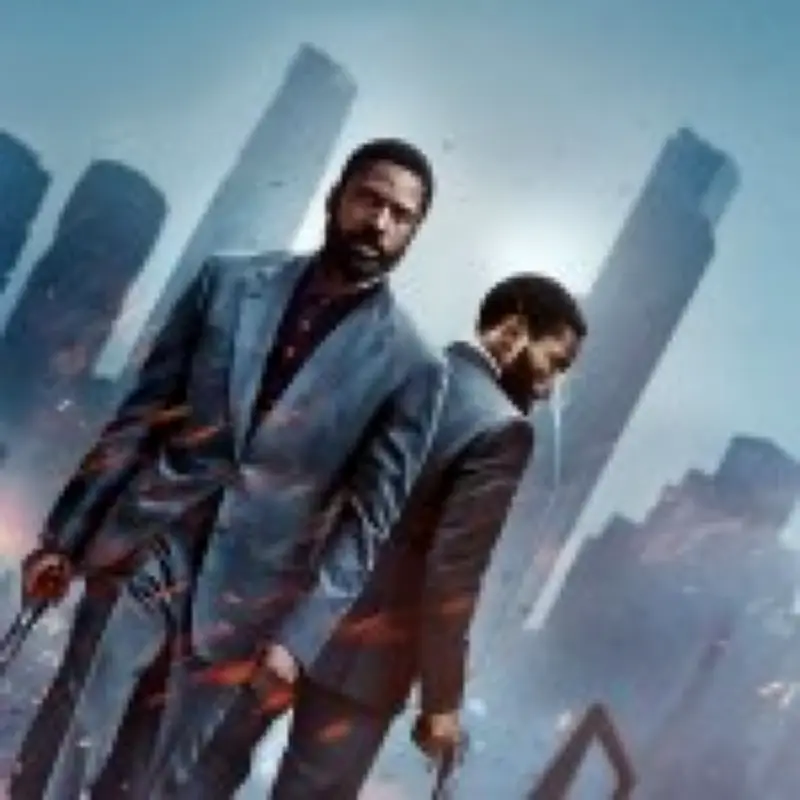
Christopher Nolan returns to cinemas this weekend with his highly anticipated epic The Odyssey, which has received some of the best reviews of his career. Coming off his Oscar-winning Oppenheimer, movie fans are keen to see how it will rank among their favorite Nolan efforts. From The Dark Knight trilogy to Interstellar, The Prestige, and Inception, many fans champion their favorite Nolan movies, but one rarely heard at the top of lists is his 2020 timey-wimey action flick, Tenet.
There's good reason for that; Nolan has made better movies. But Tenet is arguably his most underrated and, for this writer's money, superior to his much more celebrated 2010 sci-fi movie Inception. Both films are enjoyable, but Tenet offers a different kind of cinematic experience.
Inception's Rigid Rules vs. Tenet's Playful Abandon
Inception is regarded as Nolan's first blank-check movie, following the billion-dollar success of The Dark Knight for Warner Bros. The resulting blockbuster mixes grounded action and character drama with a high concept: implanting ideas into people's dreams by entering their subconscious. It was a massive hit and has rightfully achieved iconic status thanks to its inventive visuals and Hans Zimmer's bravissimo score.
However, there has always been a roadblock for this writer in embracing Inception as top-tier Nolan. While its concept allows for standout sequences, Nolan's pragmatism often limits his own imagination. The world-building is laden with rules, and more rules are added as the story goes deeper. For something set in the limitless world of dreams, it is overly concerned with setting rigid limits, which can rob it of fun and leave it feeling cold.
Enter Tenet. Inception worries about ensuring you understand how everything works; Tenet does not care. A similar high-concept sci-fi thriller, but Nolan removes the guards and remembers to have fun. Released in 2020 during the Covid-19 pandemic, it received a mixed critical reception: on Rotten Tomatoes, it holds a 70% approval rating compared to Inception's 87%. Among fans, it has a lukewarm reception with a 76% audience rating versus Inception's 91%, with some calling it confusing or, as user @RT39405909 wrote, 'a pointless struggle.'
Key Details of Tenet
Directed and written by Christopher Nolan, Tenet stars John David Washington, Robert Pattinson, Elizabeth Debicki, Dimple Kapadia, Michael Caine, and Kenneth Branagh. The plot follows a CIA officer (Washington) introduced to a secret organization tracing objects traveling backward through time to prevent an upcoming attack. The runtime is 2 hours and 30 minutes, with a 12 age rating. It can be streamed on Amazon Prime Video, Now, or HBO Max.
On first watch, this writer found it bewildering and thrilling—partly due to the excitement of returning to movie theaters, but also because of what was on screen. On rewatches, the key to enjoying Tenet is laid out early when Clémence Poésy's scientist tells The Protagonist: 'Don't try to understand it. Feel it.'
Tenet's Espionage Stylings and Visual Spectacle
Its espionage-heavy stylings evoke a James Bond adventure, with gentlemen in tailored suits traveling the globe, reminiscent of Inception but with time inversion as the fantastical hook. The theme of time has been a hang-up across many of Nolan's movies, from Following to Memento, Inception, Interstellar, Dunkirk, and Oppenheimer. In Tenet, Nolan simply asks: 'how cool would it look if one part of this fight scene was going backwards?' There is joy in seeing him be playful.
While the plot is absurd and doesn't hold up to scrutiny, the original visuals are unparalleled in Nolan's filmography. Sequences leave you in awe, making you wonder 'just how the hell did they do that?' They are energized by the visual possibilities of time inversion in a way Inception never fully embraces. From the backwards fight scene to a thrilling highway chase and the climactic assault on an abandoned secret Soviet city, Tenet features the best action Nolan has put to screen.
There is much more abandon in the set pieces than in Inception. While less emotionally resonant, Tenet never tries to match that drama. Instead, it is sillier, more bombastic, and camp. Well-dressed movie stars try to save the world from a British thespian doing a silly accent (Kenneth Branagh), driven by some of the most original visual spectacle of the last 20 years. The score by Oscar-winning Ludwig Goransson also stands out.
For those who struggled with Tenet on first viewing and want another Nolan fix after The Odyssey, this writer encourages a rewatch. Heed Poésy's words: don't try to understand it, just feel it. That's the Tenet way.