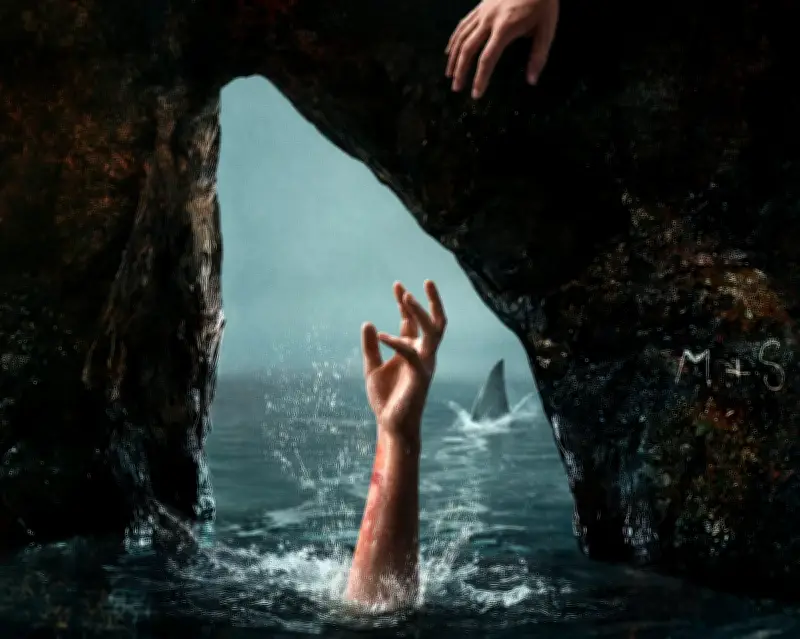
A wave of shark movies has hit screens in 2026, with at least six titles released so far this year, but none have come close to matching the cultural and cinematic impact of Steven Spielberg's 1975 classic, Jaws. This week, during Discovery Channel's annual Shark Week, two new entries—The Devil's Mouth on Prime Video and Above & Below as a paid VOD rental—join the feeding frenzy, yet critics note that the genre remains trapped in the shadow of its undisputed masterpiece.
Shark Movie Renaissance or Overstuffed Market?
According to industry observers, the surge in shark-themed thrillers reflects a sustained audience appetite for what are essentially aquatic slasher films. These movies tap into primal fears of the ocean, leveraging real-world footage of sharks from nature documentaries to ground their horror in plausible reality. However, the sheer volume of releases—including Clint Eastwood's daughter starring in The Bay (VOD), Chum starring Alice Eve in June, Renny Harlin's Deep Water in May, and Netflix hit Thrash earlier this year—has led to questions about quality control. As one critic noted, 'It's a wonder no one has arranged a 10th-anniversary re-release of The Shallows.'
The Unbeatable Benchmark: Jaws
The fundamental challenge for any shark movie is the existence of Jaws, which remains the gold standard. Spielberg's film combined a male-bonding character study, a critique of capitalism, and masterful suspense, all underscored by John Williams' iconic score. Unlike slasher genres, which have multiple classics to emulate (e.g., Psycho, Halloween), shark movies have only one universally acclaimed masterpiece. 'It put the fear of God in the audience,' said a film historian, recounting how Jaws reinvented summer blockbusters. Its sequels, however, descended into farce, with Jaws: The Revenge (1987) often cited as a nadir.

Post-Jaws Success Stories: Deep Blue Sea and The Shallows
A few films have managed to thrive in Jaws' wake by taking distinct approaches. Renny Harlin's Deep Blue Sea (1999) embraced bigger, faster, crazier elements with genetically modified sharks and a memorable cast including Samuel L. Jackson. Conversely, The Shallows (2016) stripped the formula down to a single character—Blake Lively stranded on a rock—grieving her mother while outwitting a persistent shark. Director Jaume Collet-Serra's minimalism proved effective, and the film has influenced subsequent entries like 47 Meters Down and Open Water, which focus on small groups of characters, often women, overcoming trauma through shark encounters.
2026 Releases: The Devil's Mouth and Above & Below
This year's Shark Week offerings illustrate the divide in the genre. The Devil's Mouth, directed by Jeff Wadlow, follows friends Kathryn Newton and Lana Condor on a swimming tour of a cave system in Thailand. The film attempts to replicate The Shallows' formula but is weighed down by over-explained character motivations—both leads have dead parents—and a poorly defined toxic friendship. Despite these flaws, location shooting and sparing use of shark effects make it a watchable knockoff. 'If Wadlow doesn't have B-movie mastery, he has B-minus-movie energy,' one reviewer commented.
Above & Below, directed by Jesse V. Johnson, takes a more chaotic route, blending a shark-cage dive with a criminal heist plot. Antonio Banderas plays the courteous but ruthless head criminal, but the fusion of literal and metaphorical sharks feels rote. The film borrows heavily from 47 Meters Down, focusing on oxygen conservation while trapped underwater, but adds shootouts above sea level. The result is 'two chintzy DTV movies in one,' according to a critic, offering little beyond a 90-minute time-saver.

The Visual Effects Challenge
Sharks remain a formidable visual effects challenge, especially for smaller productions. Neither CGI nor mechanical models consistently convince, and even big-budget attempts like Jason Statham's The Meg films have been criticized for poor-looking creatures. Renny Harlin's Deep Water (2026), a companion piece to Deep Blue Sea, combines a plane-crash survival story with sharks, but the sharks feel like afterthoughts compared to the human drama. 'Guess which component is more suspenseful and believable on screen?' asked a reviewer.
Sharkless Alternatives and the Future of the Genre
Some of the best recent survival thrillers avoid sharks altogether. Crawl (2019) used alligators in a hurricane setting to similar effect, while Fall (2022) featured two women stranded at great height without any creatures. These films demonstrate that the shark itself often adds little when effects are unconvincing. As one critic noted, 'Shark movies may be flashier offshoots of Shark Week, but apart from their inability to top Jaws, it's hard for them to compete with the eerie majesty of the real thing.' Spielberg's genius lay in what he didn't show, giving both the creature and human motivations space to breathe—a lesson most contemporary shark pictures have yet to learn.