Flagship indoor theme park costing millions forced to close after just three years. It was the company's flagship theme park and the first of its kind to be opened outside of Japan, yet it only managed to last three years after it proved to be unpopular with tourists.
A Promising Start That Fizzled Out
The indoor theme park did not live up to the high expectations set for it, despite having millions put behind its construction. The indoor theme park was set inside the London Trocadero and known as SegaWorld London when it first opened its doors in September 1996. This new and exciting attraction taking up seven floors of the building was a joint venture between Chorion, then-owners of the Trocadero, and Sega, a collaboration that didn't seem to work out.
Ambitious Scale and Features
It set out to be Sega's flagship European theme park at an impressive 110,000 square feet, and at the time, claimed the title of being the largest indoor theme park in the entire world. Despite all of these accolades, it wasn't enough to keep people coming through the door, and soon enough they had to bid farewell to London. From the get-go it was clear that their success would be short-lived as they suffered from bad reviews, and seemed to struggle with the sustained business model as well as management issues.
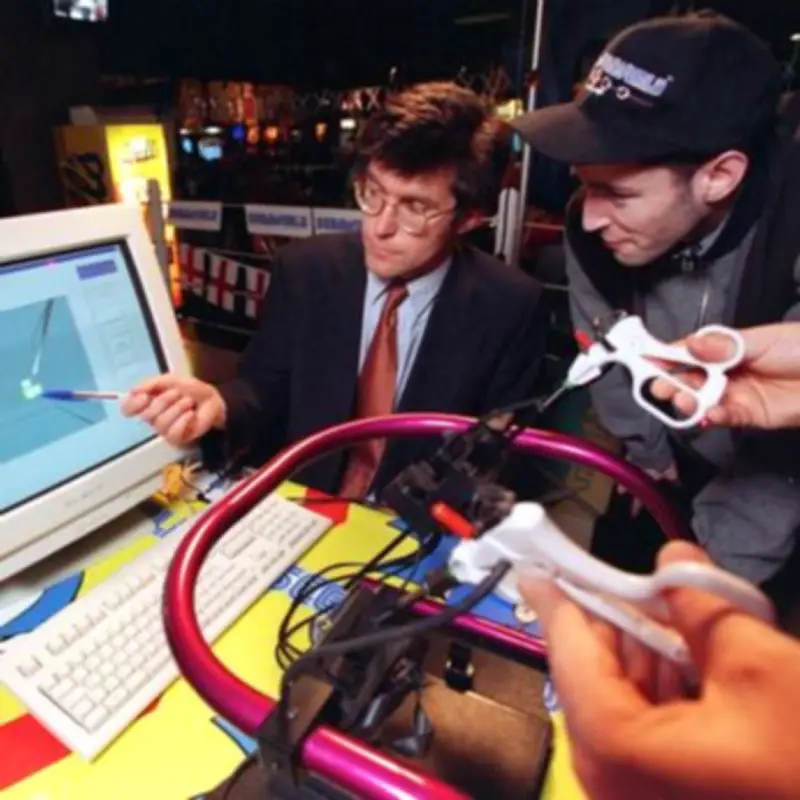
SegaWorld was supposed to model that of its Japanese park, Joypolis, including many of the same rides and bringing their Japanese flair over to the UK as a very first. Much of the floor space inside was taken over by arcade machines, many of which were imported versions of deluxe games that were rare to find anywhere else in the UK.
Inside, visitors had plenty to explore once they got taken up on the 'rocket escalator', with a race track, carnival and a whole floor dedicated to 20 'flying games' themed around aviation and aircraft. The final floor at the very top was the sports area, filled with over 90 sports-related games, including Virtua Striker, Sega Bass Fishing, and the unconventional SegaSonic the Hedgehog.
Rapid Decline and Financial Troubles
Despite all of this seemingly out-of-pocket entertainment on offer at the theme park, it wasn't long before people began to see through all the fun and pick fault. As early as their launch nights, people were beginning to talk, and the bad reviews were rolling in. Common problems cited included long queues, while others mentioned overpriced entry fees, and there was a general lack of enthusiasm for the allegedly 'futuractive' attractions on offer, which seemed neither interactive nor futuristic.
As a result, the opening of SegaWorld London was largely considered to be a PR disaster and solidified its status as a failure in the United Kingdom, which set an unfortunate precedent for its time there. By the end of the year it had cut the admission fees right down, originally costing £12 to enter the park and later costing a mere £2 - but it still wasn't enough. These changes didn't do much to help make their fortune, with a reported 1.75 million visitor target not achieved and a loss of £1 million from running the facility.
By December 1997 the park became free to enter, with the hopes of rendering enough money from the individually priced large-scale arcades and rides inside, which did see an increase in interest. While it's thought that an estimated four million visitors ventured to the site in 1998, their profit was practically nonexistent.
Final Closure and Legacy
After their best efforts it was officially announced on September 7, 1999, that Sega would be pulling out of the SegaWorld joint venture with Chorion. Immediately the space was sublet to Family Leisure, the operators of Funland in the same venue, and years later in 2024, they opened a new urban theme park in Stratford, London, known as Gravity Max.