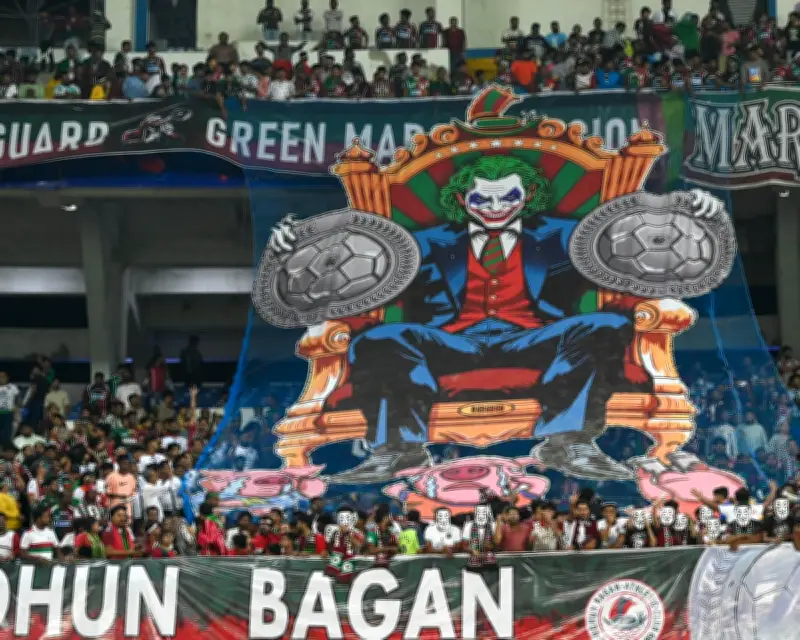
ISL returns with renewed hope after administrative turmoil
The Indian Super League (ISL) will kick off its new season on 4 September, aiming to harness the unprecedented interest generated by the recent World Cup. Despite India not participating, the tournament drew massive viewership across the country. Club chiefs believe this enthusiasm can translate into long-term growth for Indian football.
“The timing couldn’t be better,” says Ravi Puskur, chief executive of FC Goa, which won the Super Cup last season. “A World Cup that was not ideal in terms of viewing times has drawn strong interest and support from the Indian market. It does something a domestic league alone can’t do; it puts football at the centre of the conversation.”
Clubs gain control over commercial rights
The new season marks a significant shift in governance. The 14 ISL clubs have taken control of commercial, marketing, and sponsorship operations, while the All India Football Federation (AIFF) retains administrative oversight. This change follows the collapse of a 15-year masters rights agreement with Reliance, which caused a five-month delay to the 2025-26 season and a truncated 13-game campaign.

“When you’re not spending your energy firefighting administrative uncertainty, you can focus on building squads, fan experience and commercial partnerships,” says Puskur, who helped negotiate the new arrangement. “That’s the difference this year. The old model meant clubs had very little say in how the league was packaged and sold. Now the clubs hold the broadcast and sponsorship rights directly.”
Full season schedule and optimism for growth
The upcoming season will run for eight months with a complete 26-game home-and-away schedule. Shaji Prabhakaran, former AIFF general secretary, sees this as a fresh start. “The advantage is that they have resolved everything early and, at the moment, everyone is hooked on football, so finding broadcasters and investment should be easier.”
Prabhakaran emphasizes the need for long-term thinking. “Clubs have to think long term and look ahead four years and more. They have to strengthen every aspect. It can’t just be all about the first team. They need to ask where they want to be in 10 years.”
Broadcasting and youth development key
Securing a stable broadcasting partner is critical. “The initial value won’t be high, but the World Cup helps,” Prabhakaran notes. “They need a stable broadcaster who is ready to build the property and then think of monetising in three or four years.”
Puskur calls for real investment in youth and domestic talent to increase the player pool. “If ISL clubs can hold their own in the AFC competitions, that changes how the whole league is perceived.” Rebuilding public trust after last season’s disruption is also a priority. “Broadcasters, sponsors and fans all commit more when they trust the calendar won’t move under them.”
India’s World Cup dream
The World Cup has sparked a national conversation about India’s absence from the global stage. “The World Cup has energised the whole population,” Prabhakaran says, “and there is an obvious question: ‘Why India is not there?’ The next question has to be: ‘What are we doing to change that?’ So we have to support the clubs and the leagues and give these millions of football discussions that are happening somewhere to go now that the World Cup is over.”