The FIFA World Cup 2026 is nearing its conclusion, with the final between Spain and Argentina set for Sunday evening. Beyond the sporting drama, the tournament has reaffirmed its status as a geopolitically charged economic juggernaut, generating billions in spending and sparking debate over the role of money and soft power in football.
Economic Impact and Global Reach
FIFA estimates the tournament will add $40.9bn (£30.4bn) to global GDP, with the United States—the leading economy among co-hosts Canada and Mexico—accounting for nearly half. The World Cup's global reach is unmatched: Sunday's final is expected to draw an audience at least ten times that of the Super Bowl. During the 2022 Qatar World Cup, over half the world's population—about 5 billion people—watched at least part of the event, and with the expanded 48-team format, engagement is expected to be even higher.
While big events can boost local economies, the effects are not always clear-cut. Analysts at Goldman Sachs found only a marginally positive effect on host nations' output since 1982, with long-run gains virtually zero. Early analysis by the US Federal Reserve noted that while some bars in Boston saw a surge during Scotland fans' visits, economic weakness elsewhere—due to rising prices linked to the Iran war—mitigated the positive impact. Regular tourists also avoided host cities due to congestion and high prices.
Soft Power and Corporate Sponsorship
The World Cup is not just about money; it is a platform for soft power. FIFA's official sponsors highlight shifting global influence. Top-tier “partners,” believed to pay up to $200m, include Qatar Airways and Saudi Aramco, underscoring the dominance of fossil fuels and the influence of Gulf states. Legacy western brands like Adidas, Coca-Cola, and Visa remain, while Asian economies are represented by Hyundai-Kia and Lenovo. Lower-tier sponsors range from a crypto exchange to McDonald's, Frito-Lay, and even China's Mengniu Dairy as the “official dairy sponsor.” Some partnerships border on the absurd, such as Louis Vuitton's bespoke trophy trunk or Boggi Milano as FIFA's “official formal wear supplier.”
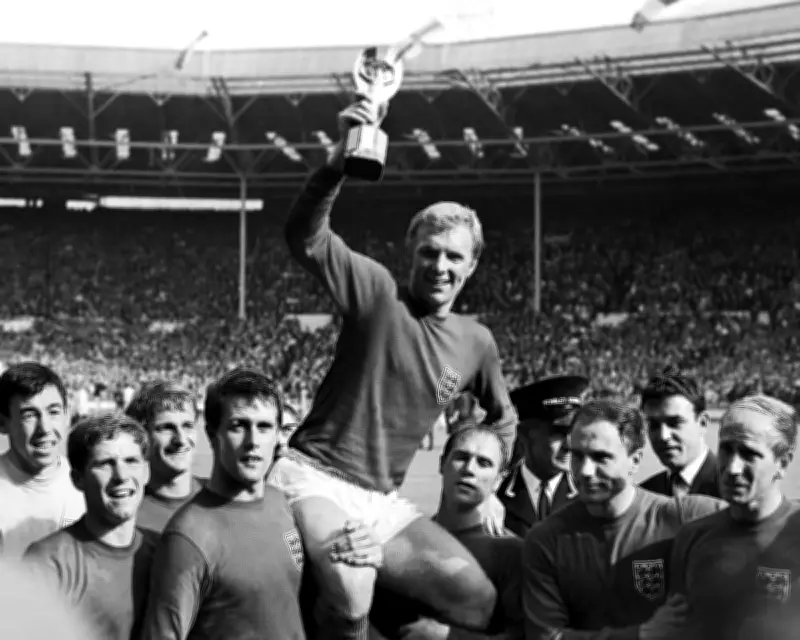
Sixty years ago, when England won in 1966, pitch-side advertising for Brylcreem and Gordon's Gin marked the first corporate creep. Today, the Rolling Stones—who once criticized consumerism in their 1965 song—have a “landmark collaboration” with FIFA to sell limited-edition vinyl covers and a remixed song for the official album.
FIFA's Revenue and Mission
FIFA is projected to earn more than the $7.6bn it made from the 2022 Qatar World Cup. The organization's mission includes growing football across its 211 member associations, funding grassroots, youth, women's football, and education programs. Despite the commercial whirl, the game still brings people together in a fragmenting world.
However, critics argue that corporate encroachment into a sport with deep working-class roots has tipped the balance too far. In an age of rising skepticism toward globalization and trickle-down economics, the tension between money and football's soul is increasingly fraught.