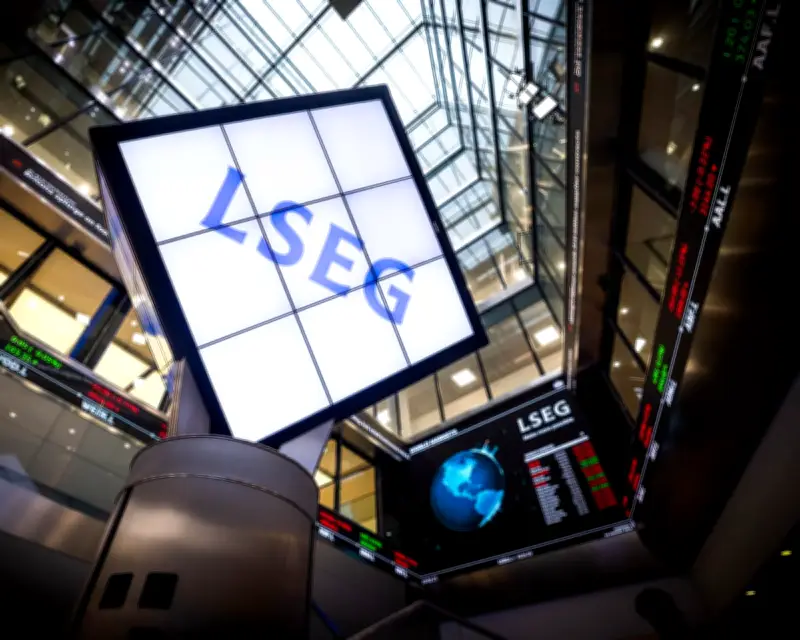
London's FTSE 100 stock index touched a fresh high on Wednesday, driven by strong corporate results as investors moved money away from tech and semiconductor stocks amid a global tech sell-off. The UK's blue chip index rose as high as 10,951 points in the morning before falling back slightly, its best level since 27 February, the day before US and Israeli attacks on Iran sparked stock market volatility.
FTSE 100 shielded by finance and energy focus
The FTSE 100 is heavily weighted towards finance and energy sectors, insulating it from the tech sell-off that rattled other global markets, particularly in Asia and New York. The Asia-focused bank Standard Chartered and miner Rio Tinto both announced a rise in shareholder payouts on Wednesday, boosting investor sentiment.
AI stocks plunge for second day
The FTSE 100's climb came as shares in AI-linked companies plunged for the second consecutive day over concerns about spending on the technology, sending stock markets in South Korea and Japan tumbling. The oil price continued to climb after the US military said it had knocked down an Iranian missile barrage and worked with Saudi Arabia's forces to strike sites in Iraq used by Tehran-backed militias. Brent crude reached $89.47 a barrel during afternoon trading in London, a rise of more than 6%.

South Korea's Kospi hit hard
Seoul's Kospi index, dominated by semiconductor manufacturers, fell as much as 12.6% at one point after disappointing results from chipmaker SK Hynix before rebounding. The index closed down 6% after falling almost 11% the previous day, reaching its lowest level since early April and marking an almost 40% fall from its peak a month ago. Trading was halted for 20 minutes for the second consecutive session after an 8% plunge triggered a market-wide circuit breaker.
Japan's Nikkei also falls
Japan's Nikkei closed 1.5% down on Wednesday, a two-month low. SK Hynix, which produces chips essential for AI datacentres, reported record profits for the second quarter but undershot investors' expectations, prompting a sell-off that drove its shares down by as much as 20% before they recovered to 10% down. Shares in fellow chipmaker Samsung Electronics also tumbled, closing 5% lower. The two companies account for more than half of the Kospi's market capitalisation, holding sway over the market this year.
Investors concerned about AI spending spree
Analysts said disappointment over SK Hynix's earnings highlighted concerns about how long tech companies could continue their spending spree on AI. Gary Tan, a portfolio manager at Allspring Global Investments in Singapore, said: "SK Hynix delivered strong results, but in today's AI market strong is no longer enough. Investors were looking for additional catalysts, particularly around long-term agreements and shareholder returns, to support a memory sector that has become the epicentre of the AI trade."
US chip stocks fall, Apple benefits
Shares in US chip companies fell on Wall Street on Tuesday, including Intel, Advanced Micro Devices, Sandisk, Western Digital Corp and Seagate Technology. Apple benefited from the falls as investors losing confidence in AI stocks sought a safe haven, with its shares briefly rising above the $5tn valuation mark, only the second company ever to do so. Shares in Taiwan's TSMC, the world's largest contract chipmaker, fell 3% on Wednesday in Taipei.
Small-time investors worsen sell-off
Analysts said small-time investors had led the charge on buying chipmakers' stocks, many using borrowed money, which pushed stocks higher in last month's rally but worsened the sell-off as many pulled their money out. South Korea's finance minister, Koo Yun-cheol, told the national assembly the government was reviewing market stabilisation measures.
FTSE 100 benefits from lack of tech exposure
Russ Mould, investment director at broker AJ Bell, said the FTSE 100 had been "helped by its lack of exposure to technology and AI stocks, and a slew of strong corporate results, with index heavyweights Standard Chartered, Reckitt Benckiser and Rio Tinto all delivering either better-than-expected profits, or bumper cash returns to shareholders, or both."