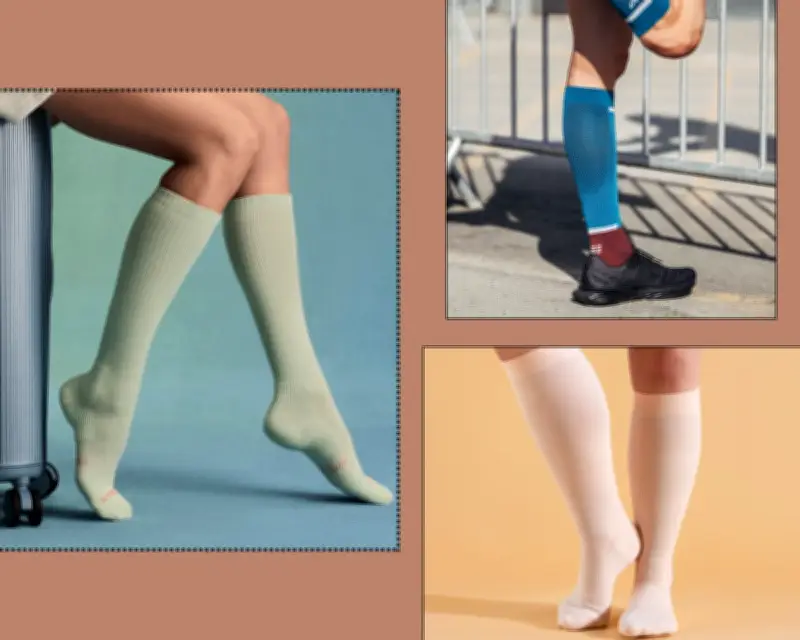
Compression socks provide relief during long flights, hours on your feet, or after surgery. Doctors say the best pairs are from Bombas, Physix, and Sockwell.
The Best Compression Socks at a Glance
- Best overall: Physix Gear Compression Socks 20-30 mmHg ($18.82 at Amazon)
- Best for everyday wear: Bombas Everyday Compression Knee-High Socks 15-20 mmHg ($30 at Bombas)
- Best for travel: Comrad Knee-High Compression Socks ($34 at Comrad)
- Best for physical activity: CEP Tall 4.0 Compression Running Socks ($47.96 at CEP)
- Best for standing all day: Sockwell Moderate Graduated Compression Socks ($32.95 at Sockwell)
The Five Best Compression Socks, According to Doctors
Best Overall: Physix Gear Compression Socks 20-30 mmHg
Dr. Miguel Cunha, DPM, a board-certified foot surgeon and founder of Gotham Footcare in Manhattan, recommends these socks as the best overall option for anyone who spends a lot of time on their feet. Made from a durable blend of nylon and spandex, these versatile socks alleviate leg stress while sitting and standing and are designed to improve circulation, reduce swelling, and decrease leg pain. They are machine-washable but should be air-dried.
Best for Everyday Wear: Bombas Everyday Compression Knee-High Socks 15-20 mmHg
“Bombas is a good, soft brand in general, but they also have [good compression socks],” says Dr. Ebonie Vincent, DPM, MBMS, a foot and ankle surgeon at Orange County Podiatry. She recommends a “moderate” level of compression – 15-20 mmHg – for daily wear. Bombas Everyday compression socks are made from a cotton blend and provide support for spending hours on your feet. They come in various colors including pink, blue, green, purple, and brown, along with standard black, white, and gray. The brand also offers a merino wool blend and a performance option with moisture-wicking materials.

Best Compression Socks for Physical Activity: CEP Tall 4.0 Compression Running Socks
For active individuals, the bestselling CEP Tall 4.0 compression running socks are a fantastic choice. They offer leg and ankle support, a secure fit, and are made mostly of nylon and spandex. The socks feature breathable mesh material on the calf and ankle, air channels in the footbed, and ventilation at the toe, providing 20-30 mmHg compression. They also have a padded footbed and CEP’s Smart Dry Technology to keep feet cool and dry.
Best Compression Socks for Travel: Comrad Knee-High Compression Socks 15-20 mmHg
For frequent flyers or aviation workers, Comrad’s knee-high compression socks come highly recommended from Dr. Cunha and thousands of customer reviews. “They are firm enough to be effective but not too tight,” wrote one customer. Another said, “I was skeptical of them working because nothing I’ve tried before has successfully alleviated my foot pain, but these are amazing.” The socks provide 15-20 mmHg compression that centers ankle support while decreasing compression on the leg to encourage healthy blood flow.
Best Compression Socks for Standing All Day: Sockwell Moderate Graduated Compression Socks
Prolonged standing can put pressure on your feet, legs, and back. Dr. Cunha recommends Sockwell’s Moderate Graduated compression socks. Made from a custom blend of merino wool, bamboo, rayon, stretch nylon, and spandex, they offer 15-20 mmHg of leg compression. There’s also a cushioned sole and arch support for added comfort, and they come in colors such as navy, khaki, black charcoal, and denim.

Everything Else You Should Know About Compression Socks
What Are the Benefits of Wearing Compression Socks?
Compression socks are commonly used for swollen legs from long bouts of sitting or standing, pregnancy, and health ailments such as lymphedema or diabetes. They also help athletes improve circulation and muscle recovery, and address circulation issues including deep vein thrombosis. According to Dr. Cunha, the socks help reduce lower-leg fatigue by decreasing muscle vibration. “Compression socks are specifically designed to decrease discomfort and improve blood flow circulation in the feet and legs by reducing swelling in the lower extremities due to gravity’s cumulative effects on the venous system,” he says. “They consistently apply gentle pressure to the feet and legs, and when worn correctly, they efficiently promote blood flow movement up from your ankles through the veins in your legs and back towards your heart.”
What Does Compression Mean?
Compression is measured in millimeters per mercury (mmHg), or “how much squeeze the sock will give,” says Dr. Vincent. “Typically anything mild – 8-15 mmHg – you can buy online. A moderate kind of compression – 15 to 20 mmHg – will be more for people who have varicose veins. Those are the people that I mostly see. People who stand for a long time.” Besides reducing swelling, discomfort, and varicose veins, compression socks can help prevent blood clots. Dr. Vincent wore compression socks during pregnancy and sometimes wears them to work. “With pregnancy, you’re carrying extra water weight and extra weight in general puts more pressure on your legs, so your vessels are also taking on the breadth of that. It’s definitely necessary for pregnant women to help their bodies out.”
What Level of Compression Do You Need?
Compression levels depend on “your goals and if you have any pre-existing medical conditions,” says Dr. Cunha. “For general health and wellness, travel, mild swelling and everyday comfort, I typically recommend that my patients look for socks with 15-20 mmHg of compression. For patients with more noticeable swelling, varicose veins or occupations requiring prolonged standing, I recommend 20-30 mmHg of compression. Higher compression levels are generally reserved for specific medical conditions such as venous insufficiency and should be used under the supervision of a healthcare professional.”
How Long Should You Wear Compression Socks?
Dr. Vincent recommends wearing compression socks for about eight hours at a time. “I wouldn’t recommend wearing them to sleep,” she adds. “Most people have their legs elevated even slightly, [from] lying horizontally. You won’t need the compression socks while you sleep [but] as soon as you wake up in the morning, put on those compression socks.”
How Comfortable Are Compression Socks?
“Keep in mind there’s a level of constriction,” Dr. Vincent says, which could become uncomfortable after more than a few hours. Compression socks can leave imprints on the skin, but that is a small price to pay for their benefits. “A lot of people don’t realize that surgery is a trauma, no matter how simple it is, because you’re cutting through layers. You have this lymphatic system that a lot of people ignore because you’re worried about your veins and arteries, which is kind of like the highway for all of your bodily fluids. You can heal that, no problem, but if it is a problem, it needs to be addressed with compression.”
What Are the Best Compression Socks for Men Versus Women?
There’s not much of a difference in compression socks for men versus women, says Dr. Cunha. “From a medical perspective, compression socks function the same way for men and women. Some brands offer gender-specific sizing and designs to better accommodate differences in foot shape, calf circumference and preferences in fashion.”
What Is the Best Material for Compression Socks?
According to Dr. Cunha, sizing, design, and material are the most important features. Socks made from soft, moisture-wicking materials such as spandex, nylon, and lycra are durable and comfortable. Breathable materials prevent sweating, while natural fibers like cotton might not be as cooling. A “seamless design” can improve comfort and reduce friction, while reinforced padding and support offer more comfort and stability. “Compression should feel supportive, not painfully tight or numbness-inducing,” says Dr. Cunha. “Well-made socks retain their compression over time and don’t lose their usefulness even after several washings.”