The construction of Westminster Underground station in the 1990s was one of London's most complex engineering projects, requiring engineers to lower existing tracks, protect Big Ben from subsidence, and manage the risk of flooding from the nearby River Thames. The station, which serves the Jubilee, District, and Circle lines, opened to the public on December 22, 1999, after years of careful work beneath a busy parliamentary area.
Engineering challenges beneath Westminster
Engineers faced multiple challenges when building the Jubilee line extension at Westminster. New platforms had to be created beneath a busy existing station, with Big Ben and the Palace of Westminster nearby, and the River Thames just metres away. Additionally, the station had to support Portcullis House, the parliamentary office building constructed above it.
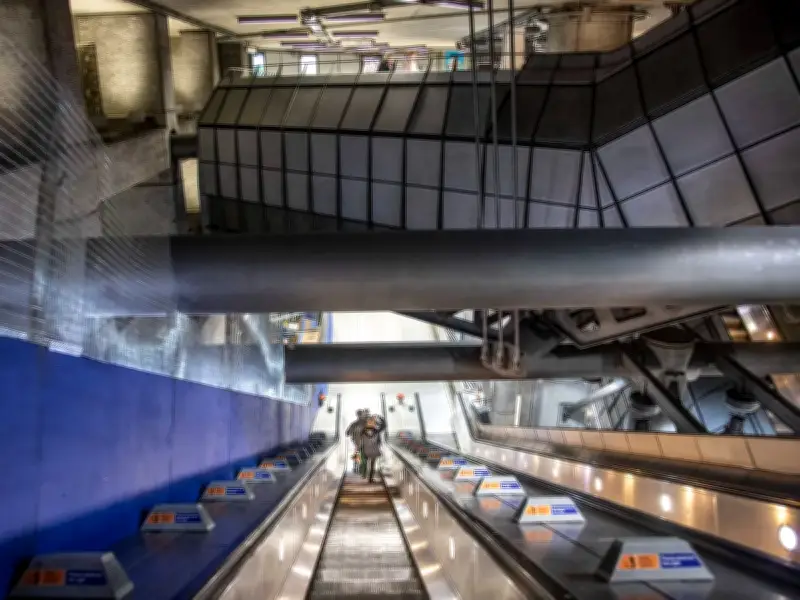
To accommodate the new layout, the existing District and Circle line tracks had to be lowered by about a foot. To keep trains running during the work, engineers supported a 130-metre section on a bridge-like structure while digging underneath. The tracks were lowered gradually at night, and below them, workers excavated a 30-metre-deep space for escalators leading to the Jubilee line platforms.

Protecting Big Ben and managing the Thames
Protecting Big Ben was one of the biggest challenges, as both the Elizabeth Tower and the Palace of Westminster were at risk of cracking and subsidence. The clock tower already leaned about 22cm towards the north-west before construction began, and digging nearby risked disturbing the ground supporting its foundations. Experts, including Professor John Burland of Imperial College London, who also worked on stabilising the Leaning Tower of Pisa, were brought in to offer their knowledge.
Engineers found a solution by installing steel pipes and pumping grout into the ground around the foundations to compensate for soil movement and limit further tilting. Throughout the work, they closely monitored the tower using a plumb line, a weight hanging on a string, with the angle of the string measured to check for any tilting, explained The B1M. An optical plumb was also used, which used a laser beam to create a vertical line, capable of tracking any movement within 10 millimetres.
Meanwhile, the works were threatened by the Thames flowing mere metres away. Workers reported water leaking through the excavation walls, and one wrong move could have seen the carefully constructed tunnels flooded, but that did not happen.
Completion and recognition
Construction took place in careful stages, allowing the team to check how the ground and tower responded before continuing. Keeping the tower stable, the works dry, and existing trains moving made Westminster an unusually demanding project, but it did not stop the station from opening successfully.
Since its opening, the station has won numerous awards for its distinctive futuristic design and was named one of Londoners' favourite 'transport design icons' in 2015.