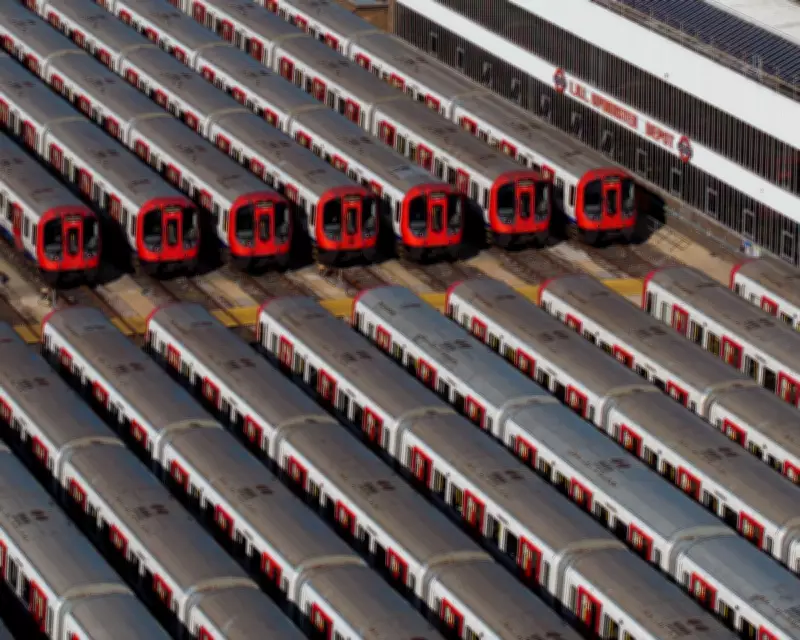
Hopes are rising that next week's planned strikes by London Underground drivers could be called off, as sources indicate the RMT union has initiated contact for talks. The strikes, scheduled for two 24-hour periods starting at midday on Tuesday and Thursday, threaten to close several tube lines and cause widespread disruption across the capital until the weekend.
The industrial action involves nearly half of London's tube drivers, who are members of the RMT union. They are protesting a proposed four-day week working pattern, which they argue imposes unacceptable conditions. A similar wave of strikes occurred in April, with further action planned for June if no resolution is reached.
Despite no formal talks having taken place, a source close to the dispute revealed that union representatives have reached out to seek a deal, presenting Transport for London (TfL) with a "window of opportunity" to prevent the strikes. The source stated that drivers are prepared for a prolonged campaign but emphasized that TfL needs to move from its uncompromising stance and offer new proposals that do not impose unacceptable working conditions.
Impact of the Strikes
If the strikes proceed, significant disruption is expected. The Circle line, Piccadilly line, and parts of the Metropolitan and Central lines in zone 1 will have no trains at all. Other tube lines will see reduced services, with early closures on Tuesday and Thursday and late starts on Wednesday and Friday. TfL has urged passengers to plan ahead and expect delays.
However, TfL stressed that alternative transport modes will operate normally, including the Elizabeth line, London Overground, DLR, and buses. Increased demand and traffic may slow some services, but data from the April strikes showed that overall TfL network patronage dropped only 13-14% on most strike days, with near-normal levels on Friday.
Bike hire companies reported increased usage: Lime saw about 20% more trips than average, while Forest reported rush hour hires up between 35% and 50%. Tube tap-ins fell 42-48% from Tuesday to Thursday but only 31% on Friday, suggesting many Londoners returned for evening leisure activities despite disruptions.
Union and TfL Positions
TfL's chief operating officer, Claire Mann, expressed disappointment over the planned strike action, emphasizing that the four-day week proposals are voluntary and designed to improve work-life balance. She noted that many drivers support the pilot on the Bakerloo line and urged the RMT to collaborate to resolve the dispute.
The RMT union declined to comment. Meanwhile, the Aslef union, representing a slight majority of tube drivers, has backed TfL's proposals. TfL maintains that the objections raised by the RMT can be addressed through further detailed work and has called on the union to withdraw the strike notice.
As the situation develops, Londoners and visitors are advised to check before traveling and allow extra time for journeys. The outcome of any potential talks remains uncertain, but there is cautious optimism that a resolution may be reached before the strike deadlines.