Underground Poetry Fails to Capture Tube Reality, Says Author
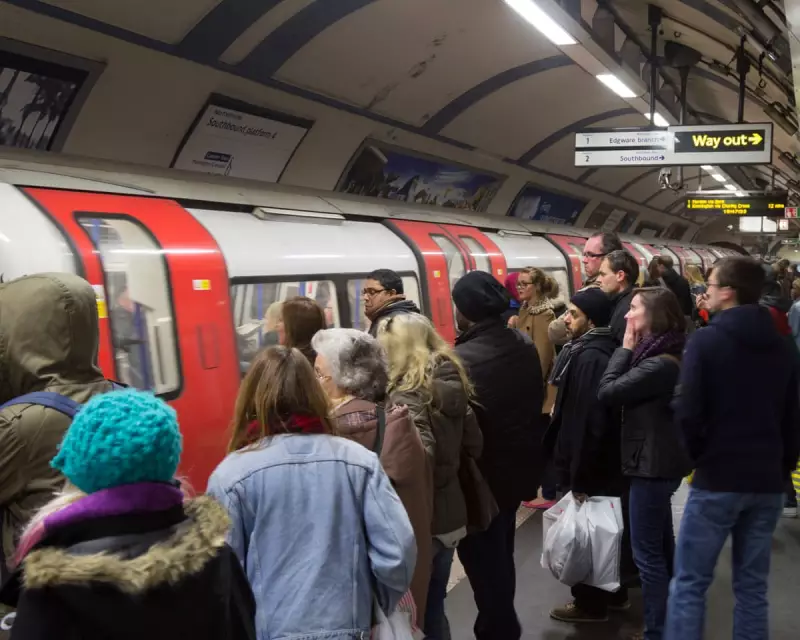
In a recent letter to the Guardian, Roger Tagholm has criticised the selection of poems featured in the long-running Poems on the Underground initiative, arguing that most fail to authentically reflect the experience of travelling on London's tube network. Tagholm, who published his own collection titled Poems NOT on the Underground back in 1996, claims this project was specifically designed to address what he sees as a significant oversight in the official programme.
While acknowledging Judith Chernaik's role in establishing the popular underground poetry scheme, Tagholm insists that very few of the chosen works have managed to capture the true essence of life down there in the depths of London's transport system. To illustrate his point, he offers a humorous adaptation of Philip Larkin's famous verse, reimagined for the Northern Line's particular frustrations.
A Poetic Take on Northern Line Frustrations
Tagholm's parody reads: They fuck you up, the Northern Line trains / They may not mean to, but they do / They say they're coming though Camden / Whereas you know they're stuck at Waterloo. The poem concludes with the lines: Governments hand on misery to man / It deepens like the Northern Line itself / Get off the trains as early as you can / And don't commute at all if you want your health.
This creative criticism highlights the daily realities faced by London commuters, from unexpected delays to the general stress of underground travel. Tagholm's letter suggests that poetry displayed in tube carriages should resonate more directly with these shared experiences, rather than offering abstract or disconnected verses.
Homer's Ancient Techniques for Modern Attention Spans
In a separate letter, John Keenan draws fascinating parallels between Homer's epic poetry and contemporary challenges with audience attention spans. Responding to recent discussions about cinema and streaming habits, Keenan points out that Homer, the ancient Greek poet, was already mastering techniques to manage listener focus centuries before the advent of Netflix or smartphones.
Keenan explains that The Odyssey, as oral poetry, couldn't rely on audiences remembering complex character details or intricate plot points. Instead, Homer employed repetitive descriptive phrases as mnemonic devices – describing Telemachus as sensible, Penelope as wise, and the sea as wine-dark throughout the narrative.
Relevance to Modern Storytelling
These techniques, Keenan suggests, remain remarkably relevant today. He references film director Christopher Nolan's approach to complex narratives, noting that if Nolan pauses action sequences to clarify plot points in his blockbuster films, he's essentially employing similar strategies to Homer's ancient methods.
The letter makes a compelling case that modern storytellers across various media could learn from Homer's understanding of audience psychology and attention limitations. In an age dominated by digital distractions and shortened attention spans, these ancient narrative techniques might offer valuable insights for contemporary creators trying to engage their audiences effectively.
Both letters published in the Guardian's correspondence section demonstrate how historical and cultural perspectives can illuminate current issues – from the daily commute on London's Underground to the challenges of maintaining audience engagement in today's media-saturated environment.