The £20 Billion Question: Can London's Tube Go Driverless?
London's iconic Underground network could undergo its most radical transformation in decades as proposals emerge to introduce completely driverless trains across the system. The controversial plan, which would eliminate human operators from Tube carriages, faces enormous financial and technical hurdles according to Mayor Sadiq Khan, who chairs Transport for London.
The Staggering Costs of Automation
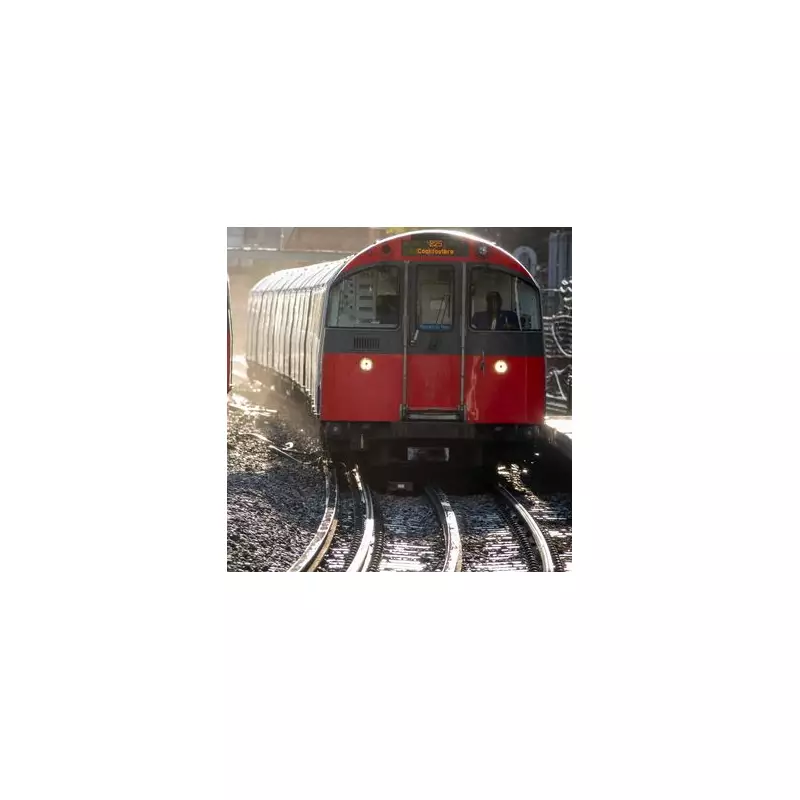
The Department for Transport estimates that converting just three sections of the Tube network to driverless operation would cost nearly £20 billion when accounting for 'optimism bias'. Specific breakdowns reveal £4.9 billion for the Piccadilly line, £4.4 billion for the Bakerloo line, and approximately £10 billion for the Central line conversion alone.
Mayor Khan explained that the most practical approach would involve coordinating automation with the introduction of new rolling stock, signalling systems, and platform edge doors as part of comprehensive line upgrades. The entirety of this work would cost billions of pounds on each line, he noted, making it an incredibly expensive proposition for a transport network still recovering from pandemic-related financial challenges.
Global Precedents and Technical Feasibility
Professor Sabih Khisaf, a fellow of the Institute of Civil Engineers and infrastructure lead at Hyperloop Transportation Technologies, points out that driverless metro systems are already operating successfully in multiple cities worldwide. Dubai, Doha, Vancouver, Singapore, Copenhagen and Paris all operate fully automated train lines, with Paris particularly outshining London with three converted lines and more in development.
Paris converted Line 1 to driverless operation in 2012, adapted Line 4 in 2024, and has operated Line 14 without drivers since 1998. The French capital continues its automation drive with Line 13 currently undergoing conversion for completion by 2035, plus four new automated lines planned as part of the £34 billion Grand Paris Express project.
Political and Practical Obstacles
Reform UK's sole London Assembly Member, Alex Wilson, told the Express his party would pursue progressive automation of Tube lines over time. However, the plan faces significant opposition from transport unions and practical challenges regarding London's unique infrastructure.
RMT general secretary Eddie Dempsey dismissed Reform's proposals as not serious, noting they would require a combined upgrade of rolling stock, signalling, and platform infrastructure across the entire network. Meanwhile, ASLEF general secretary Mick Whelan argued that passengers want a driver or pilot in place when technology fails, pointing out that even the automated Docklands Light Railway employs train captains who can operate trains manually when necessary.
A 2023 Department for Transport feasibility study found no inherent technical impediments to the conversion of most lines to full automation, though it acknowledged the London Underground's unique features would require careful consideration. The report characterized the economic argument for transformation as compelling but noted the substantial government investment required beyond existing capital requirements.
Dr. Piers Connor, another transport expert, labelled the prospect of driverless Tube trains a political myth, arguing that the annual interest on borrowing the necessary funds would exceed the cost of retaining drivers. He emphasized that older, more complex systems like London's present greater challenges for automation because they require more adaptive learning capacity during unexpected situations.
Professor Khisaf estimated that building a new automated metro line in a developed city would cost between £74 million and £148 million per kilometre, potentially more. He described a fully automated system as requiring a holistic rethinking of urban transit using cutting edge technology, including Communication-Based Train Control signalling, AI traffic management, predictive maintenance, and robust cybersecurity measures.
Despite the technical possibilities, Transport for London has clearly stated its position: There are currently no plans to introduce driverless trains on London Underground. With industrial action remaining a potential issue even with automation, given that humans would still be required for station operations, the driverless Tube appears to remain firmly in the realm of future possibilities rather than imminent reality.