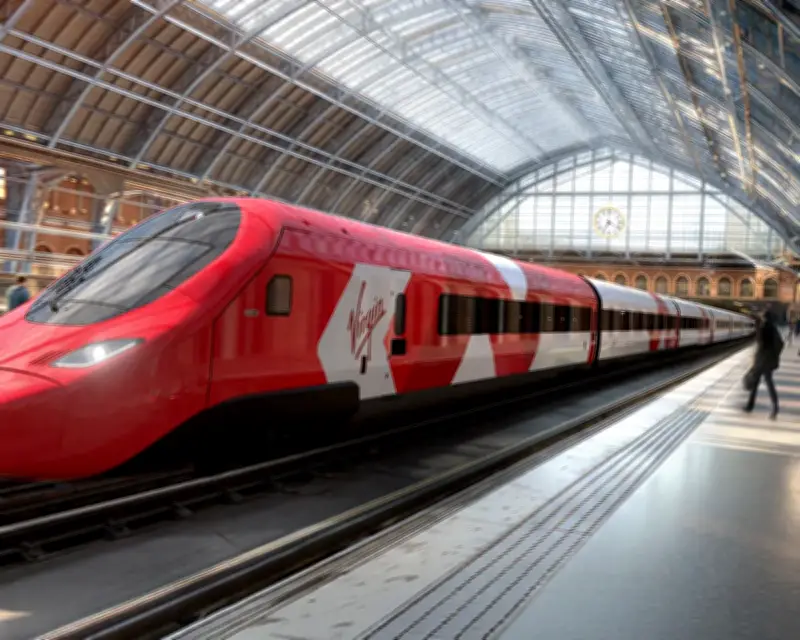
The Office of Rail and Road (ORR) has granted Virgin Trains track access on the High Speed 1 (HS1) line, enabling the company to run up to 20 daily return services between London and Paris, Brussels, and Amsterdam from 2030. This regulatory approval marks a significant step towards breaking Eurostar's long-standing monopoly on cross-Channel passenger rail services.
Regulatory Approval and Route Details
The ORR's decision covers the period from 1 October 2030 to 31 December 2040, allowing Virgin Trains to use the HS1 line that connects London St Pancras International to the Channel Tunnel. However, the approval only applies to the UK portion of the route; Virgin must still secure access to the tunnel itself and the rail networks in mainland Europe.
This approval follows a previous grant in October 2023, when Virgin was given access to share Eurostar's Temple Mills depot in east London for maintenance and storage—the only depot accessible from HS1. The company, founded by Richard Branson, has stated it plans to invest £700m in the cross-Channel project and create approximately 400 jobs in the UK.
Challenging Eurostar's Monopoly
Eurostar, formerly part-owned by the UK taxpayer but now controlled by French rail operator SNCF, has held a monopoly on passenger services through the Channel Tunnel since it opened in 1994. Eurotunnel operates the LeShuttle vehicle service on the same route. Eurostar has faced criticism over high prices and has reduced its network over the past decade, discontinuing services from Ashford and Ebbsfleet in Kent.
Branson has previously stated it is "time to end this 30-year monopoly and bring some Virgin magic to the cross-Channel route." Virgin plans to run services from St Pancras to the same stations in Paris, Brussels, and Amsterdam that Eurostar currently serves.
Growing Demand and Industry Response
The move comes as demand for international rail travel from the UK grows. Eurostar announced last year it would start running double-decker trains through the tunnel, and a joint UK-German taskforce is exploring direct trains from London to Berlin.
The ORR described the decision as "an important next step" but noted "still more work to do" before services can commence. Martin Jones, the ORR's deputy director of access and international, said: "This is an important next step in bringing competition and growth to the market for international rail services, and we welcome the progress Virgin Trains and London St Pancras High Speed have made. While there is still more work to do, we are supporting Virgin and the wider industry to grow international services."
Virgin must secure access to other rail networks and obtain safety approvals from the ORR and relevant EU regulators ahead of its planned 2030 launch. A Virgin Group spokesperson said: "Our plans for a new London – Europe rail service from 2030 are moving at pace. We welcome the ORR's pre-approval of our track access agreement and the opportunity to bring competition and Virgin's award-winning customer experience to the Channel tunnel."
Eurostar responded: "This confirms the huge potential for growth in international rail and the ambition across the industry to bring more passengers to Europe by train. Eurostar will play a full part in that growth, and our focus remains on delivering our own ambitious plans, investing in our fleet and carrying 30 million passengers a year."