As summer temperatures rise, UK railways are grappling with heat-related challenges that can disrupt services. Steel rails, overhead power lines, and signalling equipment all face vulnerabilities when temperatures soar, prompting the need for innovative mitigation measures.
Rail expansion and sun kinks
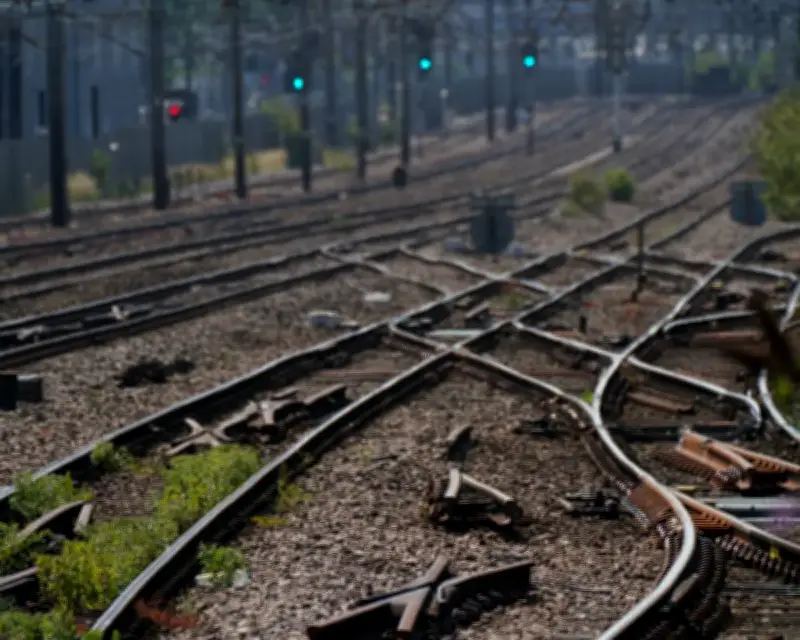
Railways in the UK are typically designed to operate within a 45C temperature range. When heat causes rails to expand slightly, excessive temperatures can lead to a phenomenon known as "sun kink," where rails warp into S-shapes. While the distortion is small, it can derail fast trains, so speed restrictions are often imposed for safety.
The issue is not limited to rails. Overhead power lines can droop under thermal expansion, and in extreme conditions, they may contact trees or other obstacles. Auto-tensioning systems, balancing weights, or springs can help adjust to changing conditions, but not all power lines have been upgraded to these standards.
Signalling equipment vulnerabilities
Signalling equipment housed in railside metal cabinets is another weak point. During a heatwave, the inside of these cabinets can reach 70C, causing electronics to fail. To address this, Southeastern has been testing IsoMat, a flat aluminium unit that attaches to a signal box and provides cooling. IsoMat is a passive heat exchanger with sealed internal channels filled with liquid that evaporates and condenses, drawing heat away from sensitive electronics.
These problems are not entirely new, but they are becoming more frequent as climate change brings hotter summers. The railway industry is exploring various mitigation strategies, including painting tracks white to reflect heat, as seen at Alexandra Palace train station in London, and investing in advanced cooling technologies.
Future investment and resilience
Hotter summers should drive investment in mitigation measures, ensuring that delays due to excessive heat become less rather than more frequent. The focus is on making the railway network more resilient to extreme weather, which is crucial for maintaining reliable services in a warming climate.
As the UK experiences more heatwaves, the need for proactive adaptation becomes increasingly urgent. The industry's response will determine how well the railways cope with future temperature extremes, balancing safety with efficiency.