Stonehaven Train Derailment Inquiry: Network Rail's Over-Reliance on Contractor Revealed
The fatal accident inquiry into the devastating Stonehaven train derailment has heard compelling evidence that Network Rail placed "too much reliance" on the contractor responsible for building a faulty drainage system that led to the tragedy. The inquiry, which began on Monday before Sheriff Lesley Johnson, is examining the circumstances surrounding the crash that claimed three lives and injured six others in August 2020.
The Tragic Loss of Life
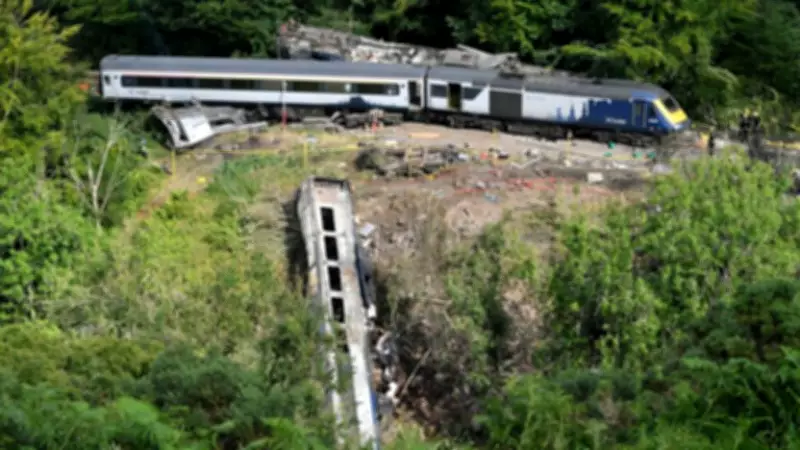
Train driver Brett McCullough, aged 45, conductor Donald Dinnie, 58, and passenger Christopher Stuchbury, 62, all suffered unsurvivable multiple blunt force injuries in the derailment at Carmont near Stonehaven, Aberdeenshire. The accident occurred on 12 August 2020 when the ScotRail service from Aberdeen to Glasgow Queen Street hit a pile of gravel washed onto the track by heavy rain before striking a bridge barrier.
Mr Stuchbury died on his wedding anniversary, with his wife stating the tragedy "robbed" them of their future together. Nick Bucknall, an inspector with the Rail Accident Investigation Branch, told the inquiry that casualty numbers would likely have been "significantly higher" had the train been full, noting passenger counts were low due to COVID-19 restrictions.
Faulty Drainage System Construction
A RAIB report published in March 2022 identified critical errors in the construction of a drainage system installed by contractor Carillion. The system proved unable to cope with the heavy rainfall that fell on the morning of the crash. Mr Bucknall explained that gravel within the drainage trench was "vulnerable to washout" and that Network Rail lacked adequate operational mitigation arrangements.
The inquiry heard that Carillion failed to build the drainage system according to the agreed design, and neither Network Rail nor designer Arup were aware of these deviations. Mr Bucknall described the transfer of safety-related information as "ineffective," suggesting that proper processes might have identified the construction flaws and prompted remedial action.
Contractor Self-Assurance and Oversight Failures
William McKay, Network Rail's former project manager for the drainage project that began in 2010, testified that Carillion had been permitted to "self-assure" its own work as a large, competent contractor and key supplier. He revealed that Carillion failed to provide the legally required "health and safety file" at project completion, which should have included "as built" drawings and photographs showing actual construction.
Sheriff Johnson questioned whether Network Rail's approach effectively allowed Carillion to "mark its own homework" through insufficient oversight. Mr McKay agreed, stating that had Network Rail known about design deviations, construction would have been halted and concerns raised with both Carillion and Arup.
Safety Improvements and Modern Standards
Since the tragedy, significant safety measures have been implemented at the crash site. A new drainage system with improved capacity and washout prevention features has been installed, while guard rails have been fitted on approach tracks to prevent derailed trains from striking bridge structures.
Scotland's Railway has established a permanently staffed weather desk to monitor conditions and advise on precautionary actions. The inquiry also heard that the 50-year-old coaches involved lacked modern safety features, with RAIB principal inspector Dominique Louis stating outcomes "would have been better" with contemporary crashworthiness standards.
Legal Consequences and Ongoing Proceedings
Network Rail was fined £6.7 million in 2023 after pleading guilty to health and safety failings contributing to the deaths. In the same year, nearly £1 million in damages was secured for seven people affected by the crash. Carillion, which entered compulsory liquidation in January 2018, is not participating in the ongoing fatal accident inquiry, which continues to examine the complex circumstances of this preventable tragedy.