Spain's railway network has been plunged into crisis following two devastating accidents within days, prompting the country's largest train drivers' union to call for immediate industrial action. The Spanish Railway Drivers' Union (Semaf) has announced a three-day nationwide strike scheduled for 9th to 11th February, demanding urgent measures to restore safety standards across the rail system.
Deadly Collisions Spark Safety Concerns
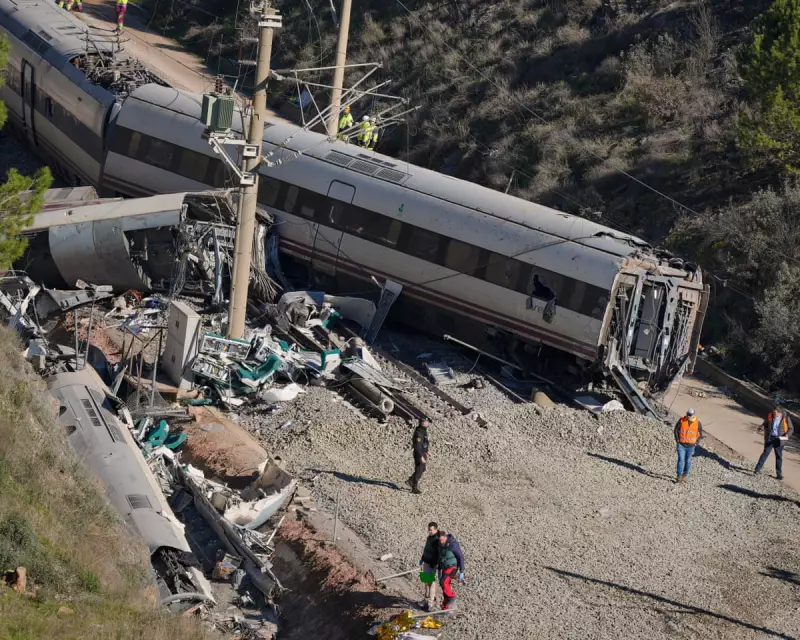
The industrial action comes in response to two separate but equally tragic incidents that have claimed at least 44 lives this week. The first catastrophe occurred on Sunday evening near the town of Adamuz in southern Spain's Córdoba province, where two trains collided with devastating consequences. At least 43 people lost their lives in this collision, with dozens more sustaining serious injuries.
Just two days later, another fatal incident unfolded near Gelida in Catalonia, where a train derailed following the collapse of a retaining wall. This second accident claimed the life of a driver and left 37 passengers injured. Adding to the week's troubling events, a commuter train in Murcia collided with a crane on Thursday, though fortunately this resulted only in minor injuries.
Union Demands Immediate Safety Improvements
Semaf has declared the strike action as "the only legal avenue left for workers to demand the restoration of safety standards on the railway system." The union has emphasised that their primary concern is guaranteeing the safety of both railway professionals and passengers across Spain's extensive rail network.
The union leadership has pointed to what they describe as "numerous reports" highlighting poor track conditions that have allegedly gone "unanswered and inactive for months, or even years." They maintain that the recent tragedies in Adamuz and Gelida represent a critical turning point that demands immediate action from relevant authorities.
Investigations Underway as Political Tensions Rise
Investigators continue to examine the wreckage at the Adamuz crash site, where preliminary findings suggest a possible connection to a 30-centimetre crack discovered in the track. Transport Minister Óscar Puente has confirmed that marks have been found on the wheels of multiple trains that travelled along the affected stretch, though the exact cause remains undetermined.
Minister Puente has expressed understanding for drivers' concerns while hoping the strikes might be averted. He has stressed that the two major accidents were "completely unrelated," noting that the Gelida incident appears to have been caused by heavy rainfall. The minister has called for calm during what he described as "a very difficult week" for Spain's railway community.
Political Reactions and Regional Disruption
The tragedies have inevitably become entangled in Spain's political landscape. The far-right Vox party has seized upon the accidents as evidence of declining rail safety standards, while the conservative People's Party has demanded greater transparency from the transport ministry. Government representatives have condemned what they describe as political exploitation of the tragedies.
Beyond the planned nationwide strikes, drivers have already initiated stoppages that have effectively shut down Catalonia's regional rail services, affecting approximately 400,000 daily commuters. This regional disruption provides a preview of the potential nationwide impact should the three-day strike proceed as announced.
The coming days will prove crucial for Spain's railway system as authorities balance investigation priorities, union demands, and the pressing need to restore public confidence in rail travel safety following one of the most traumatic weeks in recent Spanish transport history.