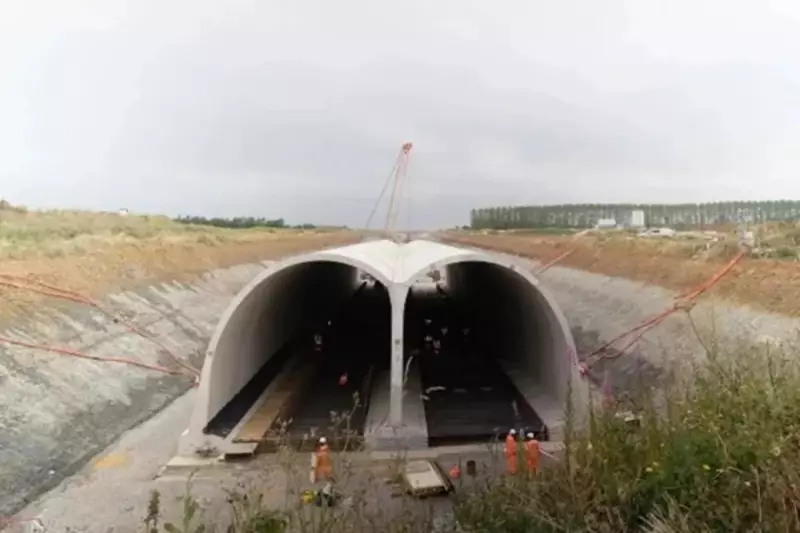
HS2 Euston Tunnelling Kicks Off with Urgent Call for Regeneration Strategy
This week marks a pivotal moment for the High Speed 2 project as tunnelling finally begins for the crucial link connecting London Euston to Old Oak Common. The long-awaited commencement of this phase has sparked renewed demands from business leaders for a robust and credible plan to regenerate the surrounding area, ensuring the infrastructure delivers lasting economic benefits.
Business Group Insists on Clear Vision for Euston's Future
Business LDN, a prominent London business group, has welcomed the start of tunnelling as a significant milestone but emphasised that it must be accompanied by a concrete blueprint for Euston's transformation. The group's communications and campaigns director, Sanjay Odedra, stated that a comprehensive reset of the HS2 programme is essential, including a clear and credible plan for Euston as the London terminus. This call to action underscores the need to move beyond construction milestones and focus on tangible community and economic outcomes.
Decades of Uncertainty and Recent Progress
The connection to Euston has been mired in uncertainty for years. In 2023, reports suggested that HS2 might not reach Zone 1 without private sector investment, before plans were revived under the Labour government the following year. Now, with tunnelling underway, two massive tunnel boring machines, named Karen and Madeleine, will excavate a 4.5-mile tunnel over the next eighteen months. Each machine weighs 1,250 tonnes and measures 190 metres in length, capable of digging as deep as 50 metres underground.
Local Council Advocates for Specific Regeneration Goals
Camden Council has long campaigned for detailed regeneration plans aligned with its Euston Area Plan framework. The local authority has pushed for the HS2 extension to deliver substantial local benefits, including the creation of 2,500 new homes and 15,000 jobs on site. This highlights the ongoing tension between national infrastructure projects and local community needs, with councils seeking assurances that development will address housing shortages and boost employment.
Chronic Challenges Plague the HS2 Project
Despite this week's progress, HS2 continues to face significant hurdles. The project has been plagued by chronic delays and construction setbacks, with costs ballooning by more than £37 billion since 2012. Current estimates suggest the overall project could exceed £100 billion. In June, Transport Secretary Heidi Alexander criticised the litany of failures that have riddled the project, announcing a further two-year delay pushing delivery to 2033.
Political Controversy and Future Uncertainty
Political opposition has further complicated HS2's trajectory. Former Prime Minister Rishi Sunak cancelled plans for the Northern leg at the 2023 Conservative party conference, while Reform leader Nigel Farage, who has led national opinion polls, has advocated for scrapping the entire project. Farage told MPs that it is time to recognise the project as a mistake and abandon it altogether. These political dynamics add layers of uncertainty to the project's long-term viability and public support.
The start of tunnelling offers a glimmer of hope for HS2, but it also amplifies the urgent need for a coherent regeneration strategy. As the machines begin their underground journey, stakeholders from business groups to local councils are watching closely, demanding that this infrastructure investment translates into real growth and opportunity for London and beyond.