West London Council's Hammersmith Bridge Expenditure Surpasses £50 Million Mark
Newly released data has revealed that Hammersmith and Fulham Council has spent more than £50 million on Hammersmith Bridge since its partial closure to motor vehicles seven years ago. The Grade II*-listed suspension bridge, which connects the borough of Hammersmith with Barnes in West London, has required substantial investment to maintain stability and safety while awaiting full restoration.
Bridge Closure and Ongoing Access Restrictions
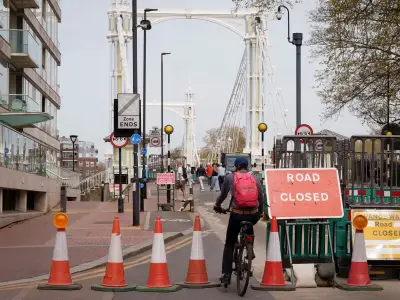
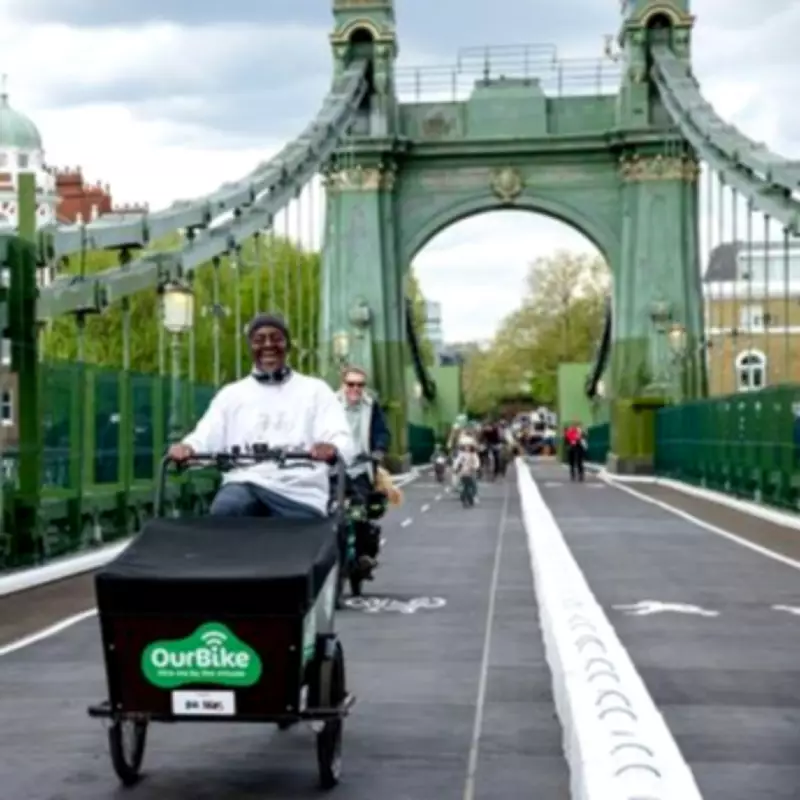
The historic crossing was initially shut to all motor vehicles in 2019 after engineers discovered dangerous micro-fractures in its pedestals. The following year saw a temporary closure to all users before limited access was restored. Currently, the bridge remains open exclusively to pedestrians, cyclists, and river traffic, with cars and other vehicles continuing to be prohibited from crossing.
Council officials have emphasised that significant expenditure has been necessary to ensure the structure remains stable and safe for the limited users currently permitted. The bridge, constructed in 1887, represents one of the world's oldest suspension bridges and consequently presents unique engineering challenges that contribute to its repair costs.
Funding Dispute and Restoration Cost Allocation
The complete restoration of Hammersmith Bridge has become a contentious financial issue, with total costs estimated to exceed £250 million. According to a 2021 funding agreement established by the previous government with Transport for London, the financial responsibility was divided into thirds: Hammersmith and Fulham Council would cover one portion, while TfL and the Department for Transport would each contribute another third.
This cost-sharing arrangement has been described by the council as "an unprecedented move," noting that traditionally such infrastructure projects would be fully funded by the DfT or regional government authorities. To finance its share of the restoration, the council has indicated that implementing a toll system would likely be necessary.
Detailed Breakdown of Expenditure and Funding Contributions
In its recently published Four Year Capital Programme covering 2026 to 2030, Hammersmith and Fulham Council disclosed that as of October last year, £54 million had been spent on the bridge. This substantial sum comprises £37 million allocated to stabilisation works and £17 million dedicated to pre-restoration preparations.
The council reports that the Department for Transport has contributed £13 million toward these costs thus far, while Transport for London has provided £2.9 million. However, Hammersmith and Fulham Council maintains that it is owed an additional £20.2 million from these two parties, a claim that the DfT has contested.
A Department for Transport spokesperson clarified their position, stating: "The repair and maintenance of Hammersmith Bridge is the responsibility of London Borough of Hammersmith and Fulham. We have already provided £17 million to keep the bridge open for walking and cycling, and will continue to work closely with the council and Transport for London on this."
The spokesperson further explained that the agreed cost-sharing arrangement specifically applies only to the stabilisation and strengthening phases of engineering works, not to broader restoration expenses.
Transport for London's Involvement and Future Funding Discussions
Transport for London has confirmed its ongoing support for the bridge project, with a spokesperson noting: "We have been supporting the London Borough of Hammersmith and Fulham, who are the owners and highway authority for the bridge, for a number of years. We have contributed £3 million towards stabilisation works and have also spent £16.7 million on assessments, feasibility studies, inspections and surveys, designs and other related matters."
TfL emphasised their continued collaboration with the borough council, the Department for Transport, and other stakeholders to determine the most appropriate solution for the bridge's future while simultaneously working to establish funding mechanisms for any forthcoming restoration works.
Alternative Design Proposals and Political Suggestions
Since the bridge's partial closure, several alternative design concepts have been proposed by various architectural and engineering firms. One notable suggestion came from architect studio Sybarite and engineering firm Buro Happold, who pitched an innovative design featuring two curved roads built alongside the existing crossing to accommodate motor vehicles.
Meanwhile, the council's opposition Conservative group has put forward the idea of constructing a new military-style temporary crossing that would enable repair work to proceed on the original structure without completely disrupting local transportation networks.
Awaiting Government Decision on Funding Allocation
Hammersmith and Fulham Council initially submitted its comprehensive business case outlining restoration and reopening plans to the previous government in December 2022, with formal submission occurring in March 2023. The council currently awaits approval and potential funding allocation from the government's new £1 billion Structures Fund, which is designated for transport infrastructure projects including bridges, tunnels, and roads throughout the country.
A council spokesperson expressed cautious optimism, stating: "Following the submission of our bid last year, we are currently waiting to hear whether the Grade II*-listed bridge has been allocated money in the new £1 billion Structures Fund for transport infrastructure including bridges, tunnels and roads."
The ongoing situation highlights the complex challenges facing historic infrastructure in London, where preservation needs intersect with modern transportation requirements and substantial financial considerations.