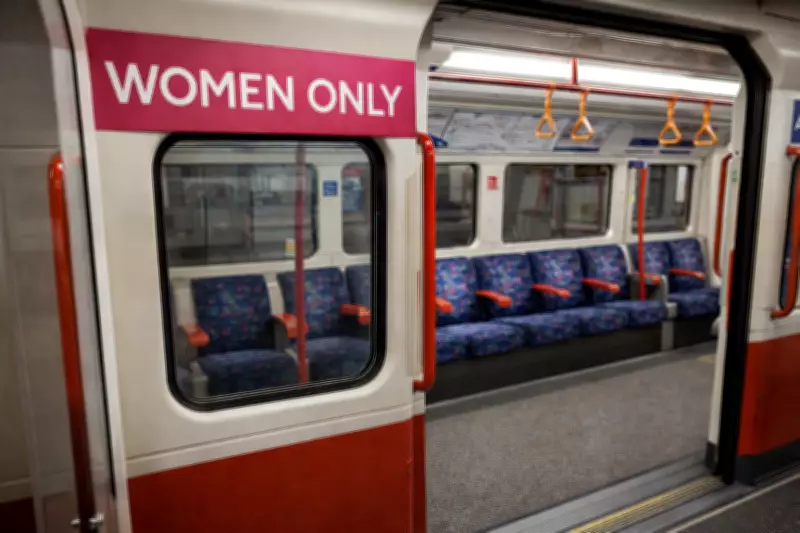
The Recurring Debate Over Women-Only Tube Carriages
Every few years, the contentious proposal for women-only carriages on the London Underground resurfaces in public discourse. The latest iteration comes via a change.org petition that has garnered nearly 15,000 signatures since September 2025. This renewed interest coincides with troubling statistics: sexual offences on the Tube averaged 2.6 assaults per day in 2025, marking the highest level in five years.
The Allure of Segregated Spaces
Proponents point to international precedents in countries like Japan, Brazil, India, Egypt, the UAE, Saudi Arabia, and Mexico where gender-segregated transport exists. The fundamental appeal is understandable – using public transport, particularly during peak hours on London's crowded network, can be a frightening experience for women and girls. The rising incidence of sexual offences suggests the problem is worsening rather than improving.
However, as former Boris Johnson transport adviser James Ford argues, if segregation becomes the default solution to criminal behaviour, we're asking fundamentally wrong questions about public safety.

The Practical Impossibilities
Beyond ethical considerations, women-only carriages present insurmountable practical challenges. During rush hours, navigating packed platforms to reach designated boarding areas would prove difficult for all passengers. Without substantial TfL staff presence on platforms and within carriages – a resource-intensive proposition – preventing men from boarding would be virtually impossible. Predators, by definition, don't adhere to honour systems.
Furthermore, such measures might simply displace criminal activity rather than eliminate it. Sex offenders could shift their attention from train carriages to crowded platforms, concourses, or escalators. The proposal also fails to address safety concerns across London's broader transport network including buses, riverboats, and the cable car system.
The Segregation Precedent Problem
Establishing segregation based on protected characteristics sets a concerning societal precedent. While well-intentioned, such policies risk normalising division rather than addressing root causes of antisocial behaviour. The optics of segregation – regardless of its stated purpose – rarely reflect well on a progressive, modern city like London.
A Better Path Forward: Enhanced Security
The most effective approach to protecting all passengers involves substantial investment in policing and physical security across the Underground network. A stronger, more visible uniformed presence would not only detect and deter sexual predators but address a spectrum of issues contributing to passenger anxiety including fare evasion, graffiti, drunkenness, fighting, begging, and other antisocial behaviours.
TfL's own surveys reveal the urgency of this matter. In the first half of 2025, 39% of passengers reported feeling worried while using London's transport network. Nearly one in ten Londoners said worrying incidents had deterred them from using public transport either temporarily or permanently.
The Financial Argument for Proper Policing
Critics might argue that women-only carriages represent a cheaper solution than comprehensive security improvements. However, TfL's current losses tell a different story. The organisation spends approximately £11 million annually cleaning graffiti while losing an estimated £190 million in revenue each year due to safety concerns deterring passengers.
To put this in perspective, that £190 million could fund approximately 4,500 newly qualified police officers or 5,400 Police Community Support Officers (PCSOs). The current regime – with insufficient police numbers spread thinly across the network and blurry CCTV filling gaps – clearly isn't working. Passengers, trains, and fare revenues remain inadequately protected.

Conclusion: A Simple, Sound Solution
While properly policing the London Underground might seem like an unoriginal idea, it remains fundamentally sound. Rather than implementing problematic segregation measures that address symptoms rather than causes, London needs a step change in transport security. Investing in visible, effective policing would protect everyone using the network – women, men, and children alike – while addressing the broader spectrum of criminal and antisocial behaviour undermining confidence in public transport.
The solution to London's transport safety crisis isn't separating passengers but creating an environment where all can travel without fear through proper investment in security infrastructure and personnel.