South Wimbledon Residents Endure Decades of Underground Disruption
For residents living along Melbourne Road in South Wimbledon, the constant rumble of Northern line trains has become an inescapable part of daily life. Every three minutes, trains traveling at 35 miles per hour between Morden and South Wimbledon stations create what locals describe as "disturbing" noise and vibrations that shake their homes.
A Growing Problem That's Getting Worse
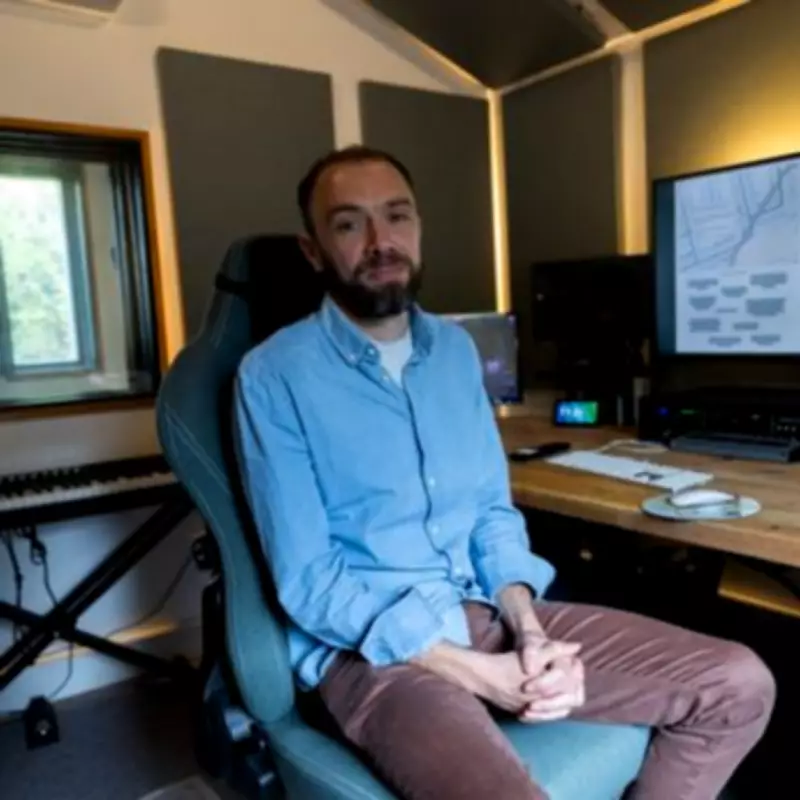
Sam Featherstone, an audio engineer who moved to the area seven years ago with his wife and young daughter, says the situation has deteriorated significantly. "It's a complete nuisance," Featherstone explained. "We don't have any control over it and we're all at the whims of TfL." The vibrations are so severe that they affect his professional work in his soundproofed garden studio and regularly disrupt his sleep.
Neighbors report similar issues: pictures falling from walls, difficulty watching television without turning up the volume, and cracks appearing near doorframes. Angela Bass-Moore, who has lived on Melbourne Road for 40 years, claims the current situation is the worst she has experienced in four decades. "Things fall off shelves and you just think 'oh the Tube,'" she said. "It's just one train after the other during rush hour so the whole house rattles."

The Technical Challenge of a Curved Track
The problem stems from Melbourne Road's location above a curved section of track between Morden and South Wimbledon stations. This curvature causes faster wear and tear, leading to trains creating a clanking sound as they bounce along increasingly uneven tracks. While rail-grinding can temporarily reduce noise and vibrations, residents claim TfL has struggled to maintain a regular maintenance schedule.
"When we moved in seven years ago they did a bunch of work and it was much better," Featherstone recalled. "But it's just got worse and worse and worse. They've previously said they'll do it every six months but the northbound track has not been done for four years."
TfL's Response and Ongoing Challenges
Transport for London has acknowledged the issue, with South Wimbledon identified as one of 11 priority areas across the Tube network where engineers are tackling noise and vibration problems. In February, rail-grinding was completed on the southbound tunnel after local representative Hina Bokhari raised the matter at the Greater London Assembly.
A noise investigation conducted in October 2025 recorded levels at 46 decibels in a nearby home - the highest since December 2018, though still below the 35 decibels achieved after significant work in 2020. TfL Chief Operating Officer Claire Mann has outlined plans to re-rail a portion of the track and trial a new rail-grinding machine that could eventually address issues in South Wimbledon.
The Human Impact of Constant Disruption
For residents, the psychological toll is as significant as the physical damage to their properties. "It's very disturbing, it doesn't make you feel good," Bass-Moore explained. "You have to have the TV up because you can't hear it much."
Featherstone, whose career depends on precise audio work, finds the constant vibrations particularly challenging. "There are sirens, busy roads nearby, planes from Heathrow fly overhead which you accept when living in London," he said, "but the one constant is the rumble from the Tube."
Despite their frustrations, residents emphasize they're not asking for complete silence. "We're not asking for silence," Featherstone clarified. "We just want manageable levels of noise and vibrations we can happily deal with."
The situation highlights the ongoing challenge of balancing efficient public transportation with quality of life for those living near London's extensive underground network. With TfL citing resource constraints and the complications of increased service frequency - including Night Tube operations that reduce maintenance windows - residents continue their decades-long push for a permanent solution to what they describe as an "impossible" situation.