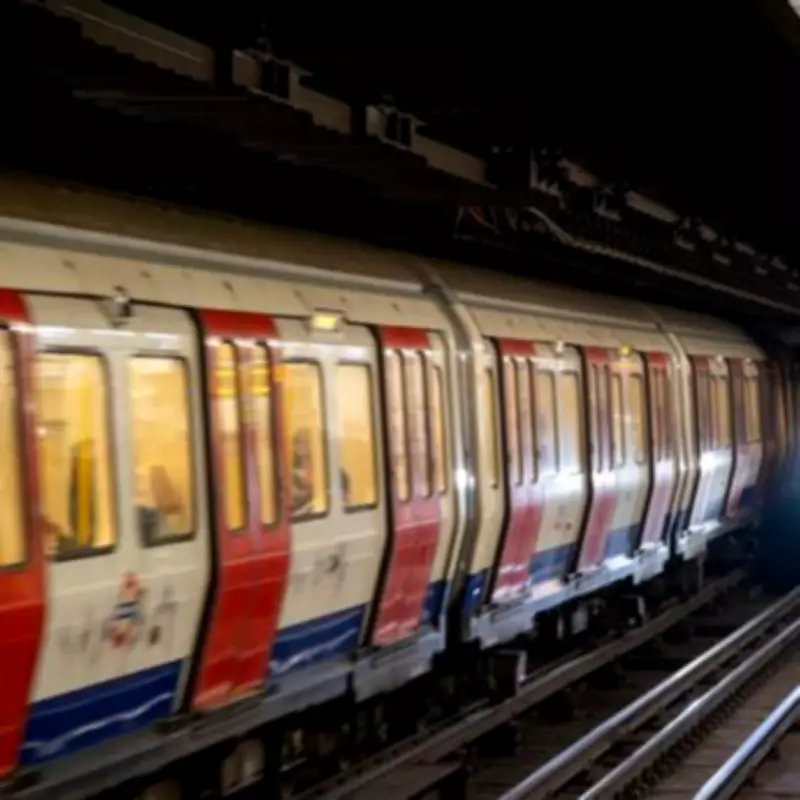
Tube Strikes Confirmed as Union Says TfL Talks Have 'Baffled Our Negotiators'
Strikes by London Underground drivers will proceed next week, threatening significant travel chaos for commuters and visitors across the capital. The Rail, Maritime and Transport union (RMT) has confirmed that its members will walk out for 24-hour periods on Tuesday April 21 and Thursday April 23, beginning at noon each day.
Union Expresses Frustration with TfL's Approach
RMT general secretary Eddie Dempsey stated: "We have approached negotiations with TfL in good faith throughout this entire process, but despite our best efforts, TfL seem unwilling to make any concessions in a bid to avert strike action. This is extremely disappointing and has baffled our negotiators."
Dempsey added: "The approach of TfL is not one which leads to industrial peace and will infuriate our members who want to see a negotiated settlement to this avoidable dispute."

Disruption Timeline and Impact
TfL has warned that services will vary across lines and urged passengers to check before traveling. The disruption timeline includes:
- Tuesday April 21 and Thursday April 23: Normal services expected until mid-morning, with some disruption as services reduce ahead of strike action starting. Significant disruption expected on all lines after midday.
- Wednesday April 22 and Friday April 24: Significant disruption expected on all lines in the morning, with continued disruption throughout the afternoon and evening as services return to normal.
Additionally, some bus routes operated by Stagecoach will be affected by a separate 24-hour strike beginning at 5am on Friday April 24.
Core Dispute: Four-Day Working Week Proposal
The conflict centers on TfL's proposal to implement a four-day working week. TfL wants to compress the current 36-hour working week across five days to 35 hours spread across four days, with contractual hours remaining the same due to one less paid lunch hour being required.
Claire Mann, TfL's chief operating officer, explained: "We have set out proposals to the RMT for a four-day working week. This allows us to offer train operators an additional day off, whilst at the same time bringing London Underground in line with the working patterns of other train operating companies, improving reliability and flexibility at no additional cost."
Mann emphasized that the changes would be voluntary, with no reduction in contractual hours, and those wishing to continue a five-day working week pattern would be able to do so.
Safety Concerns and Union Counter-Proposal
The RMT has countered with a proposal to implement a four-day week with reduced working hours to 32. Union boss Eddie Dempsey argued that TfL's proposed longer working day of eight hours and 45 minutes would cause driver fatigue and compromise safety for both railway staff and passengers.
This dispute has been ongoing since April 2025 when rival union Aslef, which solely represents train drivers, accepted TfL's 35-hour, four-day working week proposal, describing it as "exactly the sort of deal every trade union should be trying to achieve."
Background and Financial Considerations
TfL has already trialled this working pattern on the Bakerloo line and stated in November that these shifts were available for all drivers on a voluntary basis. The company's director for London Underground customer operations, Nick Dent, noted in an email to all staff in September that a small reduction in contractual hours would cost tens of millions of pounds.
Chief operating officer Claire Mann claimed such a reduction would be "neither practical nor affordable," highlighting the financial constraints facing the transport authority.