Staff at St Helier Hospital are spending significant energy reacting to estate emergencies, from pre-war pipework leaks to failing lifts, as the promised full rebuild is delayed until at least 2032. Dr Rebecca Suckling, Site Chief Medical Officer and Consultant Nephrologist at Epsom and St Helier University Hospitals NHS Trust, said the team is "spending a lot of energy" reacting to emergencies with the state of the buildings.
Daily disruptions and ageing infrastructure
St Helier Hospital, built in 1942, six years before the NHS was founded, has served Sutton and Merton for 84 years. Staff and patients have had to get used to disruption as its ageing buildings increasingly affect day-to-day services. Over the past year, staff have been forced to relocate services, send patients home with care packages and leave dozens of vital beds unused.
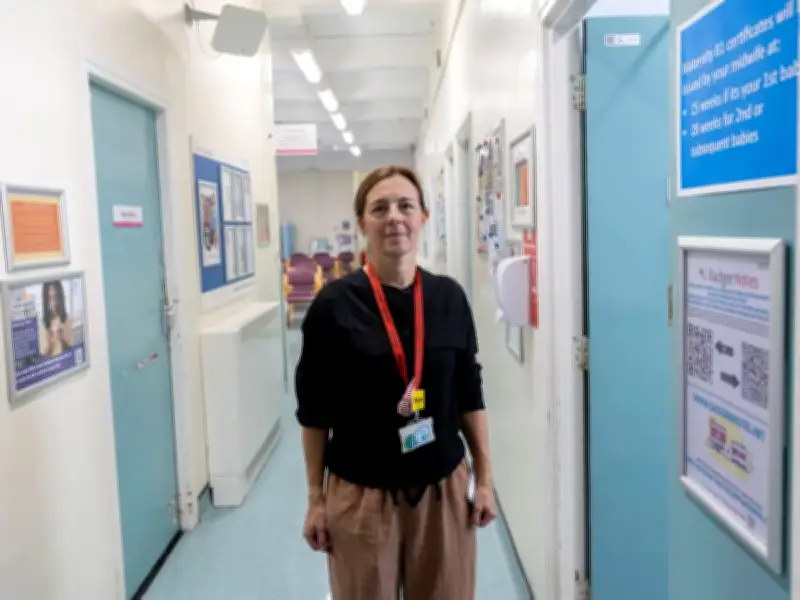
During a visit by the Local Democracy Reporting Service (LDRS), Dr Suckling highlighted several problems visible from public corridors. Gesturing to pipes above a busy corridor, she said: "This passageway is built beneath a road, and in winter it floods regularly. You will often come here and find tarpaulin and leaks going into a bucket." Orderlies have to navigate beds and equipment around leaks, further restricting the hospital's already narrow corridors.
Lift failures and costly repairs
The hospital's lifts are becoming increasingly unreliable, with regular summer faults forcing staff to adapt with short notice. In July, staff had to relocate children's services after the lift serving the ward broke down. Within two weeks, paediatric patients were moved to the main ward, which had to be converted to accommodate them, while adult patients were transferred elsewhere.
Staff recalled how the failure of one key service lift meant ambulances had to be called to transport patients across the site. "This means it is expensive for us but also that there is an ambulance not out there doing their job because they are moving their patients," Dr Suckling said. The hospital currently spends around £300,000 a year maintaining and repairing faulty lifts. Repairs are further complicated by the lifts' age, with replacement parts no longer manufactured, meaning components must be specially commissioned or the lifts rebuilt.
Reablement Unit beds unused
Perhaps the clearest symptom of the hospital's deteriorating condition is the 13 beds in its Reablement Unit, which have remained unused since the start of the month. This unit provides short-term therapy and medical care to help patients regain independence before returning home from a long hospital stay, supporting around 600 elderly and frail patients each year.
Earlier this month, a large crack appeared above a patient's bed in the unit's rear wall. The damage is clearly visible from the external wall, and the gap allows cold air to seep into the room. "Clinically, we can't have a frail person in a bed next to a draughty crack," Dr Suckling told the LDRS. As a result, just five of the ward's 18 beds remain in use, while some patients have been discharged with care packages. It remains unclear when the unit will fully reopen, with an invasive investigation still needed to establish the cause of the problem, likely requiring temporary closure of the entire unit for extensive remedial works and expected to cost hundreds of thousands of pounds.
Dr Suckling said the recent change has also affected staff. "They work in an environment they are used to and then they are suddenly told to move," she said. "The patients deserve to be looked after in a better environment; our staff deserve to work in a better environment," she added.
Women's Health ward at risk
Pregnant women and gynaecology patients could now be the latest to be affected. The maternity unit is rated among the best in the country, while its wider Women's Health ward handles around 16,000 appointments each year. However, earlier this year, staff detected rising levels of Pseudomonas bacteria in the pre-war pipework supplying water to the ward. While Pseudomonas bacteria are commonly found in water and are often harmless, some species can cause serious lung and bloodstream infections, particularly in people with weakened immune systems.
Group Chief Executive of St George's, Epsom and St Helier University Hospitals and Health Group, Mat Shaw, has outlined two options: refurbishing the unit one floor at a time, or moving maternity and neonatal services to other sites across South West London. Under the second option, gynaecology and other specialist services would remain at St Helier. "This is incredibly upsetting for the staff who have worked hard to build up this unit," Dr Suckling told the LDRS. She reiterated that no decision has yet been made, and said the ward and its water levels remain safe in the immediate term. "If you booked today you would still have your baby at St Helier," she said. A decision is expected following a board meeting on November 6.
Timelines running out for new hospital
Asked how much longer the hospital could continue to patch up these issues, Dr Suckling said: "The timelines are running out unless we get a significant investment, we are getting closer and closer [to the limit]. Without significant investment in the buildings we are struggling, and it's having an impact not only on patient care and staff care but also the financial position of the trust."
The hospital was listed as one of 30 hospitals due to receive a significant upgrade by 2030 as part of the New Hospital Programme (NHP), announced in 2020. However, in January, the Health Secretary confirmed construction of a new hospital in place of St Helier would now take place between 2032 and 2034. This summer, the Government also announced a £57m upgrade of St Helier's emergency department, due to be completed by 2027. While this investment has been welcomed, staff told the LDRS they were "disappointed" that a full hospital could still take years to come to fruition.
The issue is further complicated by local opposition to plans that could see some services moved to Belmont in Sutton. Labour-run Merton Council opposes any move to Belmont, with Councillor Peter McCabe, Merton's Cabinet Member for Health and Social Care, saying: "Proposals to reduce, close or relocate services at St Helier Hospital will widen health inequalities and have a detrimental impact on women's health in our community." Lib Dem-run Sutton has supported calls for greater investment but has not openly opposed the move. Leader of the Council, Councillor Barry Lewis, said: "The council remains extremely concerned about the poor physical state of St Helier Hospital... This 'patch-and-mend' approach to St Helier needs to end."
While the Trust said it valued the support of both local authorities, it called for a more united and practical approach to securing the hospital's future upgrades. In the meantime, Dr Suckling said staff will continue to provide the best care they can for patients. "Despite the infrastructure and the buildings, we deliver good care and we are kind and compassionate people," she said.