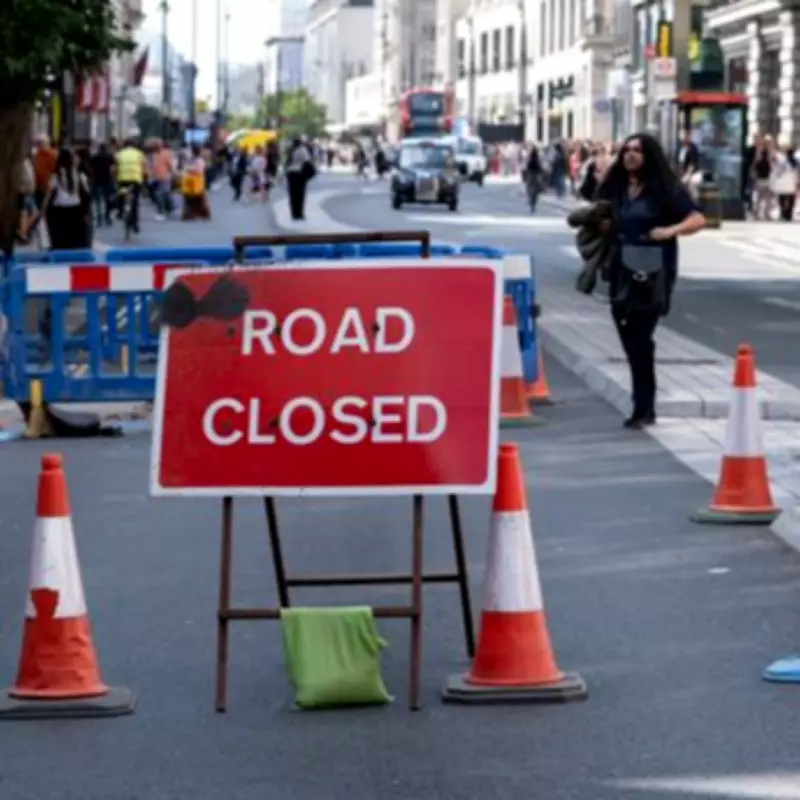
Transport for London's controversial plan to impose daily charges of up to £2,500 for utility companies to shut busy roads has drawn sharp criticism from industry representatives, who warn it will force essential works into unsocial hours and increase noise disruption for residents.
Industry Body Warns of Unsociable Hours Impact
Street Works UK, which represents energy, broadband and water companies across the capital, has issued a stark warning that TfL's expanded lane rental scheme will push essential maintenance and infrastructure works later into the evening, creating additional noise problems for Londoners living along affected routes. The trade association claims TfL lacks robust traffic data or clear evidence to justify the scheme's implementation.
Red Routes and Borough Roads Targeted
This year, TfL plans to extend its lane rental programme to cover London's vital 'red routes' – which carry approximately 30 per cent of the city's total traffic – alongside numerous borough roads. Lambeth Council, an early adopter of the approach, recently announced it will begin charging utility firms up to £2,500 per day to work on selected traffic-sensitive streets from April, with additional charges of £350 daily for footpath works.

The South London borough believes these financial penalties will incentivise utility companies to schedule their operations during less busy periods. Merton, Camden and Enfield have already received Department for Transport approval to implement similar schemes, with a further 22 boroughs currently in the application process.
Mayor's Congestion Battle Strategy
Sir Sadiq Khan has strongly endorsed the charging scheme as part of his comprehensive strategy to tackle London's persistent congestion problems and improve bus journey times by 2030. Recent City Hall data reveals concerning trends in the capital's transport network:
- Average bus speeds have declined from 10.27mph four years ago to just 9.17mph in 2024–25
- In August, the most recent month with available data, buses travelled at an average speed of 9.06mph
- Passenger numbers have dropped for the first time since the pandemic, falling from 1.869 billion journeys to 1.842 billion
Industry Concerns About Development Impact
Street Works UK has expressed significant concerns that the scheme could damage development opportunities across London while failing to achieve its stated congestion-reduction goals. A spokesperson for the organisation told media outlets: "Lane rental schemes are intended to reduce congestion on the busiest parts of the road network, and we support that principle. However, we have concerns that in some cases, new schemes are being proposed without robust traffic data or clear evidence to support their introduction."
The association emphasised that its members are committed to minimising disruption through several approaches:
- Improved coordination between different utility providers
- Implementation of trench-sharing schemes to reduce repeated road openings
- Continued investment in innovative technologies that allow essential works with minimal public impact
Mayor's Vision for London Transport
The Mayor of London has described his wider congestion-reduction project as a "bold new approach" designed to benefit all Londoners. Sir Sadiq Khan stated: "Congestion is annoying for everyone, and it costs our economy millions of pounds a year. This innovative new strategy will tackle the causes of congestion head on."
He added: "These improvements are vital to achieving my ambition for 80 per cent of journeys to be made by walking, cycling or public transport, as we continue building a greener and better London for everyone." The debate continues as utility companies and transport authorities clash over the best approach to maintaining London's essential infrastructure while minimising disruption to residents and commuters.