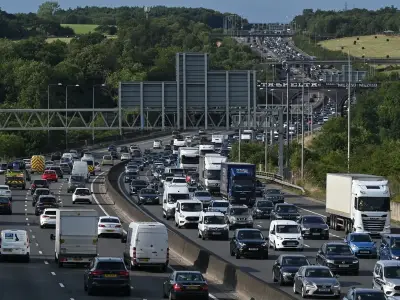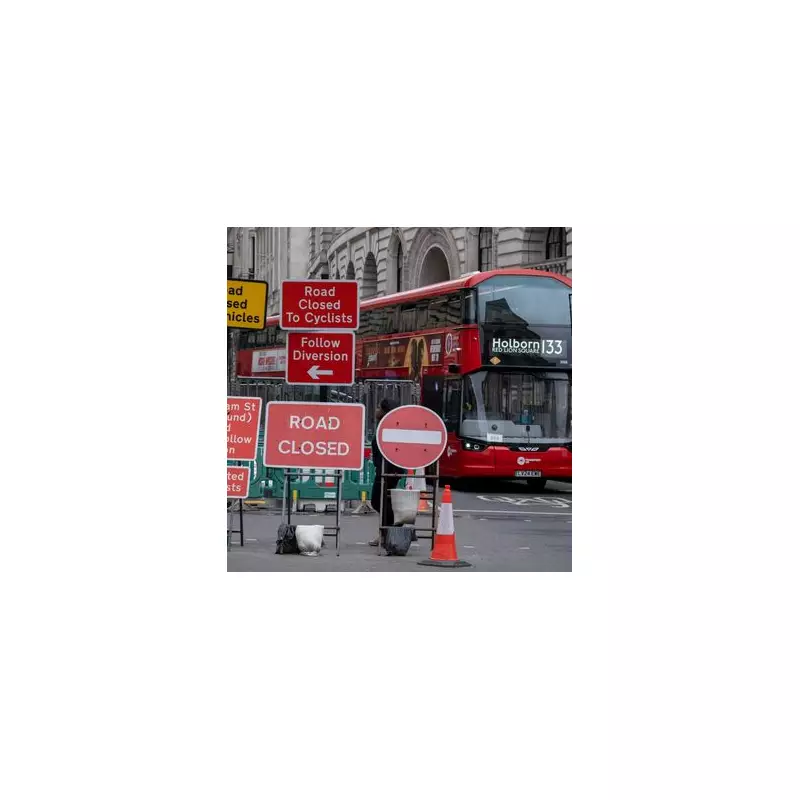
Transport for London is set to introduce a significant new policy, charging utility companies up to £2,500 per day for shutting down busy roads in a bid to alleviate congestion and improve bus journey times across the capital. This initiative is part of Mayor Sir Sadiq Khan's ambitious strategy to tackle London's worsening traffic issues by the year 2030.
Declining bus speeds and ridership
Recent data from City Hall reveals a concerning trend in London's bus network performance. Average speeds have fallen to 9.17 miles per hour in the 2024–25 period, down from 10.27 miles per hour just four years earlier. In August, the latest month for which figures are available, buses were travelling at an average speed of only 9.06 miles per hour. This slowdown has coincided with a drop in passenger numbers for the first time since the pandemic, with journeys decreasing from 1.869 billion to 1.842 billion.
Expansion of the lane rental scheme
This year, TfL plans to expand its lane rental scheme to include 'red routes', which are key connections carrying 30 per cent of London's total traffic, as well as to borough roads. Lambeth Council, an early adopter of the scheme, announced last week that it will begin charging utility firms up to £2,500 per day to work on selected traffic-sensitive streets from April, with additional fees of up to £350 per day for works on selected footpaths.
The South London borough believes this move will incentivise gas, electricity, and telephone companies to schedule their works during off-peak hours when roads are less busy. Other boroughs, including Merton, Camden, and Enfield, have also received approval from the Department for Transport to implement similar schemes, with a further 22 boroughs currently in the process of applying.
Technological innovations for traffic management
In addition to financial penalties, TfL is exploring the use of artificial intelligence to enhance traffic control. The 'FUSION' system in London will be upgraded to allow traffic signals to react more swiftly, aiming to reduce journey times by 14 per cent. AI will also be employed to analyse traffic data, providing better insights into the travel patterns of Londoners and the modes of transport they use.
Statements from key figures
Sir Sadiq Khan, the Mayor of London, emphasised his commitment to improving the city's transport network. He stated, “I’m committed to making London’s transport network as safe, efficient, and sustainable as possible. Congestion is annoying for everyone, and it costs our economy millions of pounds a year. This innovative new strategy will tackle the causes of congestion head on.” He added that this approach aims to support his goal of having 80 per cent of journeys made by walking, cycling, or public transport.
Carl Eddleston, TfL’s Director of Streets and Network Operations, highlighted the broader vision, saying, “We’re determined to ensure London’s road network is amongst the best in the world and the new London on the move plan marks a major step forward in how we manage London’s streets. By harnessing data, technology and the benefits of new infrastructure, our 2030 vision will see a better, safer street network that is better suited to the needs of Londoners today and tomorrow.”