The Melbourne Tramaroos finished second last at the 2026 European TramDriver Championship in Warsaw, just ahead of London, despite Melbourne having one of the largest tram networks in the world. The event, held on Saturday, saw 26 teams compete in a series of demanding tasks inspired by tram drivers' day-to-day work.
Competition details and tasks
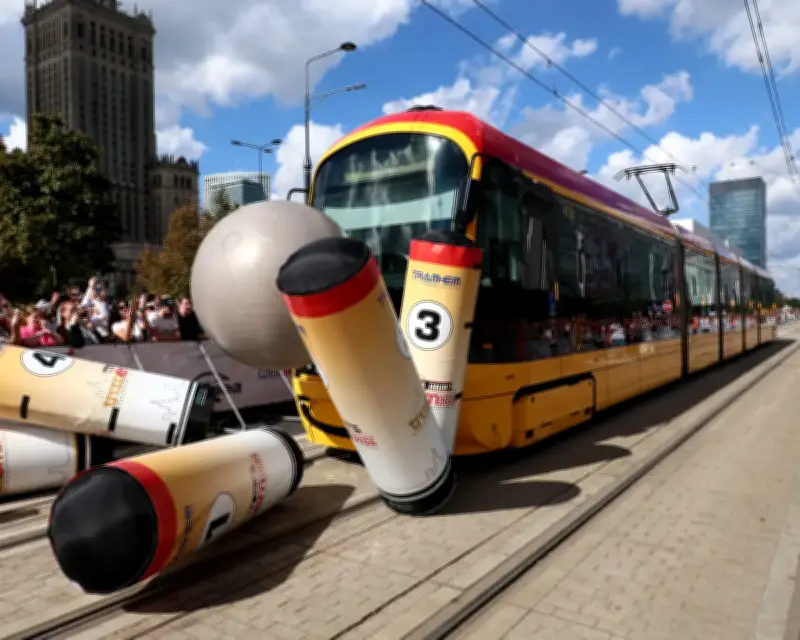
In the smooth stop-and-go task, drivers travelled with a bowl of water attached to the front of the tram, with points deducted for every drop spilled. Other precision tasks included speed control at 25 km/h, target braking, tram bowling, lateral distance, basketball, a perfect stop with the second door, and a reverse ride guided by whistle commands.
Each city was represented by a two-person team consisting of a female and a male tram operator. The championship attracted thousands of fans in Warsaw, with about 80,000 viewers worldwide watching via livestream.

Reactions and participation
Daniel Bowen, a spokesperson for the Public Transport Users Association, described the event as “an unusual event in the pantheon of world sports”. He said it was “pretty entertaining” and an opportunity to look for inspiration from other tram systems around the world. “Everyone looked like they were having a great time,” he added.
Yarra Trams sent Ivan Cavanagh of Southbank depot and Claudia Barrientos from Kew depot to compete as the “Tramaroos”. Had they won, the trophy would have gone “straight to the pool room”, Cavanagh said.
Bowen noted that the competition was stiff, saying, “You would hope our team would do well but I’m sure there’s pretty stiff competition against you know the Europeans. Perhaps it’s a bit like Eurovision – it’s great to participate.”
Winners and future events
This year’s title went to Vendula Tmejová and Zdeněk Rychtář from Prague, Czech Republic. In 2022, Australia was the first non-European country chosen to participate in the championship.
Melbourne is set to host the next event in 2027. Bowen said it would be interesting to see if other Australian cities joined the competition, given recent extensions to light rail systems in Adelaide, Sydney, Canberra and the Gold Coast.
“Back in Melbourne, it’s a reminder that trams do form a vital part of the transport system. We do have the biggest tram network in the world, but there’s more to do in terms of accessibility and on-road priority and service frequency,” Bowen concluded.