Senior police officers have confirmed that hate crime levels on London's public transport network have failed to return to pre-2023 figures, with the ongoing Israel-Gaza conflict continuing to act as a significant driver more than two years after the war began.
International Conflicts Play Out on Tubes and Buses
Chief Superintendent Chris Casey of the British Transport Police (BTP) told a London Assembly committee that global events are directly impacting behaviour on the capital's transport system. "International events play a really big part - they do generate increases in hate crime and we see those reports," he stated. He highlighted a particularly sharp rise in antisemitic hate crime towards the end of 2023, noting the Jewish community represents a small percentage of both the population and transport users.
Mandy McGregor, TfL's Head of Policing and Community Safety, corroborated this trend, confirming a reduction from the peak but acknowledging that levels remain higher than before October 2023.
By the Numbers: A Persistent Increase
Official data reveals the scale of the issue. Between January and August 2024, hate crime offences across the transport network rose by 27.8% year-on-year, from 1,551 to 1,982. While there was an 8.3% decrease from June 2024 to June 2025 (1,383 to 1,268 offences), the figures stubbornly remain above the baseline seen before the conflict escalated.
Chief Supt Casey noted that the increase recorded by BTP mirrored the rise seen by the Metropolitan Police across London overall, indicating a city-wide trend linked to international tensions.
Protests, Policing, and 'Subvertising'
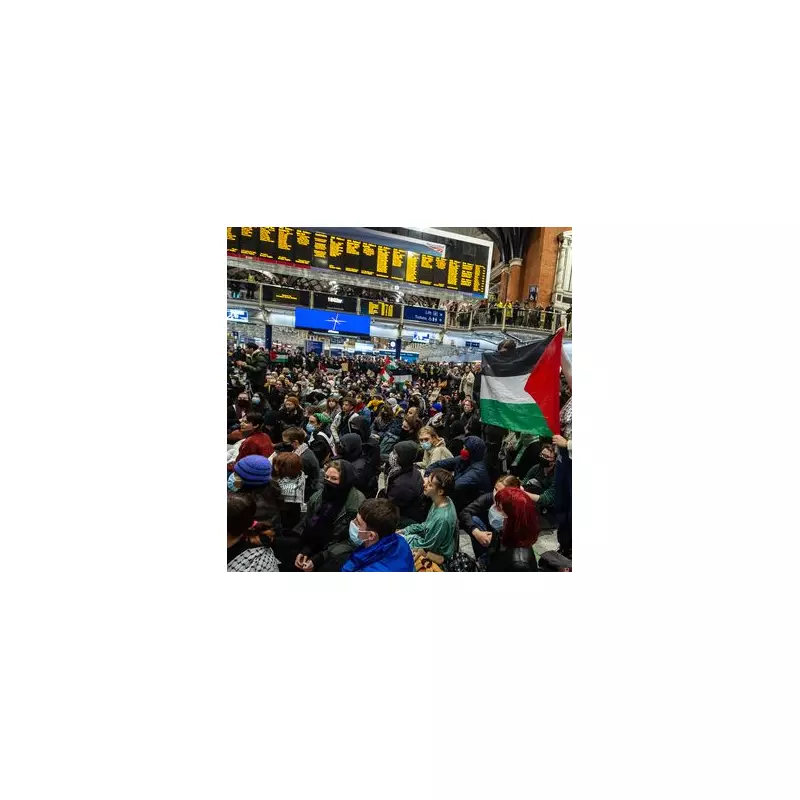
The ongoing conflict has also seen hundreds of protests, including demonstrations inside major stations like King's Cross and Liverpool Street. Police stated they must balance the right to protest with ensuring stations operate safely. "As long as the station can safely operate... we have to find a way to balance those rights," Casey explained.
Officials were further questioned about the impact of unauthorised political advertising, or "subvertising," on the network. This follows incidents like posters calling for a boycott of Coca-Cola appearing on tube trains, despite TfL banning political adverts. Conservative Assembly Member Lord Bailey suggested some such material could constitute a hate crime.
BTP Superintendent Sam Painter responded that all unauthorised advertising is removed as soon as it is identified, often via social media reports. "Advertising is a valuable source of revenue to TfL and unauthorised subvertising is not something that we would tolerate," he affirmed, detailing a thorough cleaning regime to check every advert.
The situation underscores the complex challenge for transport police: maintaining safety and order on a daily commute while navigating the fallout from distant geopolitical strife that manifests in local hostility and unlawful activity.