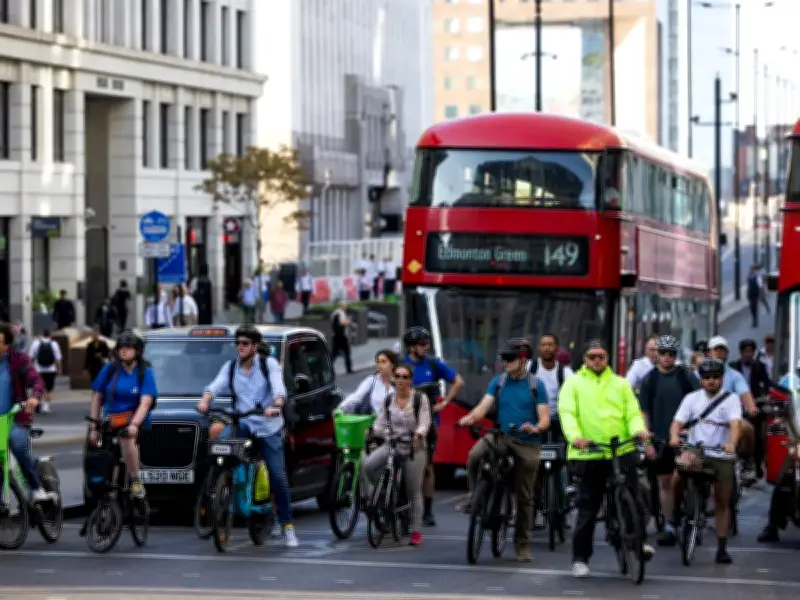
London's bus network is experiencing a significant rise in crashes, with new data revealing that 44 buses crash on average every day. This marks a nearly 20% increase compared to 2019, the year Transport for London (TfL) began systematically tracking such incidents. In 2025, there were 15,390 bus crashes across the capital, a figure that equates to almost every bus in London crashing twice in a year.
According to official TfL statistics, 10 people were killed by London buses in 2025. The severity of these incidents is underscored by several high-profile cases: in February, a double-decker bus crashed into the Southwark Playhouse, hospitalising six people; in July, a single-decker bus crashed into the living room of a house in Notting Hill; and earlier this week, TfL was fined £2m after a woman was killed by a bus while using a pedestrian crossing in Walthamstow in 2023.
Buses vs. cars: A comparative risk analysis
While the raw numbers suggest that cars are involved in more collisions—with between 57 and 65 road collisions per day involving cars, based on a total of 21,000 collisions in 2024—the risk per vehicle is starkly different. There are an average of 2 million cars on London's streets, but only around 8,982 buses. This means that one in 30,769 cars is involved in a collision daily, whereas one in 204 buses crashes each day.
James Ford, an advisor to former Mayor of London Boris Johnson, expressed concern over these figures, stating, "Something is going badly wrong with London's buses." He added, "I don't like those odds. We are all more likely to be hit by a bus than we think, and not just proverbially."
TfL's safety targets and criticism
TfL has quietly admitted that the Mayor's aim of zero bus deaths by 2030 will not be met. The target, enshrined in the Mayor's flagship 'Vision Zero' plan adopted in 2017, aimed to make the transport network as safe and sustainable as possible. Despite five separate plans to improve bus safety, with the most recent launched this summer, the number of fatalities on the bus network has remained stubbornly consistent outside of the pandemic years. TfL has now pushed its target of ending all public transport deaths to 2041.
Michael Liebreich, who served on the board of TfL between 2012 and 2018, has branded TfL as "institutionally unsafe" and stated that London has the least safe bus system of any major city. A long-term critic of TfL's safety record, he blames the current contract structure, which in his opinion encourages drivers to speed.
Driver concerns and the 'Bus Bill of Rights'
Bus drivers have lobbied in recent years for a 'Bus Bill of Rights', a list of 12 improvements to working conditions, including better toilet facilities, more breaks, cooler cabs in the summer, and warmer cabs in winter. The list also touches on better bus maintenance, not having to answer Controller's radio messages while in motion, and the right to report safety concerns without fear of retribution. However, it conspicuously fails to address concerns about speeding.
Although measures are being taken to cool cabs during a heatwave, the Mayor has largely rejected the Bus Bill of Rights. Conservative mayoral hopeful Festus Akinbusoye has debunked the Mayor of London's plans to create a publicly owned bus company, arguing that nationalising one bus route out of 700 will not reduce the number of bus crashes. It also will not reverse plummeting passenger numbers or undo the fact that assaults on bus drivers have tripled in the past year.
The Mayor needs to address the bus network's real problems urgently, rather than focusing on what critics describe as a "vainglorious distraction" of starting a small bus company. As a politician who frequently mentions that his dad was a bus driver, a lack of action from Lord Khan on bus safety is especially scandalous, according to the article.