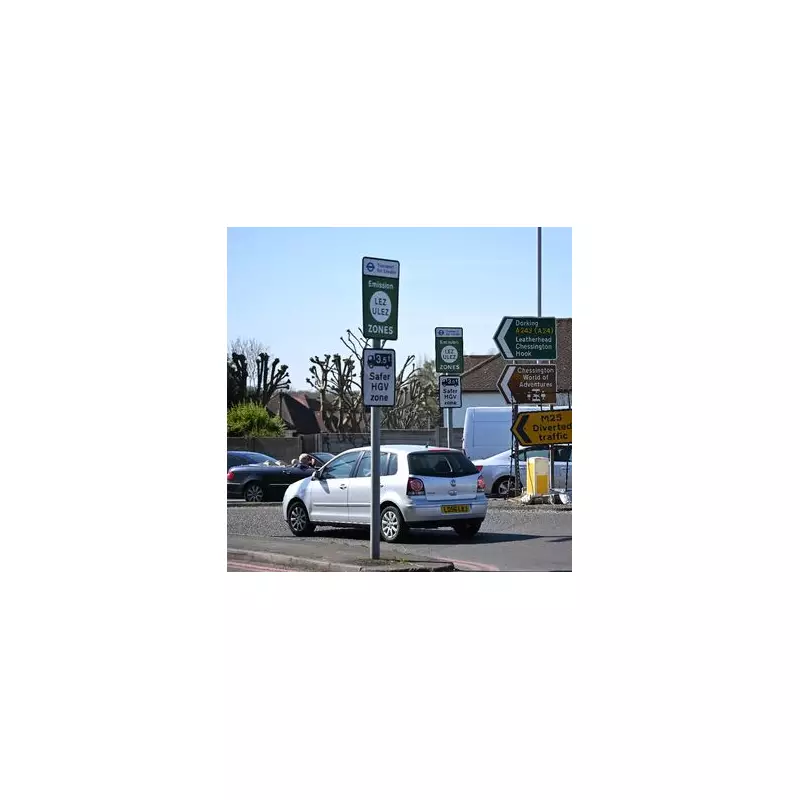
Transport for London (TfL) has admitted to incorrectly issuing penalty charges to more than 46,000 motorists who drove into the capital's Ultra Low Emission Zone (ULEZ) with vehicles that actually met the required standards.
Scale of the ULEZ Penalty Errors
The transport authority revealed it has been forced to cancel 46,113 fines over a six-year period following challenges from drivers. These penalties were issued despite the vehicles in question being compliant with the ULEZ emissions rules.
Since the scheme's initial launch in central London in 2019, TfL has issued a staggering 8.5 million ULEZ fines. The zone was dramatically expanded in August 2023 to cover all 32 London boroughs under Mayor Sadiq Khan's air quality initiative. TfL data shows these fines relate to nearly 2.5 million unique vehicles.
Why Did the ULEZ Fining Go Wrong?
In response to a Freedom of Information request, TfL pinpointed the core of the problem. The organisation primarily relies on vehicle data from the Driver and Vehicle Licensing Agency (DVLA) to automatically determine compliance. However, it acknowledges this data "isn't always adequate".
The issues are particularly acute for vehicles manufactured to meet emissions standards just before the official cut-off dates. The rules generally state that petrol cars registered after January 2006 and diesel cars registered after September 2015 are compliant.
Another common error occurs when a private number plate is transferred from a non-compliant vehicle to a compliant one. During this transition, there can be a short period where TfL's camera system incorrectly flags the vehicle as breaching the rules.
TfL's Response and Driver Advice
TfL issued a statement explaining the systemic challenge: "We acknowledge that despite our best efforts to establish compliance we still may not be able to do so for all vehicles. This is predominantly because there is no national requirement for vehicle emissions data to be recorded and such vehicle emission data simply may not be available to us."
The authority has a clear process for affected drivers. If a motorist receives a Penalty Charge Notice (PCN) and believes their vehicle is compliant, they should make a formal representation. TfL asks for evidence, such as a vehicle log book, to support the claim. Once verified, the vehicle is registered as compliant and all related PCNs are cancelled.
The standard daily ULEZ charge for a non-compliant vehicle is £12.50. If unpaid, this escalates to a £180 fine, reduced to £90 if paid within 14 days. The number of fines peaked in 2022 at 567,000 but had fallen to 331,000 by November 2025, indicating a gradual increase in compliance and awareness.