A smart motorway system had been malfunctioning for five consecutive days prior to a fatal collision on the M4 in Berkshire, a court has heard. The system's failure meant it did not display warnings about a broken-down vehicle, contributing to the tragic incident.
Details of the Fatal Collision
The collision occurred on the M4 westbound between junctions 11 and 12 in Berkshire on 7 March 2022. Barry O'Sullivan, aged 45, was driving a grey Ford Transit Connect when it collided with the rear of a stationary Nissan Micra in the outside lane.
Both vehicles were propelled forward upon impact, with the Nissan bursting into flames. Pulvinder Dhillon, a passenger in the Nissan which was being driven by her daughter, sustained fatal injuries in the crash.
Court Testimony Reveals System Failure
At Reading Crown Court on Monday, evidence was presented by David Edmond, a traffic management officer with Thames Valley Police. Mr Edmond stated that National Highways had been "quite clear that the system wasn't working as it should be" at the time of the collision.
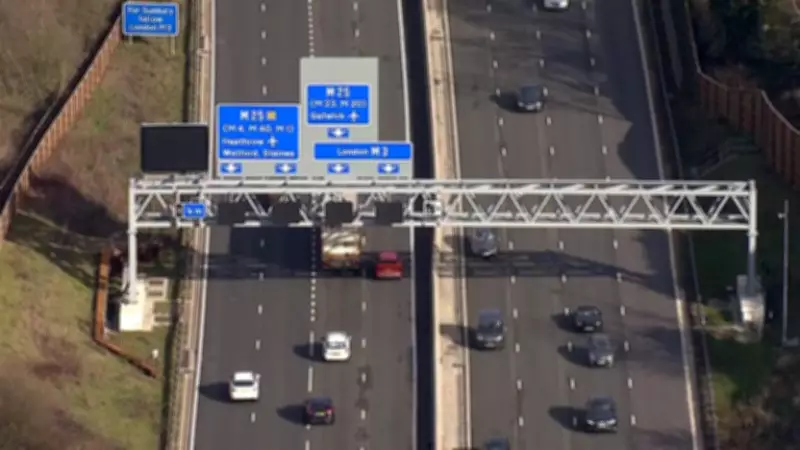
He explained that the smart motorway system, which typically uses overhead gantries to display lane closures and warnings, had failed to show any messages about obstructions on the road ahead. This left drivers without crucial information about the stranded vehicle.
Defendant's Account and Legal Proceedings
Barry O'Sullivan, of Wixams near Bedford, told police in a post-crash interview that there was "no indication of anything untoward" on any of the gantries along that stretch of motorway. He emphasised that "there was definitely no warnings" about the stationary vehicle ahead.
Jurors have previously heard allegations that O'Sullivan was driving "at speed" in the outside lane before the collision occurred. O'Sullivan has pleaded not guilty to one count of causing death by careless driving, and the trial continues.
Safety Measures Implemented After Incident
During questioning by defence barrister Ian Bridge, Mr Edmond revealed that National Highways had implemented new measures following the system failure. When asked about why the defect went unnoticed for several days, Mr Edmond responded:
"I can tell you that National Highways have put measures in place to ensure that that doesn't happen again. I received assurances that the fault or problem is resolved and sufficient balances and checks were put in place."
These assurances were based on information provided directly to Mr Edmond by National Highways, though specific details of the implemented measures were not disclosed in court.
Broader Context of Smart Motorway Safety
The case highlights ongoing concerns about smart motorway safety systems across the UK's road network. Smart motorways, which use technology to manage traffic flow and display warnings, have faced scrutiny following several serious incidents.
This particular failure occurred despite the systems being designed to enhance road safety by providing real-time information to drivers about hazards and lane closures.