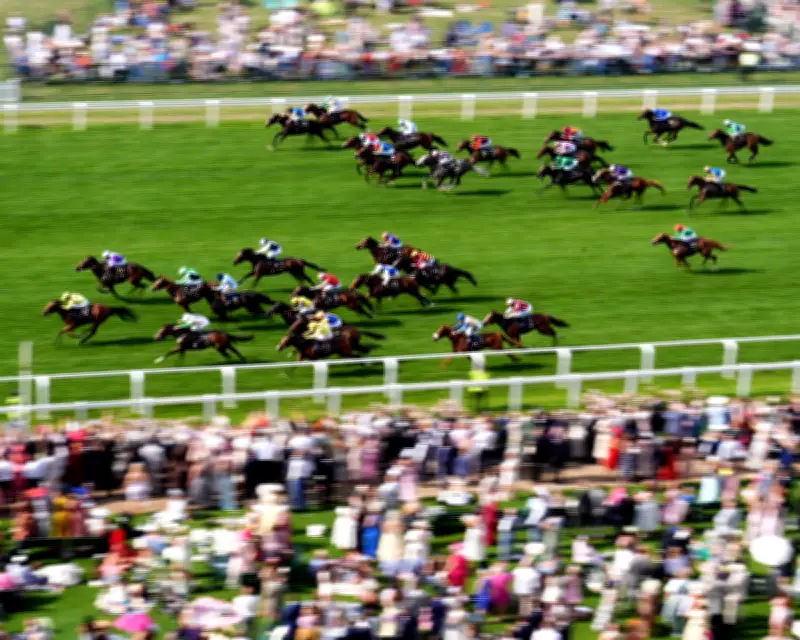
The first 11 horses across the line in the Britannia Stakes at Royal Ascot were from the stands' side group, and nine of those were drawn 22 or above. This stark statistic highlights a significant draw bias that affected many races on the straight course during the five-day meeting.
Winners from high stalls dominate straight course
Throughout the week, high-numbered stalls on the straight course consistently produced winners, powering up to the line against the near-side rail. The bias was apparent from day one and became a major talking point, overshadowing otherwise high-class performances from favourites such as Bow Echo, Ombudsman, Scandinavia, and Venetian Sun.
Trainer Simon Crisford voiced his frustration after his gelding Jazl, a leading fancy for Friday's race, finished 27th and last behind the easy winner Bacio, who was drawn in stall 31. “The bias has been shocking and it’s really disappointing because you want to be drawn high,” Crisford said. “It’s not right when you pay what you pay as an owner to come to Royal Ascot and not have a fair racing track.”
Attendances up but fairness questioned
Attendances were up throughout the week, averaging a 3.5% increase, with Saturday's meeting a sell-out. Aidan O'Brien became the first trainer to saddle 100 winners at the meeting when Scandinavia took the Gold Cup on Thursday. However, the draw bias affected 18 of the 35 races, leading to criticism that the meeting's status as the pinnacle of Flat racing is undermined.
The Britannia Handicap over the straight mile on Thursday was the most striking example. Thirty runners split into two groups of 15; the first 11 finishers all came from the stands' side, with nine drawn 22 or above. This pattern repeated across multiple races.
Ascot clerk acknowledges problem
On Saturday morning, Chris Stickels, Ascot's clerk of the course, acknowledged the issue. “We work very hard at providing as fair a track as we can,” he told Sky Sports Racing. “We study the data, we aerate it evenly, we irrigate evenly. Yes, it does seem that the high numbers have been winning, but let’s be honest, not much has raced on that far rail.”
Stickels noted that the track does not walk massively differently on opposite sides, but the evidence showed high-drawn horses winning. He revealed that officials had tried to address the bias by applying more water to the near side through May, but stopped when they felt it was even. “It’s not easy to do because you’ve got to shut off one side and not another,” he said.
Impact on owners and the meeting's reputation
While smart punters can exploit draw biases, owners and trainers face a raw deal. The yearling market remains robust partly due to the allure of Royal Ascot, but if billionaires sense unfairness, they may choose to race elsewhere. The meeting's ability to market itself as the undisputed pinnacle of Flat racing is compromised when many races appear skewed toward one side of the track.
Saturday's feature, the Queen Elizabeth II Jubilee Stakes over six furlongs, was unaffected as the field came down the middle, producing a thrilling three-way photo-finish won by Almeraq at 25-1. However, the overall week left a lingering concern that a more determined effort to ensure a fair track may be necessary next year.