One of Sydney's busiest motorway tunnels was forced into an emergency closure for hours on Thursday after engineers discovered dangerous bulges in its concrete lining, sparking fears of a potential roof collapse and stranding motorists for up to four hours.
What Triggered the Emergency Shutdown?
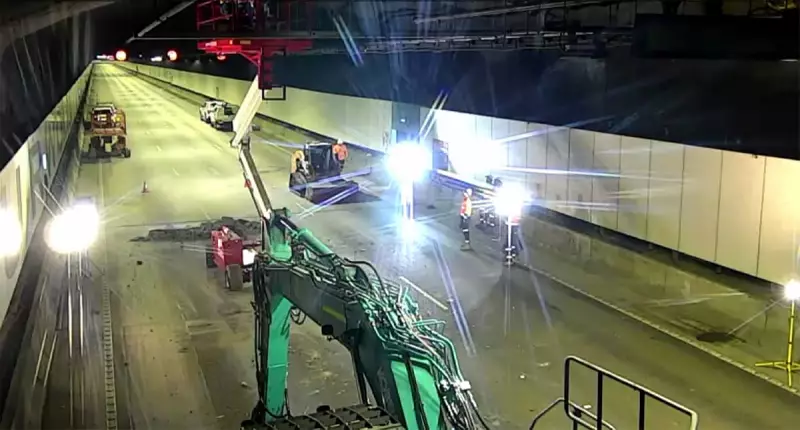
The crisis began in the early hours of Thursday morning when engineers from Transurban, the private operator of the WestConnex M4, identified what they described as "a couple of large bulges" in the tunnel roof during a routine inspection. The issue was located in the shotcrete – a sprayed-on concrete layer that acts as a lining between the tunnel and the rock above.
Authorities were concerned that sections of this material could detach and fall onto vehicles below. As a result, all westbound lanes between Haberfield and North Strathfield were closed from around 6am, throwing the morning commute into chaos.
New South Wales Roads Minister, Jenny Aitchison, criticised the handling of the incident, citing "an absolute failure … of communication" to warn drivers ahead of peak hour. She revealed her office had received calls from motorists trapped for two hours, with social media reports indicating some were stuck for as long as four.
Understanding the 'Shotcrete' at the Heart of the Problem
For many, the term 'shotcrete' was unfamiliar. Experts explained it is a form of concrete, named for the method of being shot at high pressure from a hose onto a surface. Associate Professor Sorn Vimonsatit from Macquarie University clarified that it uses finer aggregates than standard concrete, making it stronger and easier to spray.
In tunnels like the M4, which opened in 2019, shotcrete forms a composite structure with the surrounding sandstone and provides a seal. Associate Professor Wengui Li of the University of NSW noted the material can last between 50 to 100 years, suggesting the failure was premature.
While initial reports suggested a water leak may have been the cause, Transurban later confirmed this was not the case. Professor Li indicated the failure could stem from the mix composition, tension on the roof lining, or vibrations from traffic.
Political Fallout and the Path to Reopening
The incident quickly became politicised, with the NSW government pointing the finger at the tunnel's privatised ownership. The coordinator general of Transport for NSW, Howard Collins, revealed that Transurban had turned down offers of extra engineers and equipment from a nearby publicly-run tunnel project.
Transurban defended its actions, stating its general manager for WestConnex, Denise Kelly, had been in contact with the Transport Management Centre five times before 6am. The company maintained it had the necessary resources on site to manage the repairs.
After partial reopening on Thursday afternoon, all westbound lanes were closed again at 10pm for overnight remedial work. Transport for NSW confirmed the tunnel was fully reopened on Friday morning after work made the structure safe and "certified for full operation". Transurban stated the overnight operations had secured a "small section" of the roof, with re-shotcreting to be completed later.
The company has directed affected customers to seek refunds via the Linkt app, a move the Roads Minister said should be expanded across Transurban's wider toll network. The event has intensified ongoing negotiations between the NSW government and Transurban over the state's complex tolling system.