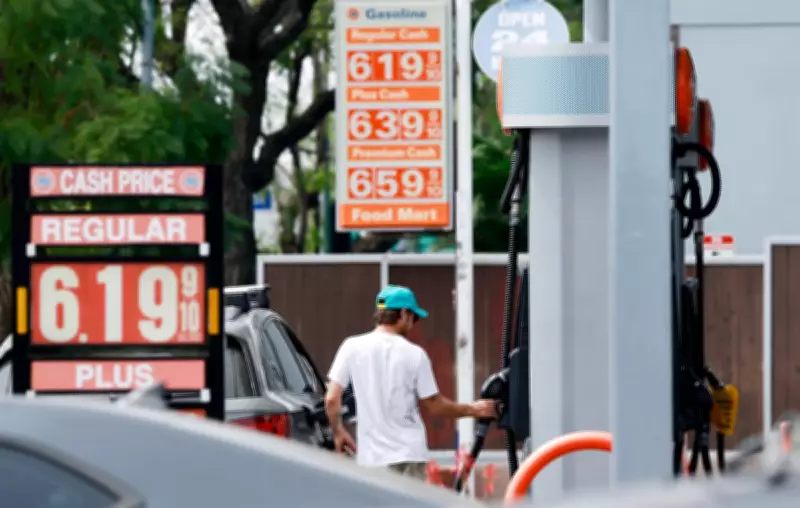
In Los Angeles, a city famously intertwined with car culture, drivers are facing an unprecedented challenge as surging gas prices threaten their daily routines. With average prices nearing $5.90 per gallon and some stations charging a shocking $8, residents are getting creative to manage the financial strain. This spike is largely attributed to the Iran war, which the International Energy Agency cites as causing the largest supply disruption in global oil market history. Compounding the issue, California gas stations must switch to a more environmentally friendly but costlier summer blend formula each spring, further driving up costs for consumers.
Personal Strategies for Saving Fuel
Jack Nooney, a musician and grocery deli employee, exemplifies the lengths Angelenos are going to. He drives nine miles daily from the San Fernando Valley to Santa Monica, a trip that often takes an hour in traffic. To stretch his fuel, Nooney shifts his manual transmission into neutral to coast down steep declines on the I-405, both southbound to work and northbound on his return. He also scouts for the best gas prices, avoiding pricier stations in Santa Monica in favor of those near his home. When his band has gigs in West Hollywood, they carpool to save on gas, as profit margins from shows are already slim. Nooney, who earns $20 per hour, notes that high fuel costs are eating into his tight budget, forcing him to pack lunches despite a 50% employee discount to save wherever possible.
Impact on Creative Professionals and Small Businesses
The ripple effects extend beyond individual drivers. Chris Hardin, a music manager in Burbank, recounts how one of his bands started a month-long tour just as the Iran war broke out, leading to skyrocketing gas prices that blew their budget. With over 20 years in the industry, Hardin calls this rapid increase a first. To cope, he rides his motorcycle to work multiple times a week, saving fuel and adding fun, though he still uses his car for a 40-mile commute to teach as an adjunct professor at California Lutheran University, prioritizing safety over savings. For small businesses like Jenise Blanc's Canyon Car Service, which has operated for 25 years, the situation is dire. Blanc and her husband employ six drivers and rely on LAX pickups, but with most of their fleet running on fuel, they've had to absorb increased costs. Blanc hesitates to add a significant fuel surcharge, fearing it could alienate loyal customers, but may consider raising rates by $5 to $10 if conditions don't improve soon.
Broader Economic and Social Implications
High gas prices are straining Los Angeles' vibrant creative community, which includes many independent artists like Nooney who form a fundamental backbone of the city. For professional drivers, options are limited, forcing tough decisions between profitability and customer retention. Nooney, a former Uber driver, reflects that even before the price surge, making a living through ride-sharing was nearly impossible, requiring 12-hour days just to cover basic expenses. His current job offers some relief, and he's seeking a transfer to a store closer to home to reduce commuting costs. As drivers band together, coast downhill, and shop around, their adaptability highlights the resilience of Angelenos in the face of economic pressures, while underscoring the broader challenges posed by global oil market volatility and environmental regulations.