South London Council's £1 Million Junction Overhaul Faces Backlash as Traffic Woes Intensify
A controversial £1 million redesign of key road junctions approaching Putney Bridge in South London has been met with fierce criticism from local residents and business owners, who describe the scheme as an absolute disaster that has exacerbated traffic problems in the area.
Residents Voice Frustration Over Worsening Congestion
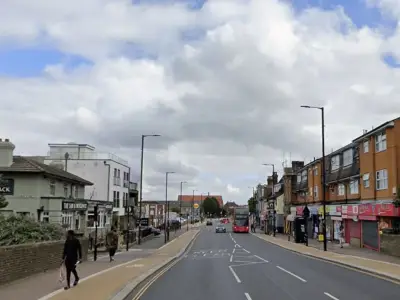
Frustrated locals have reported that Wandsworth Council's overhaul of the junctions where Putney High Street meets Putney Bridge Road and Lower Richmond Road has created persistent gridlock, pushing traffic onto residential side streets and disrupting daily life. Residents speak of being late for work or school, elderly people becoming reluctant to leave their homes, and potential visitors avoiding Putney altogether due to the traffic chaos.
Graham Morrow, 74, who runs a business on Putney High Street, stated bluntly: The consequence has been a disaster. He reported that customer numbers at his establishment fell by 25 percent in 2024 compared to the previous year, attributing this decline directly to the traffic nightmare. People do not want to come to Putney to the same extent that they used to, he explained, citing the difficulty of driving and parking in the area.
Council Admits to Unexpected Problems and Additional Costs
Wandsworth Council acknowledged in November that the redesign had caused unexpected congestion, leaving the authority extremely concerned. This admission came despite data showing that traffic volumes using Putney Bridge were actually lower in 2024 than in 2018, before the closure of Hammersmith Bridge to vehicles in 2019.
The council report revealed that the project had already exceeded its approved £835,000 budget by £100,000, with an anticipated further £250,000 required to make adjustments. The scheme, initially proposed under the previous Conservative administration, was adopted and completed by the Labour-run council after it took control in 2022.
Questionable Planning and Ongoing Adjustments
Concerns have been raised about the planning behind the redesign. The traffic data used to model the changes was collected just before the end of Covid-19 lockdowns in July 2021 and incorrectly assumed that Hammersmith Bridge would reopen to vehicles by 2026. The works included:
- A new cycle lane and bus lane
- New traffic lights allowing cyclists a few seconds' head start
- Modifications to pedestrian islands
- Reduction from two lanes to one on the approach from Lower Richmond Road
- Restriction to a single lane for turning onto the bridge from Putney Bridge Road
While intended to have a neutral impact on traffic flow while prioritising pedestrians and cyclists, the changes have instead created significant bottlenecks. Local resident Kieren McCarthy told the Local Democracy Reporting Service that the redesign had caused havoc from day one and expressed scepticism about whether ongoing adjustments would be sufficient.
Community Action and Political Responses
The community's frustration has been palpable, with residents forming an action group to demand change and Conservative councillors raising concerns in council meetings. Locals have criticised what they perceive as the council's initial reluctance to admit the scheme's failures, with McCarthy suggesting this delayed progress toward solutions.
Michael Wilson, 73, another Putney resident, described the traffic situation as murder, especially with the cycle lane... it's crazy, noting that congestion has become much worse since the redesign. Toofan Baz, 28, who works at a shop on the high street, raised concerns about the impact on public health and suggested that reopening Hammersmith Bridge to vehicles might be necessary to ease the congestion.
Ongoing Efforts and Future Prospects
The council has begun implementing adjustments in collaboration with Transport for London (TfL), including:
- Adjusting traffic light timings to give drivers more green time
- Creating more space for vehicles to ease the impact of stationary buses
- Painting double yellow lines
- Reviewing bus stop locations and driver changeover procedures
However, residents report that even these changes have not worked as hoped, with buses causing traffic to pile up and new signal timings failing to match TfL's approved specifications. A council spokesperson stated that they continue to listen to resident feedback and are working closely with TfL to reduce traffic delays, with further improvements planned for the Putney Bridge junction.
As Putney residents and businesses endure the ongoing disruption, the fundamental question remains whether piecemeal adjustments can salvage a scheme that many believe requires more radical reconsideration. The episode serves as a cautionary tale about urban transport planning and the importance of robust community consultation in major infrastructure projects.