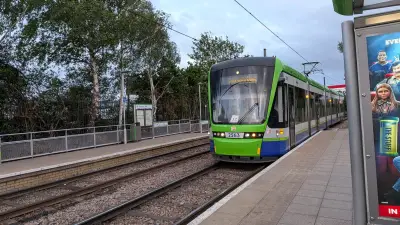
The eagerly anticipated £2.5 billion tram system for Leeds has been hit by a significant delay, with its opening now pushed back to the late 2030s. The setback follows a government-ordered review of the major infrastructure project.
New Timeline Demands Full Business Case
The West Yorkshire Combined Authority (WYCA) confirmed the mass transit scheme, featuring new lines connecting Leeds and Bradford, will not be completed until the latter part of the next decade. This represents a delay of at least two to three years from previous estimates.
The review was conducted by Nista, the government's new infrastructure advisory unit. It has stipulated that a comprehensive business case for the entire scheme must be submitted before any further planning work can proceed. This 'tried and tested' approach is a standard requirement for major projects but adds time to the schedule.
Mayor's Confidence Amidst Cynicism and Criticism
West Yorkshire's Mayor, Tracy Brabin, expressed full confidence that she would be "driving this tram" by the end of the 2030s. She acknowledged public cynicism, given the history of failed transport projects for the city, but insisted this was a "resequencing" rather than a cancellation.
"While the new timeline helps offer certainty for the scheme, I am also pleased that ministers have committed to working with us to cut red tape and put tracks on the ground as quickly as possible," Brabin stated.
However, local Conservatives have criticised the move. Alan Lamb, leader of the Conservative group on Leeds City Council, told the BBC he believed the delay had "put a nail in the coffin of mass transit in West Yorkshire," comparing it to the scrapped Leeds Supertram and HS2 projects.
A Long History of Frustrated Ambition
Leeds holds the unenviable title of the largest city in Europe without a light rail or metro network, having removed its original trams in 1959. Subsequent attempts to reintroduce a modern system have repeatedly faltered.
Key failed attempts include:
- A Supertram scheme approved but shelved in 2005 due to cost.
- A proposed trolleybus network rejected by the government in 2016.
The current Mass Transit plan consulted on ten possible routes last year and has received £200 million in early funding. Its further development is part of the region's £2.1 billion transport allocation for 2027-2032.
In a letter to Mayor Brabin, Rail Minister Lord Peter Hendy reaffirmed the government's support, calling the scheme "a vital part" of its ambitions for the region. He pledged to help find ways to accelerate delivery, sharing frustration at the slow pace of infrastructure development.
Brabin positioned the tram as the centrepiece of an integrated transport network, alongside the region's now locally controlled buses. "We deserve a transport system that's equivalent to London," she asserted, vowing to see the project through to completion.