Australia is experiencing an electric vehicle (EV) revolution, with nearly 25,000 EVs sold in March 2025—a record increase of 69.6% compared to the same month last year, according to the Electric Vehicle Council of Australia. However, despite this surge, the country's public charging infrastructure is struggling to keep up, leading to what some drivers call 'charger rage' and heightened range anxiety.
The Growing Demand for Public Chargers
While 80% of EV charging occurs at home, the need for reliable public charging stations is becoming increasingly critical for long-distance travel. Australia currently lags behind countries like China, South Korea, and the Netherlands in public charger availability, but the network is expanding rapidly. The Electric Vehicle Council reports at least 20% more chargers in 2025 compared to the previous year.
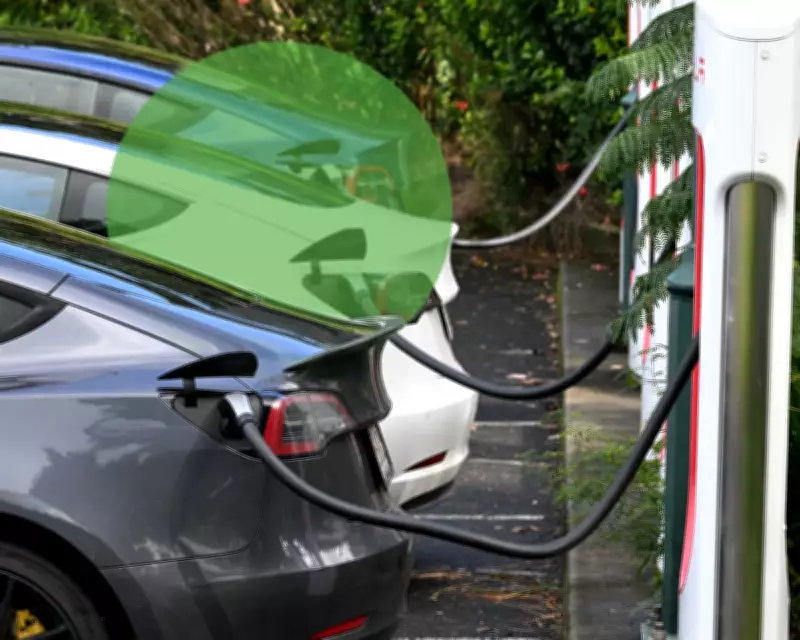
Stephen Lightfoot, a Sydney resident and vice-president of the Australian Conservation Foundation, purchased a Volvo EV in November 2024. While home charging works well for local trips, intercity travel has been problematic. On a drive to Canberra, he witnessed 'charger rage' as drivers nearly came to blows over a single available charger. He also notes that different chargers require separate apps and registrations, making the process frustrating. 'Simple tap-and-go charging, like Tesla's super-fast chargers, should be standard,' he says. Lightfoot advocates for more chargers in car parks, service centres, and shopping centres across both city and regional areas.

Advances in Battery Technology
Finn Peacock, founder of SolarQuotes, highlights that advancements in battery capacity are alleviating range anxiety. His first EV (a 2019 Tesla Model S) had a claimed range of 420km, which translated to 350km in real-world conditions. His latest 2024 Tesla Model 3 offers a claimed range of 629km, delivering over 500km on a single charge. 'The extra 150km makes all the difference,' he says. 'With 500km, I just get in and go. I regularly drive from Adelaide to Melbourne.'
Dean Postlethwaite, managing director of Sydney EV Chargers, notes that the rapid expansion of ultra-rapid DC chargers (150kW to 350kW) along major corridors is changing driver behaviour. 'Drivers are shifting from 'charge when necessary' to 'charge when convenient,' which is a key mindset change,' he explains. The federal government's National Electric Vehicle Strategy aims to establish a national highway network with fast chargers spaced an average of 150km apart by the end of 2026.
Renewable-Powered Charging
Much of Australia's charging infrastructure is already powered by renewable energy, according to Chau Le, Origin Energy's general manager of e-mobility and chair of the Electric Vehicle Council. Government funding typically requires the use of renewable energy, and even without onsite solar, most networks use renewable purchase agreements. Regional Australia is a major focus for government-funded rollouts, and in some areas, the network is becoming more reliable than in cities.
Innovative Solutions: Peer-to-Peer Charging
Julie Perrissel co-created the app Ivygo after a frustrating experience in the Hunter Valley. 'My husband and I ended up sitting in a shopping centre car park charging instead of enjoying lunch at a local winery,' she recalls. 'That was the moment it clicked: charging should fit into your plans, not dictate them.' Ivygo works like Airbnb, allowing users and businesses to rent out their chargers at a fixed price. Currently focused on the Hunter region, the app aims to have 30 bookable chargers by mid-year at wineries, hotels, and private homes. 'Our model is designed to scale and can be replicated across other regional areas,' Perrissel says. 'It's not about replacing public infrastructure but complementing it.'
Postlethwaite believes platforms like Ivygo, along with charging map apps such as Chargehound, Wevolt, and Plugshare, will be crucial in overcoming range anxiety. 'It's about convenience—charging where you live, work, and spend time,' he concludes.