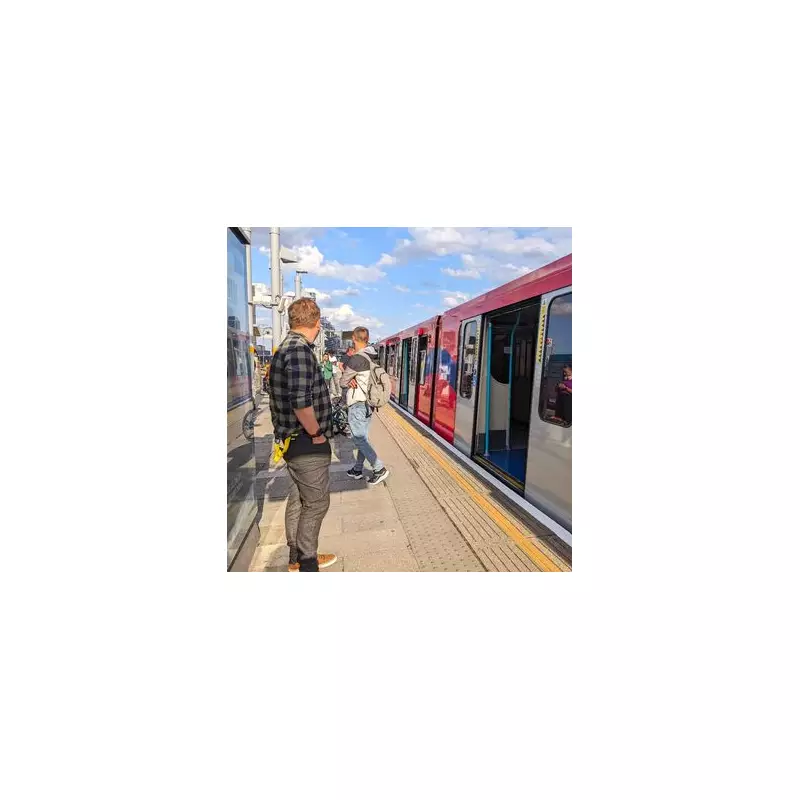
London's Docklands Light Railway stands as a unique transport solution in the UK capital, providing automated light rail services exclusively to one particular area while remaining conspicuously absent from other parts of the city.
The Birth of the DLR
By the middle of the 20th century, London's docklands had experienced significant decline from their former status as part of the world's busiest port. The various warehouses and trading facilities operated far below their Victorian-era capacity, creating an urgent need for regeneration.
In 1972, regeneration efforts gained momentum when the London Docklands Study team commissioned Travis Morgan and Partners to propose improvement strategies for the area. Among their suggestions was a 'mini tram' system designed to carry approximately 20 people per carriage.
This proposed light railway would connect the Docklands with the planned Fleet line Tube terminus at Fenchurch Street station. Later proposals involved extending the Jubilee line instead, though Margaret Thatcher's Conservative government reportedly deemed this option too expensive, with costs allegedly exceeding £300 million during a period of soaring inflation.
Why Light Railways Didn't Spread Across London
Despite the DLR's success since its 1987 launch, similar light railway networks failed to materialise in other London areas. The system ultimately represented a one-off project that offered a more economical alternative to traditional Underground expansion.
This cost difference becomes particularly evident when examining current Transport for London projects, including the ongoing plans to extend the Bakerloo line from Elephant and Castle to Lewisham and the significant tunnelling required for the Elizabeth line.
Constructing an overground light rail network through London's densely built central areas would have proved highly impractical. Meanwhile, areas north of the Thames likely didn't warrant light railway development due to insufficient demand, compounded by the region's already extensive transport connections.
The North-South Transport Divide
London Mayor Sadiq Khan has previously highlighted the historical transport disparities between different parts of the capital. He observed that North London has historically enjoyed superior connectivity compared to southern and eastern districts, noting that this pattern reflected historical wealth distribution across the city.
The Mayor, identifying as a South Londoner himself, pointed to maps showing how North London became "really, really, really, really well served" by comparison, acknowledging that transport infrastructure historically followed wealthier populations.
The DLR's concentration in East London thus represents both a practical solution to specific regeneration needs and a reflection of broader geographical transport inequalities that continue to shape travel patterns across the UK capital today.