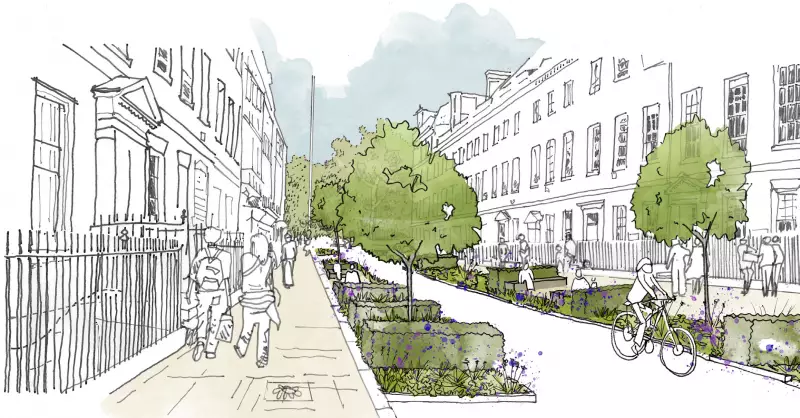
Central London is set to become significantly more cycle-friendly with radical new proposals for the Holborn area that have been described as "mind-blowingly good" by the London Cycling Campaign.
Transforming Central London Streets
The Holborn Liveable Neighbourhood project has revealed detailed images showing how several West End streets could be completely transformed through extensive pedestrianisation and new dedicated cycle routes. Camden Council began consulting residents on these ambitious plans back in February 2024, with the latest visualisations generating significant excitement among cycling advocates and urban planners alike.
This initiative forms part of London's broader shift toward becoming a cycling capital, with Transport for London having delivered 51 kilometres of new cycle lanes this year alone, alongside more than 1,500 new bike parking spaces across the city.
Key Changes Proposed
The sweeping changes would affect numerous streets in the Holborn area, including:
- Complete pedestrianisation of Great Russell Street between Museum Street and Montague Street
- Transformation of New Oxford Street with both direct and scenic winding pedestrian paths
- New one-way westbound traffic system on Great Ormond Street with expanded pavements
Other streets included in the proposals are Bedford Place, Bloomsbury Way, Bury Place, Fisher Street, Catton Street, Great Queen Street, High Holborn, Kingsway, Museum Street, Proctor Street, Drake Street, Southampton Place, Southampton Row and Theobalds Row.
Community Consultation and Next Steps
While the plans promise cleaner air, additional trees, and attractive paved pathways for both pedestrians and cyclists, they remain subject to public consultation. Camden borough residents are being encouraged to provide feedback through official channels before any final decisions are made.
The council has prepared 16 detailed images illustrating how the comprehensive redesign would alter the character of these central London streets, potentially creating more pleasant environments for both local businesses and visitors.
This represents the latest step in London's ongoing transformation into a more sustainable and cycle-oriented city, building on recent infrastructure improvements that have made cycling an increasingly popular mode of transport throughout the capital.