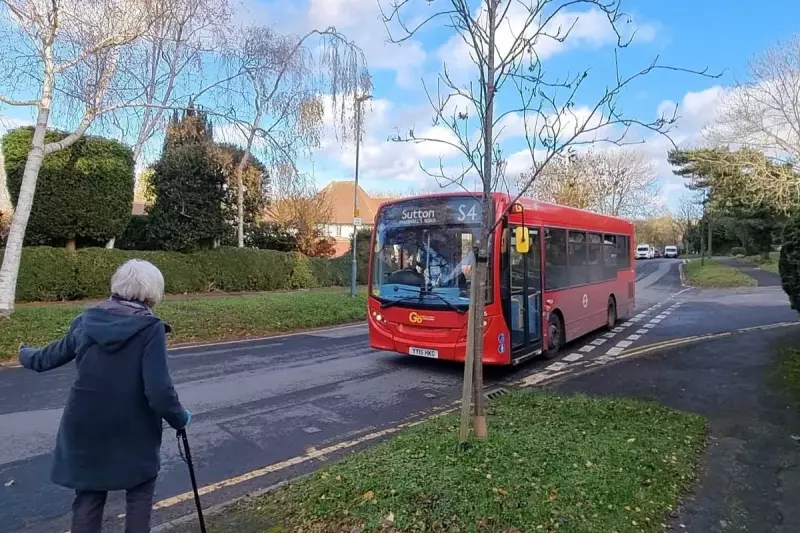
The immediate impact of a major bus service reduction in south London has left schoolchildren stranded and elderly passengers enduring long, cold waits. Residents across Sutton, Wallington, and Carshalton report being left at stops for over an hour after Transport for London (TfL) slashed the frequency of the vital S4 route.
Passengers Bear the Brunt of Reduced Services
The changes, introduced on November 29, saw the Metrobus-operated S4 service between Waddon Marsh and Sutton reduced from every 20 minutes on weekdays and Saturdays to a blanket 30-minute frequency seven days a week during daytime hours. Since then, reports have flooded in of overcrowded buses and missed journeys, placing significant strain on schools, families, and vulnerable residents.
To witness the effects firsthand, the Local Democracy Reporting Service joined West Sutton resident Margaret Reith on the S4. Ms. Reith relies on the bus to visit a friend in a Carshalton care home. Even boarding at a typically quieter midday period, the single-decker bus was near capacity with 35 passengers, many travelling through the winding hail-and-ride sections.
The journey was slow, hampered by traffic, double parking, and calming measures on narrow streets. This aligns with a recent City Hall report finding average bus speeds in London have fallen to 9.17mph, down from 10.27mph four years ago.
School Chaos and Safety Concerns Emerge
The cuts have hit local education hard. Amit Amin, Head Teacher of Oaks Park High School, said staff noticed a stark difference almost immediately. He described dozens of students waiting over 30 minutes, only for many to be left behind as full buses passed them by.
“Quite a few kids did not get on the bus because it was already full,” Mr. Amin stated, adding that some gave up and walked home. With around a third of pupils dependent on the S4, the reduced capacity has forced more parents to drive, worsening local congestion. Remaining students crowd onto the already unreliable 154 service.
Mr. Amin also raised serious safety alarms about narrow bus stops where delays cause crowds of up to 70 students to spill into private driveways. “I haven’t seen crowds that big before,” he added.
A "Counter-Productive" Policy Hits the Vulnerable
For residents like Margaret Reith, the policy is deeply flawed. After alighting near the care home, she faced a wait of one hour and 15 minutes for the return S4 bus, despite the promised 30-minute service. With no shelter at the hail-and-ride point, she highlighted the hardship for those who cannot stand for long periods.
“This would turn you off getting a bus,” she said after a journey taking over 90 minutes to cover less than four miles. She warned the impact is most severe for those without cars, particularly in less affluent areas like the Roundshaw estate served by the route. “Roundshaw is a poorer estate,” she said. “And it does not need poorer services.”
Bus expert Nash Travelman criticised the decision, calling the S4 a vital local “shopper hopper bus.” He noted its frequency was increased to 20 minutes only after the withdrawal of the 455 route and said cutting it again makes “little sense” when promoting active travel. He also lamented a lack of clear public reasoning from TfL.
The issue has drawn political attention. Bobby Dean, MP for Carshalton and Wallington, is calling for a full service restoration. “The cuts to the S4 bus are simply not on,” he told the LDRS. “School children and local residents need public transport they can depend on... I am urging all residents who feel the same to sign our open letter to TfL.”
In response, TfL's Director of Public Transport Service Planning, Geoff Hobbs, said the change followed a detailed review. “The change in frequency allows us to operate the service efficiently, improve reliability and better match capacity to demand,” he stated, adding that feedback is important and the changes will be kept under review.