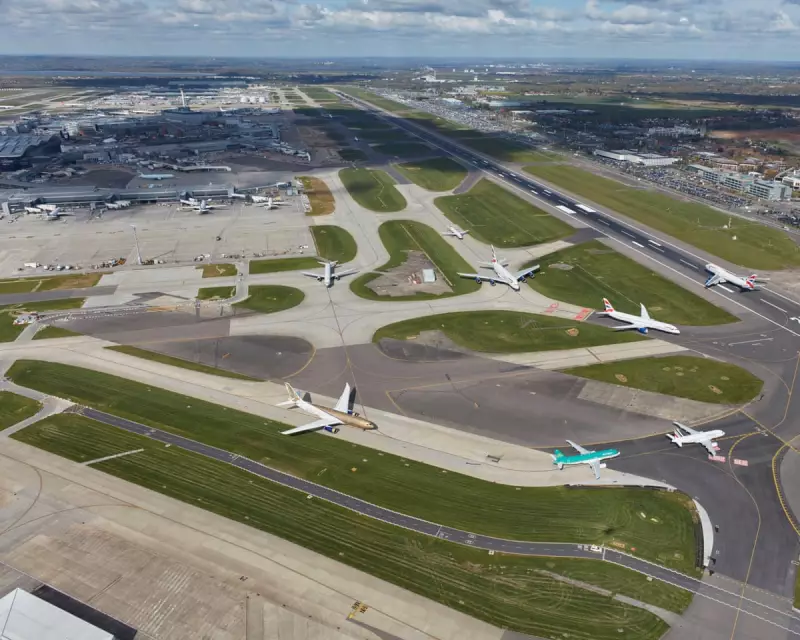
The UK government has officially thrown its weight behind a massive £33 billion expansion plan for Heathrow Airport, selecting the proposal for a third runway put forward by the airport's owners. This decision paves the way for what could be one of the UK's most significant infrastructure projects, with the goal of having the new runway operational by 2035.
Why Heathrow's Plan Won Out
Transport Secretary Heidi Alexander confirmed the decision, stating that the north-western runway scheme from Heathrow Airport Ltd (HAL) was deemed the "most credible and deliverable option". This conclusion was reached after considering a rival, lower-cost proposal from the Arora Group. Alexander highlighted that the maturity of HAL's plans was a principal factor, particularly its detailed proposal to reroute a section of the M25 motorway to run underneath the new 3.5km runway.
While the M25 works are estimated to cost £1.5 billion alone, the government assessed that the Arora Group's alternative, a shorter 2.8km runway, would still cause major M25 disruption and require the purchase of more homes. The chosen scheme must still pass the government's four tests covering environmental, economic, noise, and air quality impacts before receiving full planning permission, which is targeted for 2029.
Economic Boost vs. Environmental Concerns
Heathrow Airport has welcomed the move, emphasising the project's potential to enhance global connectivity, increase trade, and provide a substantial economic boost for British businesses involved in its construction. The total cost includes £21 billion for the runway itself and £12 billion for associated infrastructure like new satellite terminals, with a further £15 billion pledged for wider airport improvements. All funding is expected to be privately financed.
However, the expansion comes with significant scale. If completed, it could allow for up to 760 additional flights per day around London, increasing the airport's annual capacity to 756,000 flights and 150 million passengers.
This prospect has alarmed environmental groups. Tony Bosworth, a climate campaigner at Friends of the Earth, warned that the expansion is "the equivalent of bolting an airport the size of Gatwick on to Heathrow" and is incompatible with the UK's legally binding climate targets. The Department for Transport has stated that the project must meet the UK's climate obligations and will consult the independent Climate Change Committee.
What Happens Next?
The government will now review the Airports National Policy Statement, with a full public consultation expected by July next year. Despite the setback, the Arora Group has indicated it will continue to pursue a role in the expansion, reviewing how its plans can be adjusted to fit the longer runway design.
This decision marks a critical juncture for UK aviation, balancing the promise of economic growth against pressing environmental responsibilities and the logistical challenge of delivering a project of this magnitude.