TNT Sports has been forced to issue a public apology after Alexander Zverev's explosive outburst during their live broadcast of the Australian Open semi-final. The German tennis star launched into a furious tirade against tournament officials after opponent Carlos Alcaraz was granted a controversial medical timeout during their dramatic five-set battle.
Epic Semi-Final Marred by Controversy
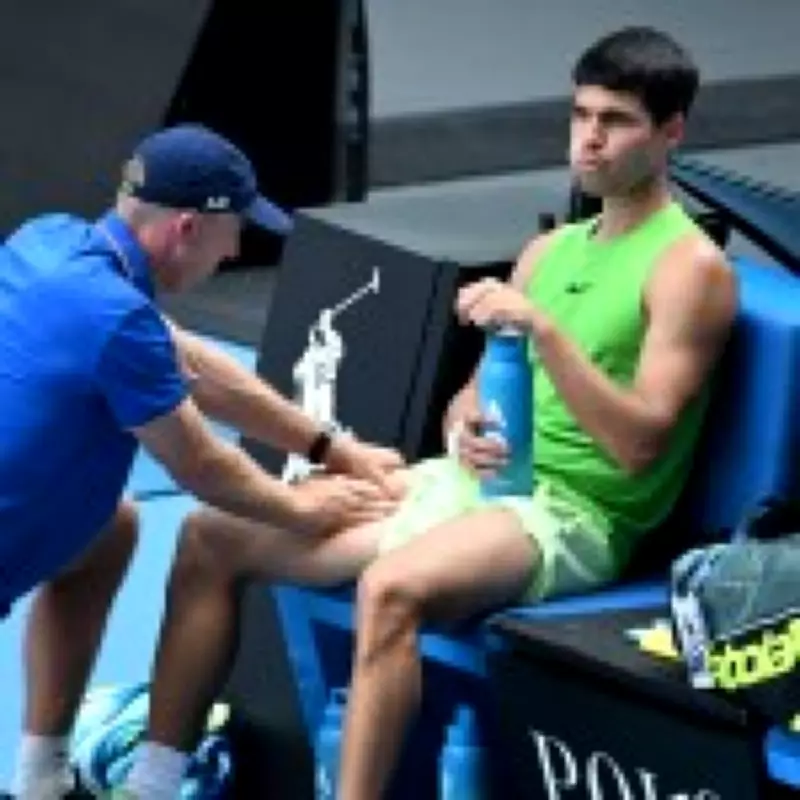
The incident occurred during what became the third longest match in Australian Open history, with Alcaraz eventually triumphing 6-4, 7-6 (7-5), 6-7 (3-7), 6-7 (4-7), 7-5 after five hours and 27 minutes of intense competition. With the third set poised at 4-4, Alcaraz suddenly pulled up, appearing barely able to move before requesting medical attention for what was described as a thigh injury.
Zverev's Heated Exchange with Officials
Zverev immediately contested the decision, engaging in a heated exchange with supervisor Andreas Egli that was captured live on TNT Sports' broadcast. 'He has cramp. He can't take a medical, he is cramping. What else should it be? This is absolute bulls***. This is unbelievable,' Zverev protested vehemently.

The world number five went further, accusing tournament organisers of preferential treatment: 'You are protecting both of them [Alcaraz and Jannik Sinner], this is unbelievable. Unbelievable. This is not possible. This is not possible. You cannot be serious.'
Broadcaster's Immediate Response
The explicit language forced commentator Nick Mullins to issue an immediate on-air apology to TNT Sports viewers. 'We apologise for any offensive language you may have heard,' Mullins stated during the broadcast, acknowledging the inappropriate nature of Zverev's comments being transmitted live to audiences.
The Medical Timeout Debate Intensifies
Following his defeat, Zverev elaborated on his frustration during post-match interviews. 'He was cramping and you can't take a medical timeout for cramping. What can I do? I didn't like it, but it's not my decision,' he explained, maintaining his position that Alcaraz had received unfair advantage.
The German also criticised umpire Marijana Veljovic for allegedly giving Alcaraz excessive recovery time between points, adding another layer to his complaints about the match's officiating.
Understanding Tennis Medical Rules
The controversy highlights tennis's complex regulations regarding medical interventions:
- Players are permitted three-minute medical timeouts for genuine physical injuries or illness
- Cramping is specifically excluded as it's considered a conditioning issue rather than injury
- Treatment for cramping is only allowed during change of ends or set conclusions
- If unable to continue due to cramping, players may forfeit points or games to force treatment opportunities
- Medical staff can overrule player claims if they determine the issue is cramping rather than injury
Expert Analysis Supports Zverev's Position
TNT Sports commentator Miles Maclagan provided insightful analysis during the match, acknowledging the validity of Zverev's complaints. 'I think Zverev has got a very good point,' Maclagan observed. 'The rules become very grey. You're not allowed a medical timeout for cramp, that's a loss of conditioning. But the difference between cramp and an injury becomes very blurred.'
Maclagan further explained the competitive implications: 'From Zverev's point of view he is viewing it as cramp and wants to press the pace. You can understand his argument and a lot of people think if there is a medical timeout then there should be a penalty for it because Zverev's fitness has been unquestionable.'
Broader Implications for Tennis
The incident raises significant questions about consistency in applying medical timeout rules during high-stakes matches. Maclagan noted that Zverev's exceptional physical conditioning represents a major competitive advantage that could be undermined if opponents receive questionable medical interventions.

'He has worked very hard, not just in this match but across the course of his career to be able to sustain a workrate that is difficult for his opponent,' Maclagan emphasised. 'Whether it's cramp or not, it's because of the duress that Zverev was able to put him under.'
Despite the controversy, Zverev acknowledged the match's quality, describing it as 'one of the best battles there's ever been in Australia,' while maintaining his criticism of the medical timeout decision.
The incident has sparked renewed debate about medical timeout regulations in professional tennis, with many observers calling for greater clarity and consistency in how such situations are handled during major tournaments.