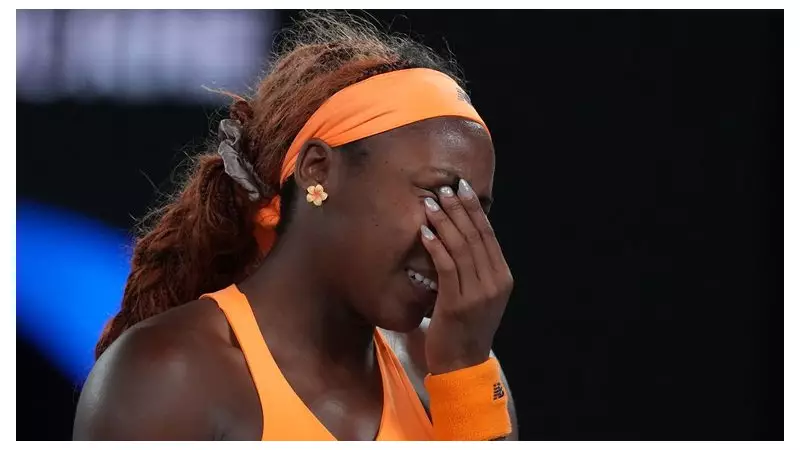
American tennis sensation Coco Gauff has publicly condemned the lack of privacy afforded to professional players after she was filmed smashing a racket in an off-court area at the Australian Open. The incident, which occurred following her quarter-final defeat to Ukraine's Elina Svitolina on Tuesday, has ignited a broader conversation about the boundaries of media coverage in the sport.
An Unwanted Broadcast
The 21-year-old, a two-time Grand Slam champion, expressed her frustration after footage of her breaking the racket was swiftly televised and disseminated across social media platforms. Gauff had deliberately sought a secluded spot, believing it to be free from cameras, only to discover that virtually every corner of Melbourne's Rod Laver Arena, barring the changing rooms, is under surveillance.
"I tried to go somewhere where I thought there wasn't a camera, because I don't necessarily like breaking rackets," Gauff explained in her post-match press conference. "Certain moments - the same thing happened to Aryna (Sabalenka) after I played her in the final of the US Open - I feel like they don't need to broadcast."

A Pattern of Intrusion
This is not the first time Gauff has addressed the issue of private moments being made public. She referenced a previous incident at the French Open where she broke a racket on-court, vowing never to repeat such an action in view of spectators, particularly children. "I said I would never do it again on court because I don't feel like that's a good representation," she remarked, emphasising her awareness of her role model status.
The star argued that venting frustration on equipment is preferable to directing it towards her support team, stating, "they don't deserve that, and I know I'm emotional." While she does not view racket-smashing as inherently "a bad thing", she strives to avoid performing such acts in public settings.
A Wider Issue in Tennis
Racket destruction is a relatively common occurrence in professional tennis, often resulting in fines from governing bodies. Notable examples include Daniil Medvedev's dramatic smash at last year's US Open. However, the filming and broadcasting of a player attempting to release tension in what they believe to be a private space is a distinct and growing concern.
This incident highlights a significant privacy dilemma, especially given the increasing number of young athletes in the sport who may be unprepared for such intense scrutiny. The debate raises questions about where the line should be drawn between public interest and personal space.
Calls for Dialogue
Gauff suggested that "maybe some conversations can be had" with tournament organisers and broadcasters to address these privacy issues. Tennis Australia, which operates the Australian Open, has been approached for comment regarding their filming policies and player welfare considerations.
The episode marks a rare low point for Gauff, who made her Grand Slam debut at just 15 and clinched her first major title at the 2023 US Open aged 19. As the sport continues to evolve, the balance between media access and athlete privacy remains a contentious topic, with this incident likely to fuel further discussion among players, fans, and officials alike.