It has been five long years since the world first learned of the looming legal storm over brain damage in sport, yet for the hundreds of former rugby players at its heart, the wait for resolution and support continues.
A Legal Labyrinth in the Royal Courts
Deep within the warren-like Royal Courts of Justice in London, three separate sets of legal actions concerning brain injuries in sport have been slowly grinding through the system for the past three years. The same law firm, Rylands Garth, is representing claimants in cases against football, rugby union, and rugby league.
The two rugby cases, involving union and league, have become particularly entangled. The rugby union case names three defendants: World Rugby, the Rugby Football Union, and the Welsh Rugby Union. This multiplicity means every procedural step, even scheduling, must be argued and agreed upon in quadruplicate, creating a morass of bureaucracy.

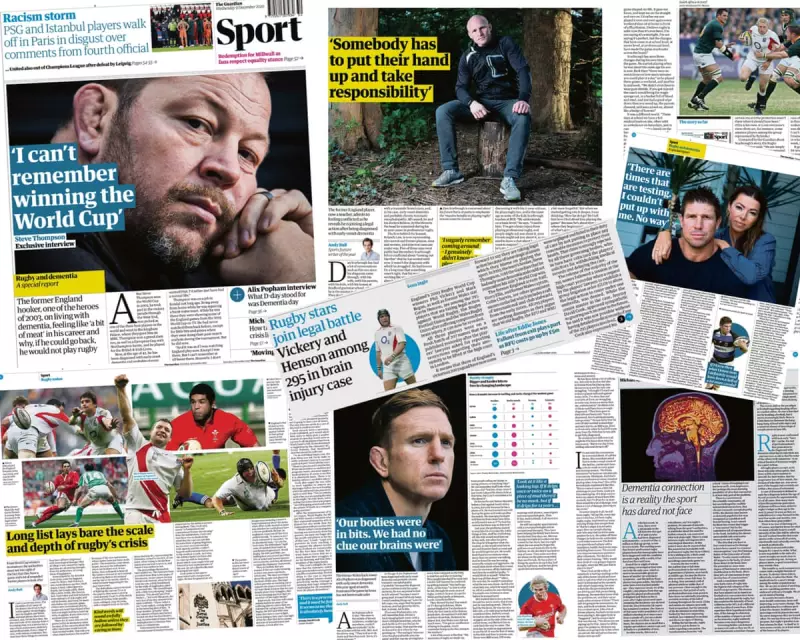
The story broke in 2020 when Steve Thompson, a 2003 Rugby World Cup winner, revealed he had no memory of that historic victory due to his brain injuries. He was swiftly joined by fellow internationals Alix Popham, Michael Lipman, and others in speaking out. By the deadline for claims, the group had swelled to over 1,000 former players: 313 from rugby league and 787 from rugby union.
Players in Limbo as Legal Process Crawls
The claimants represent a broad cross-section of the sport, from international stars to amateur club players, both men and women. Their diagnoses range from probable chronic traumatic encephalopathy (CTE) to Parkinson's and motor neurone disease. While their conditions vary in severity, all are neurodegenerative.
Despite the urgency of their medical situations, a trial remains distant. One solicitor optimistically suggests the rugby union case may reach court by 2027. The proceedings are stuck in a protracted "case management" phase, where both sides must agree on how to structure a trial involving hundreds of claimants and hundreds of thousands of documents.
Progress is painstakingly slow. Recent hearings have seen barristers and the judge, Senior Master Cook, bogged down in disputes over the disclosure of medical records. A major row has centred on the interpretation of the word "all" in the requirement to provide all relevant medical history, a demand claimants argue is an impossible burden.
Alix Popham voices the frustration of many, accusing the defendants of following a playbook of "deny, deny, deny, delay, delay, delay." World Rugby denies this characterisation.
Delays, Disputes and a Shifting Sporting Landscape
The delays are not one-sided. Judge Cook has shown sympathy for defendants' arguments that Rylands Garth has been slow to fulfil disclosure obligations. His patience eventually ran out, leading to an "unless order" that threatened to strike out many claims if the firm did not comply fully. This order is now under appeal, adding another layer of delay.
Outside the courtroom, the sport has not stood still. In the five years since the lawsuit emerged, rugby has introduced:
- Smart mouthguard technology for monitoring impacts.
- Reduced contact in training.
- Stricter sanctions for dangerous tackles.
- A brain health service for former players.
- Recommended law changes on tackle height in the community game.
World Rugby maintains these vital welfare changes are not a reaction to litigation but part of an ongoing commitment to player safety. Nevertheless, for the claimants waiting in the court's cold corridors, these reforms offer little immediate solace. They seek a settlement that will provide for their future care and security for their families.
As the legal machinery creeps forward, with a fourth judge set to join the process next year, Steve Thompson, Alix Popham, Michael Lipman, and hundreds more continue their agonising wait for the help they desperately need.