The Smiling Assassin: How McKenzie Rescued All Blacks at Murrayfield
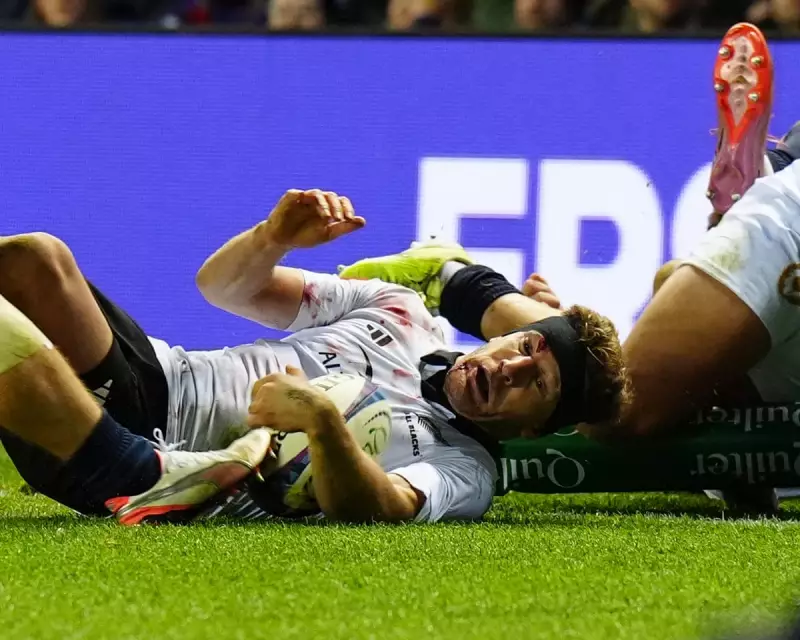
As New Zealand's players trudged off the Murrayfield pitch last Saturday, one figure stood out amidst the battle-weary All Blacks. Damian McKenzie, blood trickling from a head wound yet beaming with characteristic cheer, embodied the paradoxical nature of modern Test rugby. Here was the so-called 'smiling assassin', having just secured his team's victory against Scotland with a late try and conversion, looking more like a victorious prizefighter than a conventional rugby player.
The 74th-minute try that sealed the 31-23 win was anything but conventional. McKenzie's extraordinary spatial awareness and body contortions enabled him to evade Blair Kinghorn and George Turner, defying physics to score in the left corner. This moment of brilliance, combined with a crucial 50-22 kick and relentless support running, earned him the man of the match award and saved New Zealand from what threatened to become a grisly Murrayfield defeat.
Veteran Duo Defying Time and Convention
The performance prompted deeper reflection about the value of players who operate outside rugby's increasingly rigid systems. At 31, McKenzie represents one half of a remarkable All Blacks partnership with Beauden Barrett, who at 34 continues to defy conventional sporting timelines. The veteran playmaker, with 143 Test caps to his name, remains remarkably untouched by time's passage – his signature pitter-patter running style as effective as ever, his composure undiminished.

Both players have committed their long-term futures to New Zealand rugby, with Barrett contracted until 2027 and McKenzie until 2029. Their continued presence provides a living argument for skill and vision over pure physical power in the modern game. While debates persist about whether either represents New Zealand's greatest ever in their positions – Dan Carter and Christian Cullen still loom large in such discussions – their contribution to rugby's global appeal is undeniable.
From Dairy Farms to Twickenham: The Making of Instinctive Genius
Perhaps significantly, both players share rural origins that might have shaped their distinctive approaches. McKenzie hails from dairy farming stock in Southland, at the bottom of New Zealand's South Island, while the Barrett brothers were raised on a dairy farm just south of New Plymouth. The wide open spaces of these environments, combined with sporty elder siblings, arguably gave them the freedom to develop their imaginative, instinctive playing styles.
This background invites compelling questions about player development systems. Would the same characteristics have flourished had McKenzie grown up on a British dairy farm? Modern English rugby tends to prioritise physical size and data analysis over instinctive genius, particularly with Premier League football often creaming off the most gifted young athletes.
This Saturday's showdown at Twickenham will test these contrasting philosophies. England, under Steve Borthwick, are expected to deploy their trademark aerial assault, potentially utilising the high-flying capabilities of Tommy Freeman and Tom Roebuck alongside the secure hands of Freddie Steward. The All Blacks will need to either adapt their backline formation or find alternative ways to impose their preferred style of play.
Regardless of whether McKenzie starts or appears as New Zealand's super-sub, his presence guarantees the potential for something special. Viewers will be able to gauge the contest's momentum by one simple metric: how often they catch sight of that trademark winning smile amidst the Twickenham tension.
Broader Rugby Landscape: Discipline Debates and French Tests
Meanwhile, rugby's ongoing disciplinary controversies continued elsewhere. South Africa's Lood de Jager received a permanent red card for a shoulder charge on France's Thomas Ramos, a decision that many considered harsh given Ramos had lowered his height. The incident followed the recent rescinding of Tadhg Beirne's 20-minute red card against New Zealand, highlighting the continuing inconsistency in rugby's disciplinary processes.

In Paris, the Springboks demonstrated their remarkable resilience by defeating France with 14 men, reinforcing their status as world rugby's benchmark team. The result served as a stark reminder of the challenge facing all their rivals, including both England and New Zealand.
As attention turns to Twickenham, history offers England encouragement. The last time they defeated the All Blacks in London was in 2012, and with forecast damp conditions potentially favouring their kicking game, opportunity knocks for Steve Borthwick's squad. Having lost three tight encounters to New Zealand in 2024 by a combined margin of just 10 points, England will believe this could be their moment.
Whatever unfolds, the presence of players like Barrett and McKenzie ensures the spectacle will extend beyond mere result. They represent rugby's enduring capacity for beauty amidst the brutality – a quality that transcends national loyalties and reminds us why the sport continues to captivate.