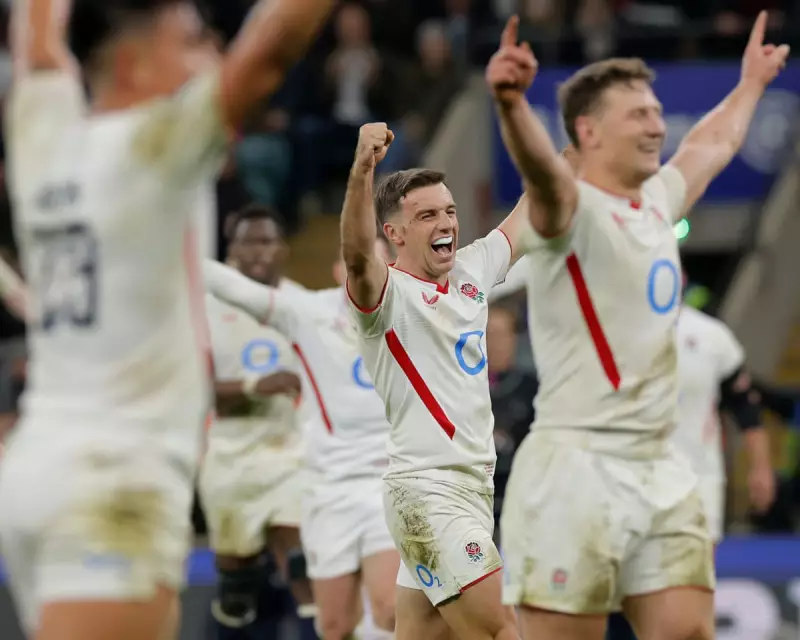
The England fly-half George Ford stood triumphant at the centre of a jubilant scene as the final whistle blew at Twickenham, sealing a hard-fought victory against New Zealand. This moment of pure elation, captured by Tom Jenkins for The Guardian, epitomised a November to remember in international rugby. While discourse has been dominated by contentious incidents, this autumn offered a feast of brilliant rugby that deserves celebration.
Beyond the Controversy: Celebrating Rugby's Finest Moments
South Africa and Ireland engaged in a slugfest for the ages, yet talk centred on yellow cards and high tackles. England secured their 11th consecutive Test win against a spirited Argentina, only for the conversation to be hijacked by alleged after-the-whistle shoving. Wales and New Zealand traded 11 tries in a spectacular ding-dong encounter, yet the narrative was weighed down by caveats. It prompts the question: what is the true value of Test rugby beyond winning trophies?
For the romantics who see their pint of Guinness as half full, for those who believe elite rugby has never been more entertaining, let's turn the dial towards whimsy. Let's revisit the moments that made this autumn's internationals utterly irresistible.

The Unstoppable Force: Springboks' Scrum Dominance
An obvious starting point is the sheer power of the Springboks' pack. Even without the nominated World Rugby Player of the Year, prop Ox Nché, and the formidable tighthead Frans Malherbe, the hefty mass in green pulverised Ireland on their own turf. The Irish scrum conceded six penalties and a penalty try, with two of their front-rowers sent to the sin bin. This was rugby in its most concentrated form, a display of raw power as coach Rassie Erasmus finally claimed a win on Irish soil.
French Flair and English Efficiency
If South African beef isn't to your taste, how about a serving of French fizz? After an initial beating by the Boks, Les Bleus rediscovered their mojo. Against Australia, Louis Bielle-Biarrey added another stunning highlight to his collection with an audacious chip-and-chase finish. Later, Kalvin Gourgues, with his first ever touch in Test rugby, scythed through the Wallabies' midfield, cantered 50 metres, and delivered a precise pass for Bielle-Biarrey to score. The French production line is clearly thrumming at full throttle.
So too is England's. Max Ojomoh was magnificent against the Pumas, scoring an opportunistic try and setting up two more. One assist came from an inch-perfect cross-field kick, the other a delicious offload as he tumbled to the floor. His ebullient post-match interview, where he beamed about waiting so long for his opportunity, offered a heartwarming juxtaposition to the nastiness that marred the occasion.
England may not have won over many neutrals, but that's primarily because they have become a genuine threat. Their strategy relies heavily on the composure George Ford brings at fly-half and a belligerent contest for high kicks. It is a ruthlessly efficient method, a hallmark of Steve Borthwick's coaching, who is clearly replicating his Leicester Tigers' success with the national team.
New Talents and Reassuring Archetypes
The rise of New Zealand's Fabian Holland as breakthrough player of the year brought welcome relief. The 23-year-old lock, who moved from the Netherlands at 16, looks like he was chiselled from rock for this purpose. With oversized mitts and a quietly spoken demeanour, he fits the classic All Blacks lock archetype, reassuring fans that the production of formidable forwards continues.
Rugby's charm also lies in those who break the mould. The rise of Sacha Feinberg-Mngomezulu in South Africa, with a Zulu mother and Jewish father, challenges stereotypes. Like England's Henry Pollock, he is abrasive and confident, representing a new generation of personalities that the sport has long needed.
The Future of Test Rugby
Next year, the notion of a 'friendly' Test will vanish with the arrival of the Nations Championship. Every game will carry meaning, every collision will serve log points. But something will be lost in the process – the carefree joy that made this autumn such a tonic, for those who chose to see it.

A Fixture Too Far?
The final game of the autumn, Wales vs South Africa, highlights a growing issue. Falling outside World Rugby's designated Test window, it renders the contest almost meaningless. With 13 front-line Welsh players unavailable, including Adam Beard, Tomos Williams, and Louis Rees-Zammit, the team resembles a development XV. The real purpose of this match is not player development but to siphon money from the public before the 2025 season. Supporters are expected to accept this as a fair contest, which it palpably is not.
This autumn has delivered unforgettable drama, from England's relentless winning machine to the emergence of new stars. As the game evolves, it's crucial to cherish these moments of pure, unadulterated rugby brilliance.