England Conquer Rugby Everest with Historic All Blacks Victory
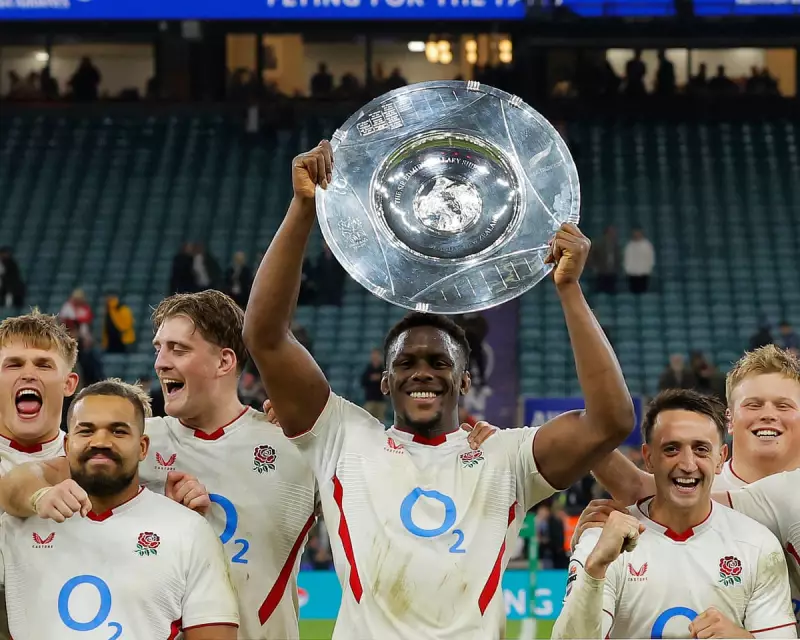
Maro Itoje lifted the Hillary Shield in triumphant celebration as England secured their first home victory against New Zealand since 2012, achieving their second-highest margin of victory in the 120-year history of this prestigious fixture. The symbolism wasn't lost on anyone at Twickenham, where England's rugby renaissance under Steve Borthwick reached new heights against the mighty All Blacks.
From Setback to Triumph: England's Remarkable Comeback
When England found themselves 12-0 down early in the contest, many might have expected the familiar narrative of southern hemisphere dominance to continue. Instead, George Ford's remarkable series of drop goals provided the platform for an extraordinary turnaround. The fly-half's clinical execution under pressure demonstrated the growing composure that has become England's trademark under Borthwick's leadership.
Captain Maro Itoje revealed the psychological preparation that underpinned this victory, describing his morning-of-the-game address to younger squad members. "I've been fortunate enough to be around England for a while," Itoje reflected, "but sometimes it can just feel like a job... you have to take a step back and actually realise where you are." His message resonated throughout the team, inspiring players to reconnect with their childhood dreams of facing the haka at a sold-out Twickenham.

Tactical Brilliance and New Zealand's Worrying Decline
The match's defining moment arrived in the 54th minute, showcasing England's evolving tactical sophistication. From clean lineout possession, Alex Mitchell delivered a rapid miss pass to Ollie Lawrence, who instead of taking the obvious contact option, deftly offloaded to centre partner Fraser Dingwall. The resulting try, scored with precision and intelligence, highlighted qualities once considered New Zealand's exclusive trademark.
Meanwhile, the All Blacks' performance raised serious questions about their current trajectory. Their 43-10 collapse against South Africa in September appears less like an aberration and more indicative of systemic issues. The concerning results extend beyond the senior team, with Australia's Under-18s having comprehensively defeated New Zealand secondary schools twice in recent months.
England's scrum has developed into what Itoje described as "a weapon," while the emergence of young talents like Guy Pepper, Henry Pollock, and Immanuel Feyi-Waboso provides depth and competition. With ten consecutive victories building formidable momentum, the squad's belief is visibly growing.
Looking Ahead: World Cup Ambitions and Global Implications
While celebrating this significant achievement, England remain focused on their ultimate objective: the 2027 Rugby World Cup. The upcoming World Cup draw on December 3 represents the next milestone, with injured players including Ollie Chessum and Tommy Freeman expected to return for the 2026 Six Nations campaign.
Itoje's conviction about England's potential is unmistakable. "We want to get better," he stated. "When I think about the squad, where we are and our desire to grow as a team, I think we can." This renewed self-belief, coupled with strategic clarity, suggests England's ascent in world rugby is gathering pace at precisely the right moment.
The broader concern for world rugby remains New Zealand's apparent decline. As Itoje aptly noted, echoing Sir Edmund Hillary's famous wisdom, "It is not the mountain we conquer but ourselves." For England, that conquest appears increasingly within reach, while New Zealand face their own formidable rebuilding challenge.