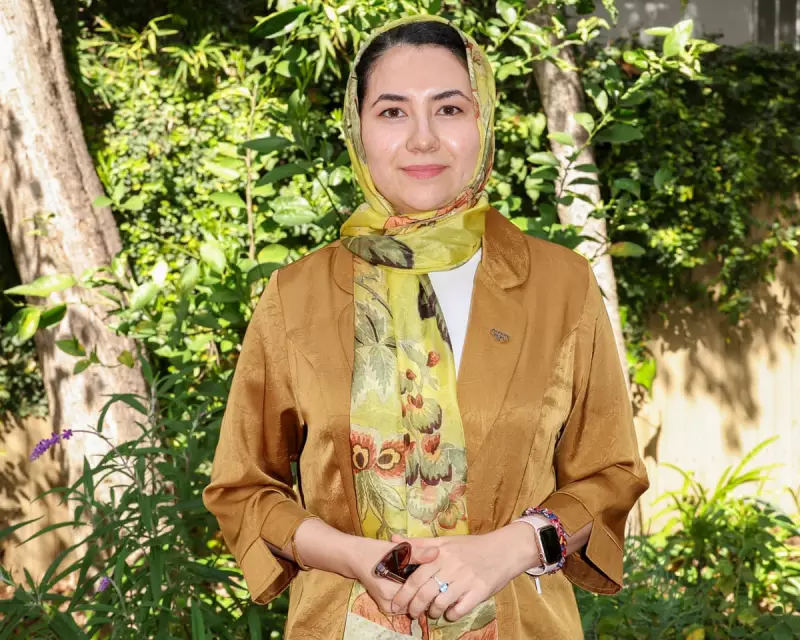
Samira Asghari, the International Olympic Committee's youngest member at 31, is fighting for the sporting future of Afghan women and girls from exile, declaring that negotiation with the Taliban is the only viable path forward.
Never, Ever Give Up: A Message to Afghan Women
In an impassioned plea, Asghari urged Afghan female athletes to seize every small opportunity. "My message for all Afghan women who play is that if there is any small opportunity, do it," she stated. "My solid message is never, ever give up." Acknowledging Afghanistan's long history of conflict, she expressed unwavering belief in the country's people as its ultimate future.
Her role now centres on dismantling the restrictions that prevent women and girls in Afghanistan from participating in sports. This daunting task requires her to engage with the very group enforcing these bans: the Taliban.
Grassroots Change and Taliban Negotiation
Asghari argues that while life in Afghanistan remains difficult, the desire for reform is growing. She has set a clear goal for tangible progress before the 2028 Los Angeles Olympics. "Before 2028 and the Los Angeles Olympics, what I really hope for is to develop sports for schools, to invest in girls' sports in Afghanistan," she explained.
Currently, girls are permitted to attend school only until year six, and provisions for sport—including teachers and equipment—are severely lacking. Her strategy hinges on dialogue. "My hope is that we could reach a negotiation point with the Taliban, to develop sport and the primary school for girls," she said, emphasising the importance of introducing the new generation to sports like basketball, football, and taekwondo.
The IOC has been in "continuous dialogue" with the Taliban-controlled Afghan sporting authorities since December 2022, aiming to reverse the current restrictions. Asghari is aware of the criticism this approach attracts, particularly concerning the Taliban's human rights record.
"There are critics who ask why we should be talking to the Taliban in the first place, when they ignore human rights," she acknowledged. "That's the reality and, of course, we stand against the breach of human rights. But on the other hand, we can't leave behind the daughters and the girls of Afghanistan." She advocates for persistent communication, believing that compromise is necessary to achieve progress.
A Unifying Platform in Riyadh
Asghari spoke from Riyadh, where she was observing the Afghan team at the Islamic Solidarity Games (ISG). The event, featuring 57 Muslim nations competing in 21 sports and two para-sports, presented a stark contrast to the small, compromised team for the Paris Olympics.
Afghanistan fielded a team of 76 athletes, largely comprised of exiles from hubs in countries like Iran. The games were marked by a significant achievement: Mohammad Yousuf Jahangir won a historic first gold for Afghanistan in the men's 70-75kg muay thai boxing final.
Asghari sees the ISG as a crucial unifying platform. "The Games are unifying the neighbourhood," she said, highlighting the need for such events in underdeveloped and conflict-affected regions like Afghanistan, Iraq, and Pakistan. She suggested that the Saudi-led Islamic Solidarity Sports Association could play a diplomatic role by engaging the Taliban and sharing Saudi Arabia's own experience of social reform.
Looking ahead, Asghari's optimism for Afghan sport is clear. "I believe in the youth of Afghanistan," she affirmed. For the 2028 Olympics, her ambition extends beyond mere participation. She aims for a stronger, properly invested team that can compete at a higher level, tapping into the potential of athletes currently in exile.