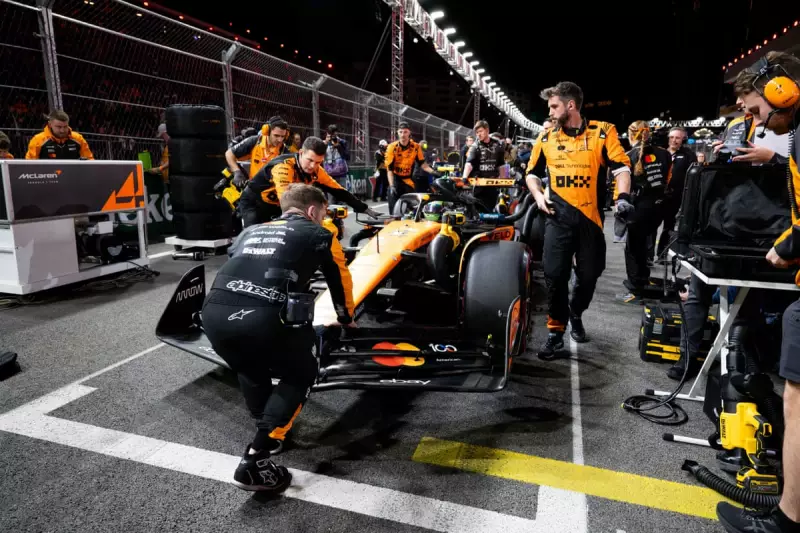
McLaren's Catastrophic Las Vegas Error
McLaren committed what can only be described as a monumental error during the Las Vegas Grand Prix, resulting in the disqualification of both Lando Norris and Oscar Piastri from their hard-earned positions. The team's miscalculation couldn't have come at a worse moment, with only two races remaining in the Formula One season and the drivers' championship hanging in the balance.
The Costly Technical Infringement
Both McLaren cars were found to have skid blocks worn beyond the permitted 9mm limit, a discovery made after Norris had finished second and Piastri fourth behind race winner Max Verstappen. This technical infringement completely overturned what had appeared to be solid results for the British team.
The immediate consequence saw the championship standings dramatically tighten. Verstappen is now just 24 points behind Piastri, with Norris's previously comfortable lead suddenly looking precarious. Had the disqualification not occurred, Norris would have entered the next round in Qatar with a 30-point advantage over Piastri and 42 points over Verstappen.
How Did McLaren Get It So Wrong?
Teams constantly push the limits of car setup to maximise aerodynamic efficiency, running cars as close to the ground as regulations allow. However, several factors converged to create a perfect storm for McLaren in Las Vegas.
Critical practice session time was lost to two stoppages, preventing the team from completing their usual race simulations. This deprived engineers of invaluable data needed to accurately set ride heights. Compounding the issue, the final practice session took place in wet conditions, where cars behave entirely differently aerodynamically compared to dry races.
During the race itself, the team encountered unexpected bouncing and bottoming of the car floor - a characteristic of the current ground-effect regulations. This combination of factors led to excessive wear on the skid blocks, ultimately resulting in the double disqualification.
Evidence suggests McLaren were aware they were sailing close to the wind. Norris received instructions late in the race to adopt a 'lift and coast' approach, initially thought to be for fuel saving but actually intended to minimise skid block wear. Norris himself referenced these "issues on our car" in McLaren's subsequent statement.
Championship Implications and Unanswered Questions
The timing of this error could hardly be worse. With just 58 points remaining available across the final two races, any single incident could now decide the championship. A mechanical failure, on-track error, or further technical infringement could see Verstappen capitalise on McLaren's misfortune.
This scenario seemed unimaginable after the Dutch Grand Prix in late August, when Norris trailed Piastri by 104 points. The remarkable comeback now faces an unnecessary complication entirely of McLaren's making.
Awkward questions remain about why McLaren alone fell foul of these regulations when other teams faced identical track conditions. The team possesses one of the strongest cars on the grid and enjoyed a commanding championship position, making the error particularly difficult to explain.
Norris can still secure the title in Qatar by outscoring both rivals by two points, with 33 available. However, the confidence within the McLaren camp must surely be shaken after such a fundamental miscalculation at this critical stage of the season.