New independent testing has delivered a sobering reality check for electric vehicle buyers in Australia, revealing that not a single model tested managed to achieve its advertised driving range on a single charge.
The Best and Worst Performers Revealed
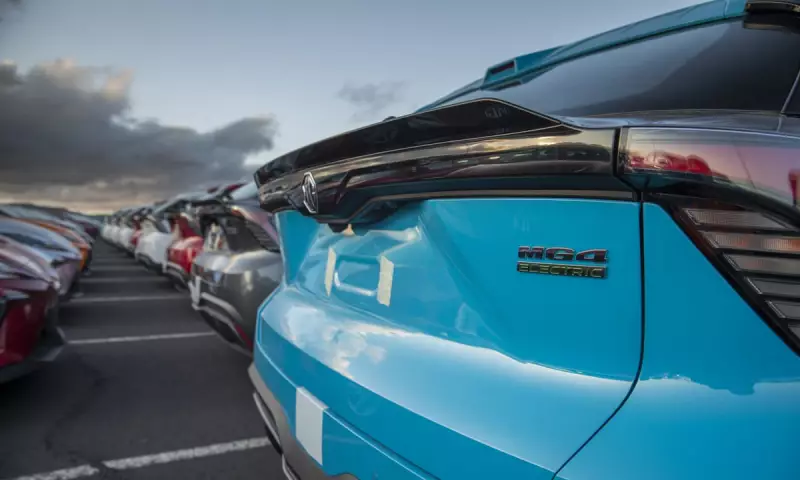
The Australian Automobile Association (AAA) released the latest results from its Real-World Testing Program on Thursday. The findings show a significant gap between laboratory promises and actual road performance. The standout underperformer was the MG4 electric hatchback, which managed just 281km against its claimed 405km range—a substantial shortfall of 124km, or 31%.
At the other end of the scale, Tesla's Model Y SUV emerged as the closest to matching its official figures. The US-made vehicle fell short by just 16km from its claimed 466km range, making it the best performer in the tests to date.
A Pattern of Exaggerated Claims
These latest trials, which included four new electric models, add to a previous round of tests where all five EVs also failed to hit their promised range. This issue is not exclusive to electric vehicles. The AAA's broader programme, which has examined 140 vehicles out of a planned 200, found that 76% of internal combustion and hybrid vehicles consumed more fuel than advertised.
The tests are conducted on a 93km mixed route in Geelong, Victoria, designed to replicate real-world driving conditions across urban streets, rural roads, and motorways. The programme was launched in 2023 with $14m in federal government funding, partly in response to the 2015 Volkswagen emissions scandal.
Why Real-World Testing Matters for Consumers
Michael Bradley, the AAA's Managing Director, emphasised the critical importance of this independent data for motorists considering the switch to electric. "These results give consumers an independent indication of real-world battery range," he stated. "It means they now know which cars perform as advertised and which do not."
Bradley argued that transparent information is key to building driver confidence. "Giving consumers improved information about real-world driving range means buyers can worry less about running out of charge and make the switch to EVs with confidence," he added.
Other models tested in this round included the Kia EV3, which missed its mark by 67km (11%), and the Smart #1, which fell short by 53km (13%). As electric and hybrid vehicle sales continue to climb in Australia, these tests provide an essential, unbiased benchmark for performance that goes beyond manufacturer claims.