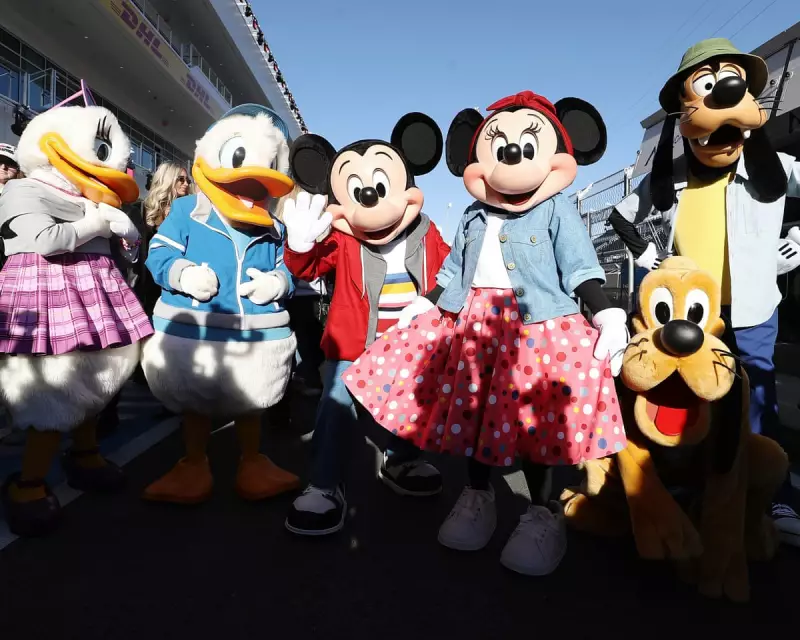
The remarkable transformation of Formula One's fortunes in the United States reached new heights this weekend with the surreal sight of Mickey Mouse leading fans down the pit lane at the Las Vegas Grand Prix.
This unlikely partnership between the American entertainment giant and the motorsport represents a sea change for F1 in a market it has long coveted. Where a decade ago such a collaboration would have been unthinkable, Disney characters have become central to the race weekend festivities.
From Niche Sport to Mainstream Phenomenon
The presence of Donald Duck and Goofy outside team garages underscores how dramatically F1's American prospects have improved. This weekend marks the beginning of a two-year collaboration that will see Mickey and the Disneyland Band perform the national anthem and feature in post-race celebrations at the Bellagio fountains.
Despite unexpected rain sweeping across the Nevada desert, enthusiasm among fans remains undiminished. These supporters represent the vanguard of F1's exploding popularity across the United States, with the country now hosting three sellout races.
Billions in Value and Growing American Influence
The sport's commercial success has been nothing short of spectacular. Formula One recently signed a groundbreaking $160 million per year deal with Apple for US television rights over five years. This enormous investment signals the tech giant's belief that F1 now appeals directly to its audience.
Eddy Cue, Apple's vice-president of services, recently highlighted the sport's transformation, noting that Mercedes team principal Toto Wolff now gets stopped constantly for pictures in New York. "Five years ago, nobody would know who Toto was as he was walking down Soho," Cue observed.
The numbers tell a compelling story of growth:
- US firms sponsoring or partnering with teams have increased from 44 in 2017 to 125 this year
- F1's market value has reached $24 billion, triple what Liberty Media paid in 2017
- 47% of new US F1 fans are aged between 18-24, with more than half being female
Cultural Shift and Future Ambitions
Stefano Domenicali, Formula One Group's chief executive, has been instrumental in this American resurgence. The former Ferrari team principal believes there's still enormous potential for growth.
"The sky's the limit," Domenicali states. "I want us to have more than a billion fans worldwide and growing our fandom in the US can certainly help us to get there."
He emphasizes the need for F1 to become embedded in American culture, noting that the sport has changed its approach significantly. "When the sport came to the country previously, we thought we could just turn up for four days, race and everyone would love us. Now we know we must keep engaging with our American fans and US culture until F1 becomes relevant and a part of it."
The demographic numbers are particularly impressive, attracting what Domenicali describes as the "golden ticket" - young, enthusiastic fans without the baggage of F1's historical legacy. While series like Drive to Survive and Brad Pitt's F1 film may have drawn them in, the sport is now focused on delivering experiences that keep them coming back.
On the Las Vegas streets, this new approach is evident everywhere. Fans revel in the spectacle, the lights, the music, and the entertainment-focused experience. Partnerships with brands like Disney, Hello Kitty, and Lego are embraced rather than questioned, with associated merchandise selling rapidly.
Though this American-focused strategy has drawn criticism from traditional European heartlands, the commercial results speak for themselves. As Mickey Mouse strolls the pit lane and Fantasia comes to Vegas, Formula One's American transformation appears complete - and extraordinarily profitable.