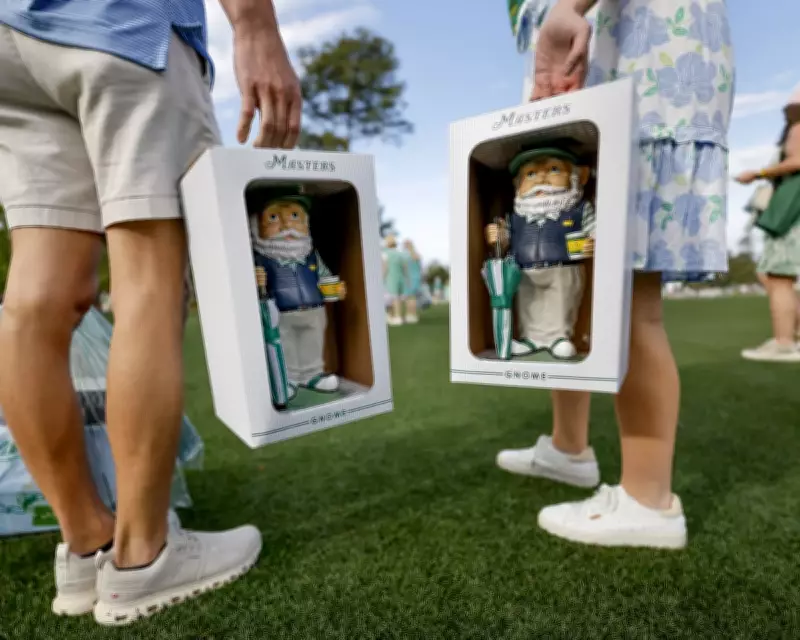
The annual Masters media address took an unexpected and amusing turn when Augusta National chairman Fred Ridley made a startling admission about one of the tournament's most sought-after merchandise items. Ridley revealed he has been completely kept in the dark about the future availability of the iconic Masters gnomes, despite his position as the club's chairman.
The Gnome Mystery Deepens at Augusta
When questioned about widespread speculation that 2026 might mark the final year for gnome sales at the Masters, Ridley responded with surprising candor. "Number one, the question is not trivial," he stated emphatically. "Number two: I've been asking that question for several years and they won't tell me the answer. So I can't help you."
This revelation highlights an intriguing level of internal secrecy at Augusta National, where even the chairman appears to be excluded from certain conversations about merchandise strategy. The identity of "they" – the individuals making these decisions – remains unclear, adding another layer of mystery to the already secretive golf institution.
Merchandise Mayhem and Resale Frenzy
The Masters gnomes have become legendary for their rapid sell-out times, typically disappearing from merchandise outlets within just one morning hour during tournament week. Priced at $49.50 (approximately £37), these collectible items have developed enormous resale value on secondary markets, creating what some officials reportedly view as problematic spectator experiences.
The stampede for these ceramic figures has apparently raised concerns among Augusta National officials about crowd management and the overall fan experience in merchandise areas. The combination of limited availability, high demand, and significant resale potential has transformed what might seem like simple tournament souvenirs into highly coveted status symbols.
Serious Golf Matters: The Ball Rollback Debate
While the gnome discussion provided lighthearted moments, Ridley addressed more substantive golf issues with characteristic seriousness. He reaffirmed Augusta National's position supporting potential golf ball rollback measures, despite resistance from equipment manufacturers and several prominent players.
"I want to be clear that our position is grounded on much more than protecting the Augusta National golf course," Ridley emphasized. "We will continue to make modifications as are necessary to react to driving distances that in some cases exceed 350 yards."
The chairman expressed concern about how modern driving distances affect the broader game. "Unfortunately, many courses, including some iconic venues, do not have that option," he noted. "Until recent years golf has been a game of imagination, creativity and variety. The game has become much more one-dimensional."
A Commitment to Golf's Future
Ridley concluded his remarks on equipment regulation with a firm commitment: "My feeling on this subject is that failure is not an option. We need to continue to work together to come to some agreement." This statement underscores Augusta National's influential role in shaping golf's future direction, even as the institution maintains its famously secretive approach to other matters like merchandise strategy.
The contrast between Ridley's detailed knowledge of equipment issues and his complete lack of information about gnome sales highlights the complex, multi-faceted nature of running one of golf's most prestigious institutions. While Augusta National maintains tight control over its public image and tournament operations, even its chairman finds himself outside certain internal decision-making circles when it comes to popular merchandise items that have captured the imagination of golf fans worldwide.